













Mexico on edge: Thousands of troops deployed, mass casualties and World Cup security concerns after El Mencho killing

The arrest and death of Nemesio Oseguera Cervantes — known as El Mencho — has left large parts of mexico confronting immediate security, transport and public-safety consequences. Thousands of troops were moved into affected regions, multiple security forces and civilians died, and major travel and sporting-event plans are now being examined in light of the unrest.
Immediate impacts felt by communities, security forces and travellers
Residents in Jalisco and other states have experienced roadblocks, burning vehicles and city streets patrolled by armed groups; dozens of banks and local businesses have been set alight and some towns were ordered to shelter indoors. The human cost has been concentrated among security services and those tied to the operation: at least 25 National Guard members have died in Jalisco since the violence began, while a prison guard, a member of a state prosecutor's office, and dozens linked to the cartel have also been killed.
Here’s the part that matters: the unrest has immediate knock-on effects for public safety in urban centres, transportation hubs and tourist areas, and has prompted government travel and sheltering guidance for foreign nationals and residents alike.
How events unfolded the day El Mencho was captured and died
The leader of the Jalisco New Generation Cartel, Nemesio Oseguera Cervantes — El Mencho — was captured in Jalisco state after forces tracked down a romantic partner he was meeting. He was seriously injured in a firefight between his bodyguards and the military commandos deployed to capture him and died while being transported from the town of Tapalpa to Mexico City. At least six of his security guards were killed in the operation and three members of the Mexican military were injured. The capture and death triggered immediate, widespread reprisals in areas where the cartel operates.
Security response: troop numbers, casualties and clearing operations
- An extra 2, 500 soldiers were sent to western Mexico on Monday, with roughly 9, 500 troops reported deployed overall since Sunday.
- At least 25 members of the National Guard have died in Jalisco state since the violence erupted.
- A prison guard, a member of the state prosecutor's office, and 30 members of the cartel were reported killed in the unrest.
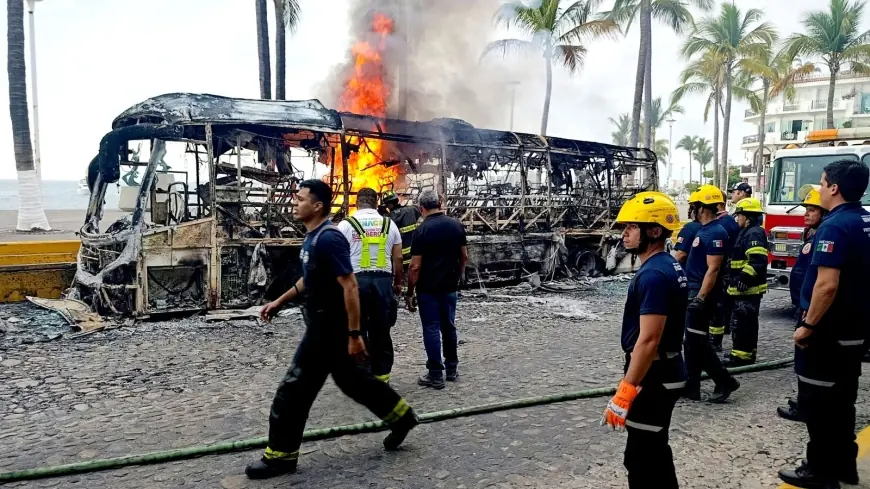
- Roadblocks created with spikes and nails were cleared by Monday morning, while commandeered buses and other vehicles were torched in the middle of roads in several towns.
What’s easy to miss is how concentrated the military and security response has been in western states, even as unrest appears in multiple regions.
Transport, flights and the tournament: disruptions and official reactions
Air travel and tourism were immediately affected. Flight-tracking data showed many aeroplanes returning to departure points, and some countries advised their citizens in affected areas to shelter indoors. Canada cancelled flights to the Puerto Vallarta airport. An airline announced gradual resumption of flights to and from Guadalajara, Puerto Vallarta, Manzanillo and Tepic, while a European carrier said it would operate flights from two major German airports. Local airports and tourist hotspots were among the locations specifically mentioned in sheltering guidance and travel advisories. Smoke from burning buses was visible in Puerto Vallarta as violence spread.
Guadalajara is scheduled to host four matches this summer, Mexico City five and Monterrey four; experts and officials have warned that such unrest could complicate the security planning for the tournament and force re-evaluation of safety measures for visitors and venues.
Organised-crime dynamics, scale and likely short-term risks
The Jalisco New Generation Cartel is described as one of the country's most powerful criminal organisations. It is estimated to be worth more than £10bn and to number tens of thousands of members, and it has been linked to massacres, kidnappings and killings of politicians since its formation in 2009. Some cartel figures retain popularity in local communities by financing infrastructure and services, which complicates efforts to isolate their operations.
Analysts warn the killing of a dominant leader can create a power vacuum and a period of instability as contenders vie to replace him. The cartel's response has included coordinated arson, roadblocks and public displays of force — actions that appear designed both as retaliation and as a national signal amplified by social media.
Micro timeline and continuing uncertainties
- Sunday: Capture of El Mencho in Jalisco after forces tracked a romantic partner; serious injuries during a firefight.
- Shortly after capture: El Mencho died while being transported from Tapalpa to Mexico City; unrest erupted across multiple states.
- Monday: Additional 2, 500 soldiers sent to western Mexico; total troop deployment near 9, 500 since Sunday; roadblocks cleared in some areas.
The real question now is how long the instability will persist and whether the security mobilization will be sufficient to restore wider calm. Recent updates indicate details may evolve as authorities continue operations and as cartel dynamics shift.
Writer's aside: The bigger signal here is how the disruption blends immediate security threats with economic and reputational risks for cities that host large events; that combination shapes both short-term tactics and longer-term planning.
Key affected groups include local residents in Jalisco and other states, National Guard and military personnel, airport and airline operations, tournament organisers and travellers; confirmation of the next turn would come from official updates on troop deployments, casualty figures and the resumption of flights and matched events.