

























Opm Orders Two-Hour Delay for D.C.-Area Federal Employees as Snow Arrives

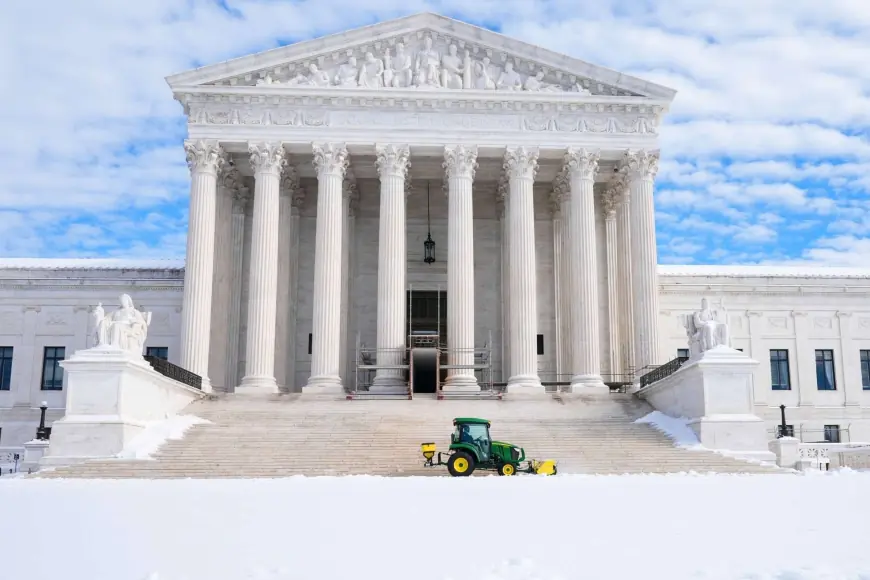
opm has directed a two-hour delayed arrival for federal employees across the Washington, D. C., metro area on Monday to allow local transportation crews time to clear snow-covered roads. The shift changes arrival expectations, leave rules and commute conditions as a winter weather advisory takes effect for multiple jurisdictions.
Opm directive and Scott Kupor's guidance
The Office of Personnel Management initiated the two-hour delay Sunday afternoon as snow began to fall and stick to the ground across the region. OPM Director Scott Kupor wrote in a post on X that the delay is intended to give people more flexibility in the morning if snow continues overnight, and noted that temperatures are not expected to be as cold as in the prior storm — reducing concern about serious icing that would require a full shutdown. Kupor closed his post with a reminder to stay warm and stay safe.
National Weather Service advisory for District of Columbia and surrounding jurisdictions
The National Weather Service issued a winter weather advisory effective from 5 p. m. Sunday through 10 a. m. Monday for the District of Columbia, Fairfax, Arlington, Falls Church, Alexandria, Prince William, Manassas and Manassas Park. The advisory warns of total snow accumulations between 2 and 4 inches with localized amounts near 5 inches. Northwest winds are expected to gust between 30 and 40 mph overnight through Monday, and officials warned that slippery road conditions will affect the Monday morning commute. Snowfall amounts are expected to be higher in the Baltimore region.
WTOP forecast and timing from Mike Stinneford
Local forecasts diverge slightly: WTOP cautioned that parts of the D. C. area could see total accumulations ranging from 2 to 6 inches after much of the region began Sunday with rain. WTOP meteorologist Mike Stinneford said the heaviest snow should come during the evening hours and taper off after midnight. Temperatures are expected to rise Monday, which will lead to snow melt, but forecasters raised concerns about the potential for freezing again Monday night as temperatures fall.
Employee categories, telework rules and weather-and-safety leave
Federal agencies are open with a two-hour delayed arrival, and staff may use unscheduled leave or unscheduled telework. Employees should plan to arrive no more than two hours later than their normal expected arrival time. The guidance lays out different expectations by employee category:
- Telework employees not scheduled to telework but requesting unscheduled telework must be prepared to telework, take unscheduled leave, or use other paid time off to cover the entire workday; weather-and-safety leave is generally not available to these employees if they do not report to the office.
- Remote workers and telework employees already scheduled to telework are expected to begin their workday on time; they may request unscheduled leave if needed, but weather-and-safety leave is generally not available to remote and telework employees who do not report to the office.
- Non-telework employees, and telework employees not scheduled to telework and not requesting unscheduled telework, are expected either to report to the office and receive weather-and-safety leave for up to two hours past their normal arrival time or to request unscheduled leave for the entire workday; weather-and-safety leave is not available to those who request unscheduled leave.
- Emergency employees are expected to report to their worksites on time unless their agencies provide alternative directions.
- Employees on preapproved leave, whether paid or unpaid, or using other paid time off such as compensatory time or credit hours will generally be charged for that leave and will not receive weather-and-safety leave even if they request unscheduled leave or other paid time off.
School systems delay starts and commute impacts
School systems across the D. C. metro region have delayed their start times to give streets a chance to be cleared and for initial snow melt to begin. The combination of delayed federal arrivals, school schedule changes and advisories about gusty northwest winds creates a multilayered effect on Monday’s travel: crews will have limited time to treat and clear roads, and officials expect the hazardous conditions to affect the morning commute.
What makes this notable is the alignment of administrative action and layered forecasts — opm’s delay is a direct response to snowfall that had already begun, and the conflicting accumulation ranges mean some localities should plan for as much as 6 inches while others are projected closer to 2–4 inches with spots near 5 inches. The timing matters because a late-evening heaviest band of snow, tapering after midnight, compresses the window for road-clearing before peak travel.
Federal employees and commuters should follow agency directives for reporting status, prepare for slippery roads and expect that further agency-specific instructions could change emergency-employee requirements or telework allowances.