

























Rob Reiner case deepens family isolation and courtroom timeline as son pleads not guilty

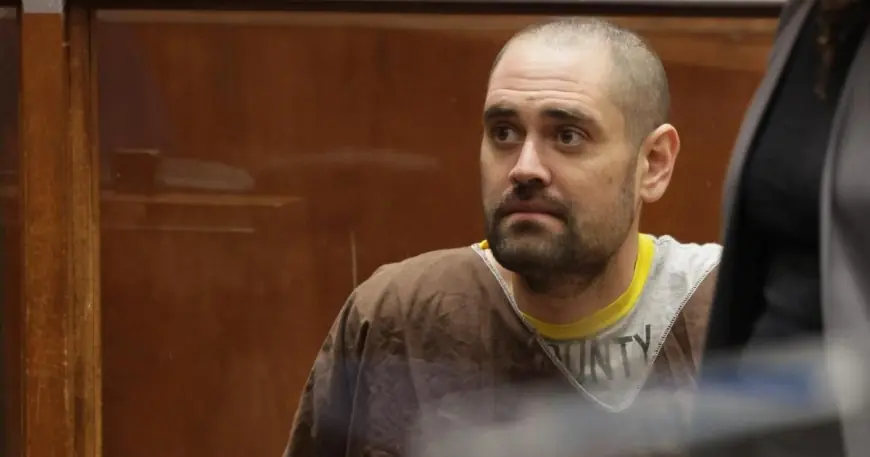
Who feels the impact first is the family: the court filing and confined detention of rob reiner’s son has widened a separation that relatives describe as grief layered on top of disbelief. The legal calendar is shifting too—pleas, judge assignments and preliminary hearings now map the next phase, while confinement rules and visitor choices keep the accused physically isolated from relatives.
Immediate family fallout and enforced isolation
No family members have visited the accused in person. Relatives are keeping their distance and are described as torn between grief and disbelief; those close to the family frame the collective silence as survival, not vengeance. On paper the accused may receive family visitors, but in practice none have come to the visiting room at Twin Towers Correctional Facility. One insider summarized the position as family members mourning their parents while trying to comprehend what has happened.
Here's the part that matters for relatives and the public: the accused is being held in conditions that limit contact. He was placed in a mental-health unit downtown, initially on suicide watch and later moved off that status but into high-observation housing. He is confined alone in a cell, monitored every 15 minutes, escorted by deputies and watched on camera whenever he leaves the unit. He eats alone, sleeps alone, and is currently allowed contact only with legal counsel and jail staff.
Rob Reiner court appearance: plea entered, next dates, and judge reassigned
The accused entered a not-guilty plea to two counts of first-degree murder, in the first formal denial of the allegations that he fatally stabbed his parents. His deputy public defender, Kimberly Greene, entered the plea on his behalf while he stood behind glass in an enclosed custody area of a packed Los Angeles courtroom. He appeared with a shaved head and light facial hair, wearing brown jail clothes. During the hearing he spoke only to answer yes when asked if he waived his right for next steps to proceed speedily. He was not wearing the suicide-prevention smock he had worn at his initial December court appearance.
It was the third scheduled plea appearance; delays were caused by case issues including a surprising change in defence lawyers. The judge directed the accused to return to court on April 29 for scheduling of a preliminary hearing where prosecutors will present evidence and a new judge will decide whether there is enough to send the case to trial. The case will now be handled by long-time Los Angeles Superior Court Judge Sam Ohta, who has overseen prominent murder, manslaughter and public corruption cases but not one that has drawn this level of national attention.
Charges, penalties and prosecutorial stance
Prosecutors have charged two counts of first-degree murder with a special-circumstance allegation of multiple murders. Those charges carry a maximum sentence of life without parole or the death penalty. The district attorney, Nathan Hochman, said his office has not decided whether it will seek the death penalty and that such a decision follows a very rigorous process that will examine aggravating and mitigating circumstances.
Legal team changes, pretrial steps and evaluations
The defence roster shifted when a high-profile lawyer abruptly withdrew last month, citing circumstances beyond his control, and later saying he still believed his former client was not guilty under California law. After that withdrawal a public defender took over. The case is moving toward standard pretrial processes: discovery, pretrial motions, psychological evaluations and fights over what evidence and testimony a jury may ultimately hear.
- December 14 — The parents were found dead at their Brentwood home with multiple sharp-force injuries.
- Mid-December — The accused was arrested hours after the deaths and has been held without bail since that arrest.
- February 23 — A court date was set earlier as the case progressed; the accused later entered a not-guilty plea in a subsequent appearance.
- April 29 — Return to court for scheduling of a preliminary hearing where prosecutors will present evidence and a new judge will assess whether the case should go to trial.
- Forward signal: the death-penalty decision remains pending and will influence whether the case proceeds toward a capital phase.
It is easy to overlook, but the record of judicial assignment and the timeline for the preliminary hearing will shape how quickly discovery and evaluations are prioritized.
Several factual notes in the public record do not align: one account describes the accused as the third of four children; another describes him as the eldest of three children and names siblings Max and Robbie. That discrepancy is unclear in the provided context and remains unresolved here.
The accused is identified as 32 years old in some court descriptions. The victims are identified in other public accounts with ages given as 78 and 70. The deaths were discovered at the Brentwood home; the injuries are described as multiple sharp-force wounds. The parents had previously turned the accused's struggles into a film about redemption.
The real question now is how the court will sequence preliminary evidence, mental-health evaluations and the death-penalty review while the family continues to process both mourning and the criminal accusation. Silence from relatives has been the prevailing response so far: no public statements beyond early shock and no apparent contact with their brother in custody.