


















Tottenham Vs Arsenal: How a 4-1 Derby Drubbing Immediately Shifted the Pressure Onto Spurs’ Survival

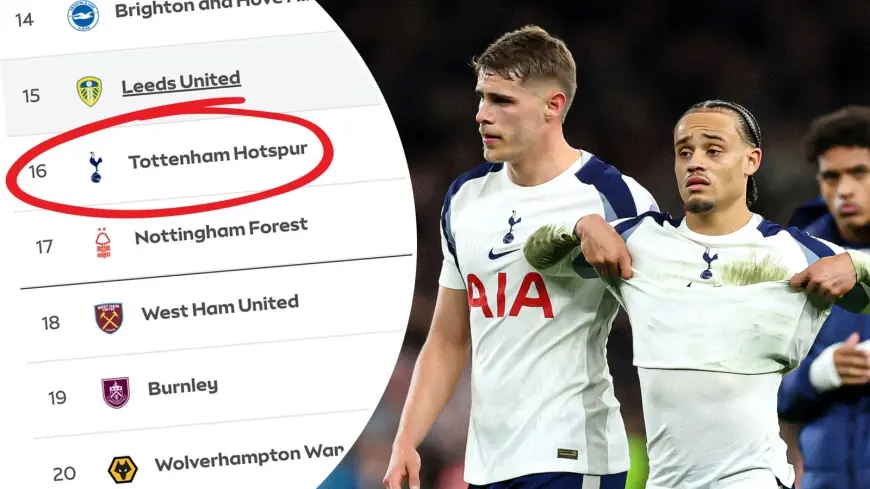
The north London result known as Tottenham Vs Arsenal landed like a shockwave for Spurs’ players, staff and supporters: a 4-1 defeat that left them 16th and just four points above the relegation zone. That immediate impact matters because it compresses a run of poor league form, an injury list of 11 unavailable players and a fixture run that now looks perilous for the club, manager and dressing room.
Tottenham Vs Arsenal — who feels the fallout first
Here’s the part that matters: the shock is not only on the scoreboard. Spurs’ new boss, Igor Tudor, faces a squad stretched by injuries and suspensions while juggling a Champions League knockout bid alongside a Premier League slide. Captain Cristian Romero was suspended for the derby; long-term absences include Dejan Kulusevski and James Maddison, and Mohammed Kudus and Wilson Odobert are now missing too. Overall, 11 players are unavailable — the most in the division — and that depletion shows in results and mentality.
How Arsenal’s right flank repeatedly exposed Tottenham’s setup
Arsenal’s superiority and moments of attacking quality were decisive. Bukayo Saka and Jurrien Timber dominated down Arsenal’s right in the first half and beyond, combining to create space and chances. Timber—described as one of the best attacking right-backs—mixed supporting runs, overlaps and inside moves and was left with time to pick passes, including the pass that found Viktor Gyökeres for Arsenal’s second goal. Saka, after recent questions over his form, looked back to his confident best.
Where Spurs’ 3-5-2 shape and individual roles broke down
Spurs’ 3-5-2 under Tudor often left reactive cover rather than proactive defending. Djed Spence needed help when Saka and Timber doubled up; Xavi Simons—playing as a second striker—was repeatedly forced to run back into left-back positions, while Pape Matar Sarr and Micky van de Ven shuffled cover. At one point Sarr (the blue white circle on the far right) was left one-on-one with Saka in a makeshift left-back role and could not stop the cross that led to Arsenal’s opening goal. The system demanded long recovery runs from Simons and Sarr and created moments where players unfamiliar with those defensive tasks were out of position.
Form, standings and crunch fixtures — a compact snapshot
- League position: 16th, four points above relegation zone.
- Recent league run: no wins in the last nine top-flight games.
- Past dozen matches: Spurs have taken seven points; Nottingham Forest and West Ham have 12 points each in the same span, effectively making up five points on Spurs.
- Squad stressors: 11 players unavailable; Cristian Romero suspended for the derby; long-term absences include Dejan Kulusevski and James Maddison; Mohammed Kudus and Wilson Odobert also missing.
- Schedule pressure: 11 games to go; final two fixtures mentioned as a trip to Chelsea then a home game with Everton could be must-win.
Questions from the derby and a quick micro Q&A
The real question now is whether Tottenham can change course before the fixture list and injuries deepen the problem.
Q: Did Arsenal completely dominate the match? A: Arsenal outplayed Spurs for long periods, creating 20 chances to Tottenham’s six and winning 4-1, and could have won by more. They also delivered moments of quality when it mattered, looking back to the levels seen earlier in the season.
Q: Is the loss tactical or symptomatic? A: Both. Spurs’ 3-5-2 shape left exploitable spaces and the squad’s absences made those gaps harder to plug; at the same time, the team’s recent form and mentality issues are recurring themes.
Q: Is this season slipping away? A: With 11 league games left, mounting absentees, Champions League commitments and no easy immediate fix, the pressure is unmistakable.
What's easy to miss is that some of these problems are not just tactical but cultural: the derby exposed moments of carelessness as much as structural flaws.
Broader narratives threaded through the result
Beyond the scoreboard, the match fed three ongoing storylines. First, Tottenham’s wider slump: a run that has seen them finish above Arsenal only until 2022 and now leaves them perilously close to the drop. Second, Arsenal’s contrasting confidence: despite an odd habit of conceding soon after scoring in recent games—conceding within 10 minutes of scoring for the third league game in a row and the fourth in six—they still produced a dominant display overall. Third, managerial context: last season’s approach under Ange Postecoglou involved prioritising Europe and allowing the league to slide; Igor Tudor now lacks that luxury, balancing knockout ambitions with a fight for survival.
Pre-match theatre also underscored the moment: the home announcer, Paul Coyte, stoked belief about turning “a small flame” into “a roaring fire, ” an image that looked mismatched in light of Tottenham’s fragile position. Declan Rice’s visible swings between leadership gestures and remorse during the game captured another subplot—he oscillated from urging focus to apologising after a giveaway that allowed Spurs to equalise, an emotional thread that could define narratives on his season.
Fans poured out of the stadium after Viktor Gyökeres made it 4-1; an image of consumption and celebration that contrasted sharply with Tottenham’s internal alarm. The bigger signal here is that tactical cracks, a depleted squad and damaged confidence intersected to produce a result whose consequences will be felt first by players, manager and supporters as the season reaches its decisive phase.
Final note: some contextual details were unclear in the provided context, such as exact dates of fixtures and the timing of injuries beyond what is stated above.