






















Consequence test: Keely Hodgkinson's run puts Jarmila Kratochvilova's 1983 800m record squarely in play — what would change next

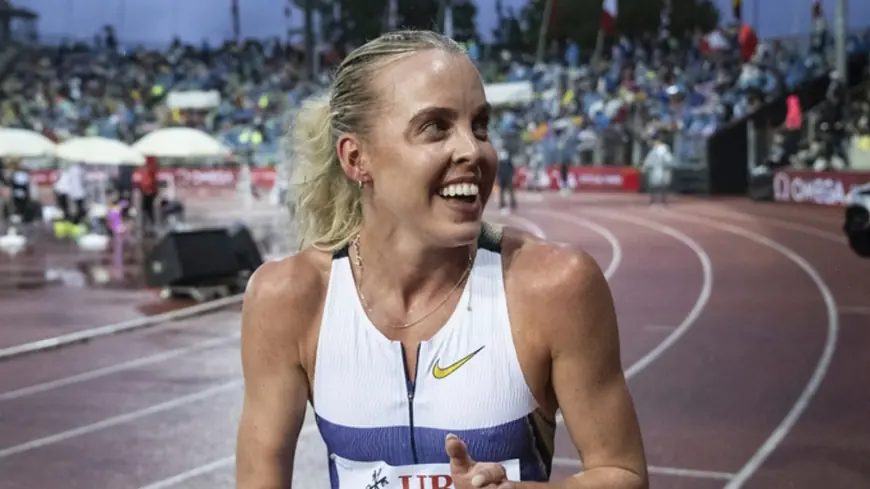
What changes because of Keely Hodgkinson's recent surge is now tangible: the long-standing outdoor benchmark set by jarmila kratochvilova in 1983 is no longer an untouchable relic but an explicit target. Hodgkinson’s 1: 54. 87 indoor world record in Lievin has shifted expectations for who should be favoured to chase the 1: 53. 28 outdoor mark, and it recalibrates timelines for the athlete and her team as they plan races, health management and pacing strategies.
If Keely Hodgkinson clears Jarmila Kratochvilova's 1983 1: 53. 28, the immediate consequences for her legacy and the event
Breaking the 1: 53. 28 set in Munich in July 1983 would be a high-profile alteration to the women's 800m record book. For Hodgkinson — who believes she can surpass that time — such a result would be framed as a crowning achievement that could "cement her place" in the sport. The practical consequences include raised expectations for outdoor seasons, pressure to tailor race schedules around optimal conditions, and intensified scrutiny of training load and injury risk.
Here's the part that matters for competitors and meet planners: the bar for pacing and race setup would rise. Meet organisers would likely be asked to recreate the controlled conditions Hodgkinson has shown she can exploit; pacemaking and pacing technology will factor into attempts.
Event details and the Lievin performance (embedded specifics)
Hodgkinson ran 1: 54. 87 in Lievin, France, setting a new indoor world 800m mark and beating a previous indoor standard that dated from 3 March 2002. That earlier indoor best was 1: 55. 82, set at the European Championships in Vienna on March 3, 2002. In Lievin the wavelights were set at 55. 8s for 400m and 1: 53. 80 overall. Hodgkinson followed pacemaker Anna Gryc of Poland through 200m in 26. 47s and 400m in 55. 56s, then was timed at 1: 25. 06 through three-quarters.
She celebrated trackside, accepted congratulations from rivals and coaches, and then went to her family — taking a selfie to mark the moment.
It's easy to overlook, but the split details underline how intentional the attempt was: pacemaker work plus precise targets at halfway and overall were in place to create the conditions for a very fast time.
Recent form, the recovery arc and support team
Hodgkinson is 23 years old and is the reigning Olympic champion, having won 800m gold at the Paris 2024 Games. She opened this indoor season with a 1: 56. 33 at the UK indoor championships, achieved without pacemakers or wavelights, moving her to third on the all-time indoors list before Lievin.
Her victory in Lievin followed a difficult period: a torn hamstring left her unable to train for months after the Olympic triumph, and she has been rebuilding since. Her coach, Jenny Meadows, has said the Lievin time could have been up to one second faster, and both coach and athlete view the performance as a stepping stone with more to come if health holds.
Reactions and expectations inside the sport
Hodgkinson has said this is the closest she has felt to the outdoor record and that many things must align for an attempt to succeed. Others working in the sport have expressed belief that she can do it this year. That external confidence combines with Hodgkinson’s own statements that she has known for weeks she was capable and that the current moment might be the beginning of further progress.
Quick Q&A to clarify the immediate facts
- Q: Which outdoor record is in question? A: The women's 800m outdoor world record of 1: 53. 28 set in Munich in July 1983 by Jarmila Kratochvilova.
- Q: What did Hodgkinson do indoors to sharpen the debate? A: She ran 1: 54. 87 in Lievin, France, breaking the nearly 24-year-old indoor standard from 2002.
- Q: What factors could affect a future outdoor attempt? A: Health, pacing, race-day conditions and pacemaker support — all cited as necessary to bring such a time within reach.
The real question now is how Hodgkinson and her team will sequence the outdoor season and manage risk after a hamstring tear and a rapid climb back to elite fitness.
Micro timeline: Munich July 1983 (outdoor 1: 53. 28 set), 3 March 2002 (previous indoor standard set), Paris 2024 (Hodgkinson Olympic gold), recent UK indoor championships (1: 56. 33), Lievin (1: 54. 87 indoor world record). The sequence shows a compressed momentum into this season.
What’s easy to miss is how the combination of recovery from injury, an indoor world record and explicit statements of belief from Hodgkinson and figures in the sport now create a narrow window where an outdoor assault on that 1983 mark is plausible — but contingent on many moving parts.