























Tsa Precheck reversal leaves Chicago travelers stranded amid nor'easter chaos and checkpoint confusion

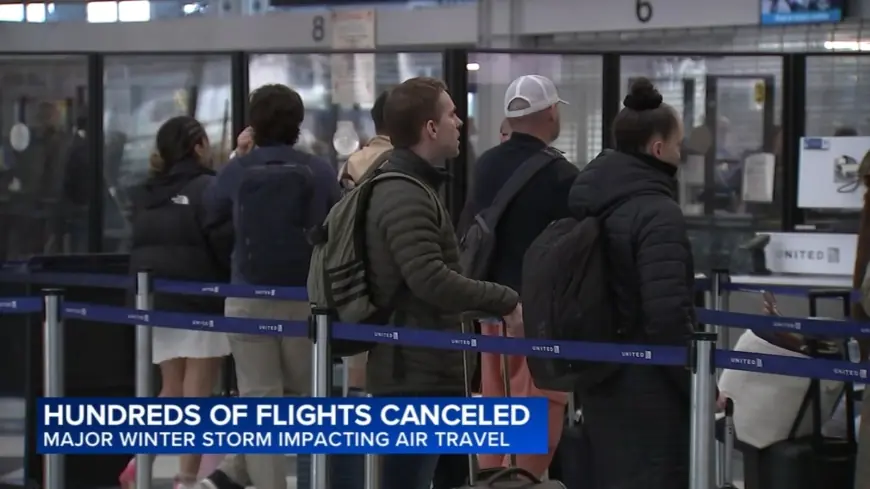
Chicago flyers felt the immediate sting when a Department of Homeland Security move to suspend Tsa Precheck and Global Entry briefly forced many passengers into general security lines while a major nor'easter battered the Northeast. Here’s the part that matters: the disruption compounded already severe flight cancellations and delays, and although the expedited programs were restored hours later, travelers and airport staff were left scrambling.
Tsa Precheck impact: who was affected first
Passengers using expedited screening, airport employees and travelers with tight connections were the first to see effects. An airport employee said long lines and confusion followed the closure, because PreCheck lanes were shut and those passengers had to join general-security queues. One frequent traveler, Jason Hahn, said he arrived 45 minutes earlier than usual at O'Hare and had adjusted his schedule expecting delays; he also said he felt punished and suspected staffing levels were unchanged. A separate traveler warned that losing Global Entry can add about two hours to travel time.
What unfolded at Chicago airports (timeline and operational notes)
- Saturday evening: DHS announced a suspension of Tsa Precheck and Global Entry set to begin Sunday.
- 5: 00 a. m. (Chicago time): the suspension was scheduled to take effect.
- 6: 00 a. m.: travelers were observed getting through checkpoints without issue in Chicago.
- After 9: 30 a. m.: agencies announced that PreCheck remains operational with no change for the traveling public; staffing constraints would be evaluated case by case.
- 5: 30 p. m.: cancellation and delay counts were tallied for the day (see flight figures below).
It’s unclear in the provided context exactly which statements were issued by which office at each hour, but the operational result was a short-lived closure followed by a reversal and a promise to evaluate staffing on a case-by-case basis.
Storm-driven cancellations, delays and on-the-ground counts
The Tsa Precheck confusion coincided with a major nor'easter that produced heavy disruption across the Northeast and rippled into Chicago operations. As of 5: 30 p. m. Sunday, O'Hare recorded 133 cancellations with average delays of 16 minutes, and Midway had 23 cancellations with average delays of less than 15 minutes. The storm prompted blizzard warnings and travel bans in parts of the Northeast: roughly 40 million people were under a blizzard warning and another 14 million faced winter storm warnings, and several states declared emergencies.
Policy snapshot and political context
The partial government shutdown began Feb. 14 after lawmakers failed to reach a funding deal for the Department of Homeland Security. Opposition from Democrats — who pressed for changes to immigration operations in the wake of deadly shootings of Renee Good and Alex Pretti in Minneapolis last month by federal immigration agents — was cited as a factor in that impasse. Homeland Security leadership warned that shutdowns carry serious real-world consequences and said TSA and border officials would prioritize the general traveling population and suspend courtesy and special-privilege escorts, including escorts for members of Congress, so officers could focus on core missions.
Two DHS there were no changes to Global Entry even amid the suspension announcements. Travel expert Peter Greenberg reacted with incredulity, calling the move nonsensical given the enrollment numbers and describing it as more of a political gesture than a fix for shutdown problems. What’s easy to miss is that this action landed on top of a weather-driven operational strain, multiplying the practical impact for travelers.
On the ground: traveler experience, payroll and agency notes
Beyond longer lines and canceled flights, the shutdown has had other operational effects: TSA workers have missed one paycheck so far, while air traffic controllers were not affected by the shutdown. States along the East Coast took emergency steps — governors in Connecticut, Delaware, Massachusetts, New Jersey, New York, Pennsylvania and Rhode Island declared states of emergency, and Maryland's governor declared a state of preparedness. Officials urged people to avoid travel where possible and some states imposed travel bans.
- PreCheck and Global Entry enrollments cited: about 20 million people have PreCheck and 12 million have Global Entry.
- Courtesy escorts suspended to allow officers to focus on securing entry points and air travel operations.
- O'Hare cancellations: 133; average delay 16 minutes. Midway cancellations: 23; average delay less than 15 minutes.
- The nor'easter prompted the first blizzard warning for New York City in nearly a decade and forecasts of at least a foot of snow in places.
If you’re wondering why this keeps coming up, the immediate cause was a funding impasse at DHS combined with staffing priorities, layered on top of a major winter storm — a convergence that briefly disrupted expedited screening while airport operations were already under pressure.
- Travelers reported long lines and confusion when PreCheck lanes temporarily closed.
- PreCheck was restored hours after the initial suspension was announced; agencies said operations would be adjusted case by case if staffing became a problem.
- Political pressure over immigration operations and the Feb. 14 shutdown are the backdrop for the suspension decision.
- Flight counts and storm warnings show the weather amplified the disruption, producing tangible delays and cancellations at Chicago airports.
The real test will be whether operations hold steady through the coming days of storm cleanup and any further staffing strain; officials signaled they would monitor and adjust as necessary.