












Mencho’s Fall Is a Turning Point — Immediate Turmoil and the Longer Violence Question for Mexico


Why this matters now: the death of Nemesio Oseguera Cervantes — known as mencho in public discussion — collapsed a long-standing protection network in Jalisco and instantly reshaped security calculations. The move has produced immediate disruption on the streets and raises hard questions about whether decapitation will reduce cartel power or trigger a new phase of factional fighting and attacks.
Consequences for Mexico’s security approach and local order
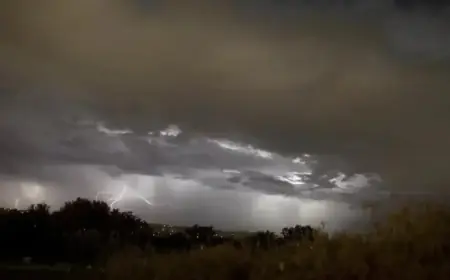
The immediate consequence is visible: an expert on organized crime who was in Guadalajara the day authorities announced the death described the city as eerily quiet, with empty streets and closed businesses — a snapshot of the territorial control these groups can exert. That same analyst warned the initial wave of blockades and attacks in Tapalpa and other states where the cartel operates is likely only the first reaction; in months, competing groups may fight over the business the capo controlled, producing a different, prolonged violence.
Political friction is also in play. The recent posture of the national government is more confrontational than prior administrations, and there is pressure from the White House for closer bilateral action. Mexican officials present their approach as cooperation and shared intelligence while Mexico remains in charge of on-the-ground operations. But the core strategy — removing top leaders — has been used for two decades and, when tested before, tended to destabilize networks and multiply criminal factions rather than eliminate them.
The bigger signal here is how deeply embedded the cartel’s reach could be: a major urban capital paused in reaction to the news, an indicator that territorial control is not only rural but urban and social.
- Key takeaway: streets emptied in Guadalajara on the announcement, reflecting strong local control.
- Key takeaway: immediate violent reactions included roadblocks and attacks on businesses in Jalisco and other states.
- Key takeaway: analysts expect new types of violence in coming months as control becomes contested.
- Key takeaway: the central debate returns to whether decapitation undermines or fragments criminal organizations.
Mencho: who he was and what was at stake
Nemesio Oseguera Cervantes, known publicly as El Mencho, was 59 years old and a cofounder of the Cartel Jalisco Nueva Generación (CJNG), an organization that expanded across Mexico since the previous decade and rose to match the Cartel de Sinaloa in capacity and violence. The U. S. had placed a US$15 million reward for his capture; Mexican authorities offered US$1. 75 million, the largest payout in its rewards program. The CJNG was designated during the Trump administration as a terrorist organization, described as a ruthless cartel responsible for trafficking fentanyl, methamphetamine, cocaine and other illicit drugs into the United States.
Operation details and immediate human toll
The army located him in the municipality of Tapalpa, a mountainous area about 130 kilometers south of Guadalajara. The Secretaría de la Defensa Nacional said a Special Forces command carried out the operation with support from Air Force aircraft and the Guardia Nacional’s Immediate Reaction Special Force. Authorities said criminals on site had armored vehicles and heavy weaponry — including rocket launchers with the capacity to down aircraft.
During the operation military personnel were attacked and, in repelling that aggression, forces killed four CJNG members on site. Three individuals who were seriously injured died while being airlifted to Mexico City. Nemesio Oseguera was among the injured who had been captured and died during the transfer. Two other CJNG members were detained, and the Army sustained three seriously wounded personnel who were moved to hospitals in Mexico City. The Defense Ministry stated the operation relied on "información complementaria" from the U. S. within a framework of bilateral coordination and cooperation. The White House spokesperson Karoline Leavitt wrote on X that the U. S. provided intelligence support and praised the Mexican military; the government of Trump also praised and thanked the Mexican military for the operation's execution.
Politics, strategy and expert warnings
David Mora, senior analyst in Mexico at the International Crisis Group and a researcher on organized crime, was in Guadalajara when the announcement was made and emphasized two political levels: the government’s current, more combative security posture under President Claudia Sheinbaum and the bilateral relationship with the United States. He contrasted this with the previous era characterized by the slogan "abrazos y no balazos, " calling that earlier posture more passive and blaming it for the growth in criminal groups' territorial control. Mora cautioned that removing leaders has repeatedly failed to eliminate organized crime and instead tends to produce destabilization and the multiplication of factions.
Separate result: U. S. wins Olympic hockey gold in Milan-Cortina
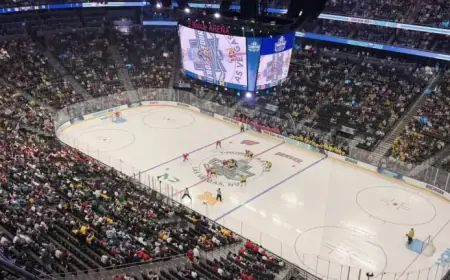
In a distinct headline from the same day, the U. S. men’s hockey team surprised and beat Canada in the Olympic final in Milán-Cortina. Led by Auston Matthews Martínez, who has a Mexican mother, the U. S. captured gold for the first time in 46 years. The event concluded this Sunday; the final is dated Feb. 23, 2026, and France will host the Winter Olympics in 2030.
Here’s the part that matters for readers tracking security: the death of this cartel leader removes a familiar node of control but opens a period of uncertainty — local communities, military forces, and regional partners will be the first to feel how that uncertainty resolves.
The real question now is whether immediate disruptions — blockades, attacks and the moves by rival groups — turn into short-term shocks or a longer, more dangerous reordering of criminal territories. Recent updates indicate this is still evolving; details may change as authorities share more information.