





















Sarah Symonds: Ex-mistress lashes out as six-hour Being Gordon Ramsay doc prompts fresh questions

The latest round of publicity around the six-part, six-hour documentary Being Gordon Ramsay has drawn a sharp public rebuke from sarah symonds, who is identified in recent commentary as a long-term former mistress and who calls the series "completely misleading and fake. " The clash matters because the programme is being framed both as an intimate family portrait and as a large-scale chronicle of a multimillionaire restaurateur launching multiple venues at once, raising questions about image management, who appears on screen and what is left out.
Sarah Symonds's accusations against Ramsay
Sarah Symonds, aged 56 in coverage of her remarks, has described the documentary's title and tone as false and disingenuous, calling the presentation a glossed-over, rehabilitated glow-up of a figure she brands a bully, a cheat, a liar and a serial philanderer. She says she was traumatised by an alleged affair and the fallout that followed, and that seeing the series labelled "unflinchingly honest" provokes anger while she is still trying to heal. Her account asserts an alleged seven-year affair during which she says the marriage was a sham and she portrays the man she knew as acting like "a single man, a man about town, " always available, frequenting the same late-night social venues, and projecting the swagger of someone with no responsibilities. The public denials are also on record: Gordon Ramsay has long denied having had an affair.
Six-part, six-hour format and the launch at 22 Bishopsgate
The documentary runs across six episodes and follows the chef as he attempts an ambitious restaurant project at 22 Bishopsgate in London. The series tracks the development of multiple dining concepts — described in coverage as five new dining ideas developed inside the building — and documents both the scale of the undertaking and the minutiae of design and service decisions. Among the venues shown are a 60-seat rooftop garden with a retractable roof, a 250-seater Asian-inflected restaurant named Lucky Cat, a Bread Street Kitchen brasserie and a culinary school. The project requires each premises to be designed and built from scratch and even the addition of a retractable roof to one site is shown.
Family scenes, who appears — and conflicting family details
The series opens with a home scene: the youngest of the chef's six children with his wife of 30 years, Tana, are eating pancakes that he criticises as too thick — American-style rather than the crepe he prefers — and Tana asks him to "give it a rest. " At home, the programme presents him as fully engaged with his children: running and jumping with the little ones, planning weddings and engagement parties, and buying inaugural chef whites with older children. One description of the family lists children and ages as Megan 27; twins Holly and Jack 25; Matilda 23; Oscar six; Jessie James 18 months. Another description lists the children as Megan 27; twins Jack and Holly 26; Tilly 24; Oscar six; Jesse two. The two accounts also differ on the chef's age — given as 59 in one place and 57 in another — and on other small biographical details; these differences are unclear in the provided context.
Why Megan and Jack are not in the series
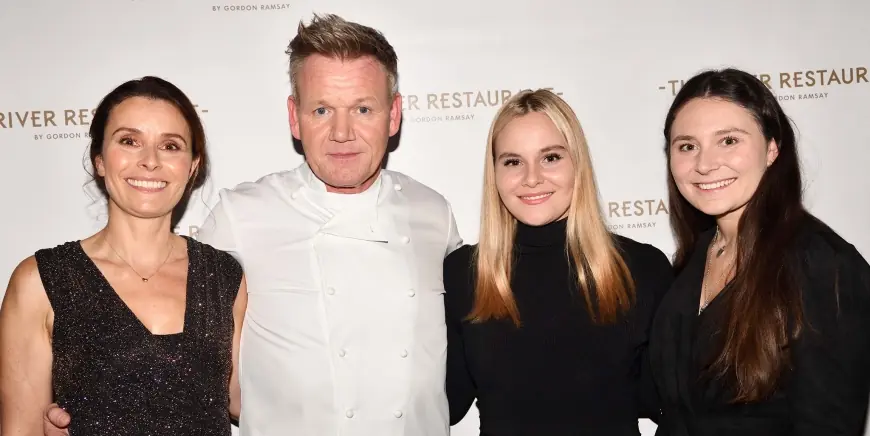
Not all six children appear on screen. The two eldest, Megan and Jack, are notably absent. The stated explanation is practical: Megan works as a police officer, which is described as a security-sensitive role, and Jack serves in the Royal Marines and is described as a "busy boy" whose duties and safety mean they cannot be involved in the filming. The series includes more footage of other older children — notably Tilly and Holly — and regular appearances by the two youngest. Past public celebrations of the siblings' milestones are shown in coverage: Megan's graduation and a proud parental social-media post marking Jack joining the Royal Marines, plus previous public appearances at restaurant launches (Megan at a 2021 launch of The River Restaurant; Jack at the official launch party for Lucky Cat, where he posed for photos with family members and other named guests).
Production obsessions, brand-ad critique and culinary detail
Critics of the series characterise much of its six hours as an extended brand advert — lengthy coverage of the practical and public relations side of launching multiple high-end venues simultaneously. The film shows obsessive attention to detail: menu tastings where a rum baba's size matters for aeration, prototype aprons with pockets removed because wait staff fill them and look scruffy, and the vetoing of leather seating for spatial or aesthetic reasons. That granular focus is presented as both evidence of seriousness about standards and as fuel for the argument that six hours of this material may be more self-promotion than revelation.
The series also travels beyond London to showcase international locations tied to the chef's career, including a branded kitchen project in Las Vegas. The programme was released on 18 February in recent coverage and is currently streaming on a major platform. The controversy sparked by sarah symonds's remarks and the contrasting critical reception underline that public perception of the series — as family portrait, promotional showcase or both — remains contested; details may continue to evolve as the conversation develops.