























Homeland security reverses course on TSA PreCheck suspension; Tsa Precheck and tsa precheck remain operational

The Department of Homeland Security announced a suspension of TSA PreCheck and Global Entry and then reversed course, leaving tsa precheck operational for travelers. The sequence — a Saturday evening suspension notice, a planned halt from Sunday morning, and a reversal the next day — touched off industry and passenger outcry.
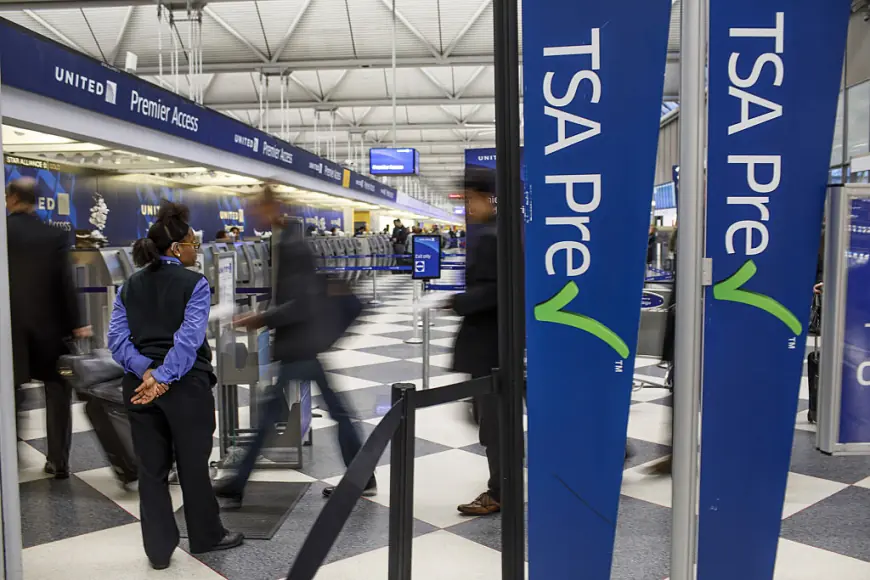
Passengers walk through the entrance of a TSA PreCheck in Terminal one at O'Hare International Airport Wednesday, Feb. 1, 2017, in Chicago.
Tsa Precheck status restored
The DHS first said Saturday evening it would suspend TSA PreCheck and Global Entry, blaming a partial government shutdown that has halted funding to the agency and was sparked by a dispute between Democrats and Republicans over funding for Immigration and Customs Enforcement (ICE). DHS said it would halt the programs from Sunday morning to "refocus Department personnel on the majority of travelers. "
Later on Sunday, the Transportation Security Administration said: "TSA PreCheck remains operational with no change for the traveling public. As staffing constraints arise, TSA will evaluate on a case by case basis and adjust operations accordingly. " The TSA also added that courtesy escorts provided for members of Congress have been suspended "to allow officers to focus on the mission of securing America’s skies. "
Global Entry remained halted
The suspension of Global Entry, a U. S. Customs and Border Protection (CBP) program, appeared to remain in place. A DHS official said Global Entry would remain halted and that the reversal on PreCheck was based off conversations the secretary had with the White House and TSA.
What the programs do
TSA PreCheck and Global Entry are programs that give approved participants expedited airport screening and fast-track processing. TSA PreCheck allows approved passengers through a faster security lane at U. S. airports designed to reduce wait times and Global Entry expedites U. S. customs and immigration clearance for pre-approved, low-risk international travelers entering the U. S.
TSA PreCheck had more than 20 million active members as of 2024, while some 13 million people use Global Entry. Other coverage noted PreCheck has around 20m enrolled users and Global Entry is used by over 10 million pre-approved, low-risk, international travelers, including U. S. citizens and green card holders.
Industry leaders and lawmakers react
The reversal followed an outcry from airline industry leaders who warned the short notice would cause chaos for passengers. Chris Sununu, named in coverage as CEO and elsewhere described as president and CEO of Airlines for America, which represents American Airlines, Delta Air Lines, Southwest Airlines, and United Airlines, said his organization was "deeply concerned that TSA PreCheck and Global Entry programs are being suspended and that the traveling public will be, once again, used as a political football amid another government shutdown. " He added that the announcement was issued with extremely short notice to travelers, "giving them little time to plan accordingly, which is especially troubling at this time of record air travel. "
U. S. Travel Association President and CEO Geoff Freeman called the suspension "extremely disappointing, " and said lawmakers have used travel personnel as a "means to achieve political ends. " After PreCheck was restored, Freeman said his group was "glad" DHS had avoided "a crisis of its own making" and urged the same action for Global Entry. He added: "These Trusted Traveler Programs strengthen aviation security and improve screening efficiency. They are funded by user fees, and there is no reason at this time for them to be suspended. " Freeman also said that air travel is essential and criticized use of travel as leverage in political disagreements.
Shutdown impacts on staffing
The battle over airport lines comes as Democrats and Republicans continue to negotiate over how to end the partial shutdown over DHS funding. Many DHS operations remain untouched during the shutdown, but agencies such as TSA are bearing the brunt: roughly 95 percent of its employees, about 61, 000, have been forced to work without pay since the funding lapse began on Feb. 14 at midnight. The partial government shutdown began on 14 February after Democrats and the White House were unable to reach a deal on legislation to fund DHS.
As part of what she described as an effort to "conserve resources" in response to the funding shortfall, Secretary Kristi Noem said that the Federal Emergency Management Agency would "halt all non-disaster related response to prioritize disasters. " Noem also said: "Shutdowns have serious real world consequences, not just for the men and women of DHS and their families who go without a paycheck, but it endangers our national security. " She added that "TSA and [Customs and Border Protection] CBP are prioritizing the general traveling population at our airports and ports of entry and suspending courtesy and special privilege escorts. "
Weather and timing concerns
The suspension from early Sunday was expected to cause headaches for passengers, compounded by an incoming blizzard in the north-east and a major blizzard set to hit the East Coast; as much as 20 inches of snow is expected to fall in New
A similar shutdown last year "caused losses of more than $6bn across the travel industry and related sectors, " he said; unclear in the provided context.
Closing: DHS announced a Saturday evening suspension, planned a halt from Sunday morning, and then partially reversed course on Sunday, leaving tsa precheck operational while Global Entry appeared to remain halted amid continued negotiation over DHS funding.