

























Arsenal Standings: What the season’s narrow margins say about who is genuinely leading the title race

When predictions regularly miss dramatic late goals, the table becomes a moving target — and that volatility is central to current discussion of the arsenal standings. Backing Arsenal for every game would have been correct 17 times out of 27 attempts; backing Manchester City for every game would have been right 16 times out of 26. Those raw counts show a tighter top end and more opportunities for swing results than in past seasons.
Arsenal Standings and the shifting title momentum
Viewed as a performance trend, the season reads less like two dominant forces and more like a fragmented top group. Manchester United, Chelsea and Liverpool — occupying fourth, fifth and sixth in the running referenced here — have each won fewer than half their matches, which compresses the chasing pack and magnifies the effect of single results on the standings. The contrast with the 2018–19 season is stark: then, backing Manchester City for every game would have netted 32 correct picks out of 38 and Liverpool 30 out of 38, producing 98 and 97-point finishes; this season’s hit rates so far (17/27 for Arsenal, 16/26 for City) underline how much more contestable the title is.
What’s easy to miss is how frequent stoppage-time twists — like the Wolves comeback — amplify small margins into major table consequences. That pattern makes every late goal feel like a title event rather than an isolated drama.
Matchday 27: Wolves comeback, prediction challenge and expected line-ups
The midweek advance of Arsenal’s fixture at Wolves to avoid a cup final produced one of those late-game verdicts: a teenager struck late to set up an own goal by an Arsenal substitute, erasing an expected win and leaving the predictions competition unchanged. No points were added after that Wolves–Arsenal game in the weekly challenge, which has four regular predictors: a six-year-old named Wilfred, a rotating guest subscriber, an algorithm and the columnist producing the picks. The scoring system awards three points for a correct scoreline, one for a correct result and a bonus point for any unique correct prediction.
- Key match facts: Wolves teenager Tom Edozie scored to set up an own goal by Riccardo Calafiori; the result overturned many participants’ picks.
- Fixture timing: Arsenal’s game was moved to midweek to avoid a clash with an upcoming cup final.
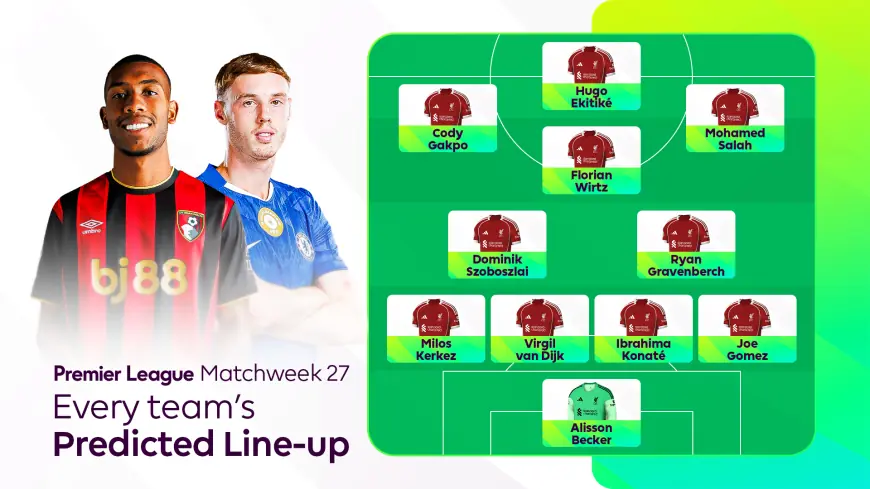
Predicted line-up and fitness headlines for the round highlight rotation and availability questions that could affect outcomes:
- Arsenal manager indicated a strong possibility that Martin Odegaard and Kai Havertz could be available for the match, perhaps from the bench.
- Liverpool updates: Joe Gomez may be available to start; Jeremie Frimpong expected back next week; Wataru Endo will be out for a long spell.
- Wolves and other clubs are juggling recent knocks — one forward lasted only 22 minutes with a back spasm and may be eased back into action.
- Several clubs face defensive headaches and competition for returning players, influencing tactical choices across the weekend.
Here’s the part that matters: unpredictability has become a competitive feature, not a glitch. If outcomes keep swinging on stoppage-time moments and selective availability, the arsenal standings will stay fluid and fewer teams can be treated as certainties.
- Arsenal’s hit rate when backed every game: 17 correct outcomes from 27 attempts.
- Manchester City comparable hit rate: 16 correct from 26 attempts.
- Manchester United, Chelsea and Liverpool have each won fewer than half their games, compressing the chasing pack.
- By contrast, the 2018–19 top two produced near-faultless seasons (32/38 and 30/38 correct picks, 98 and 97 points), a benchmark the current campaign is not matching.
The real question now is how much value to place on short-term prediction exercises versus underlying consistency. The weekly challenge has highlighted both the unpredictability of single match events and the broader signal: this title race is being shaped as much by late drama and rotation as by sustained dominance.
The real test will be whether these late twists and squad availability trends keep producing swings in the table or whether one club reestablishes a steadier run. Micro shifts in results are already proving decisive; expect the next set of matchdays to clarify whether this season settles into unpredictability or reverts toward a clearer pecking order.
What’s easy to overlook is that a weekly prediction game can illuminate league-wide patterns: slip-ups, comeback goals and rotation pressures all map back to the same fragile margins that define the current standings.