




















Connor Hellebuyck’s Olympic surge is changing who feels the pressure and who gains confidence

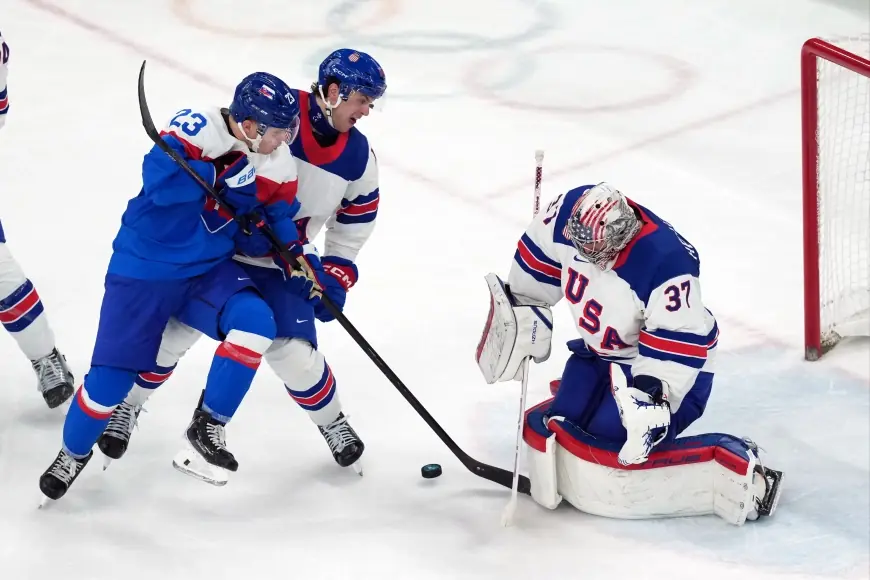
The immediate impact of Connor Hellebuyck’s form in Milan is straightforward: Team USA’s chances and the goalie’s narrative are both being reshaped. After stopping 90 of 95 shots five games into the tournament and leading the event in save percentage and goals-against average, connor hellebuyck has become a stabilizing force that shifts responsibility away from skaters and onto fewer, clearer margins in the knockout rounds. That shift matters for teammates, national expectations, and the story that follows him back to the NHL.
Connor Hellebuyck’s play alters who carries the burden and who can play freer
Put bluntly, Hellebuyck’s consistency in goal hands Team USA a kind of insurance policy. When the netminder is sharp, forwards can play more aggressively knowing the last line of defense is steady; when he’s struggling, pressure cascades up-ice. That dynamic is especially relevant given the persistent narrative about his playoff record in the NHL. The contrast between his international calm and past postseason scrutiny changes match-level tactics and the broader conversation about where responsibility lies inside the roster.
- Here’s the part that matters: the U. S. can treat tight knockout minutes differently when its starter is performing at the top of the tournament.
- For roster construction and coaching choices, reliable goaltending reduces the need for overly conservative strategies in late-game situations.
- For Hellebuyck himself, strong Olympic results create a tangible counterpoint to his difficult playoff stretches in club play.
- For critics and evaluators, a major-tournament run shifts the evidence set used to judge clutch performance.
Event details and the narrative tensions that follow
On the ice, specific patterns are clear in the available facts: Hellebuyck has stopped 90 of 95 shots through the tournament’s early games and is leading the competition in both key goaltending metrics. At the same time, his NHL postseason record has been a recurring point of critique—he has a 1-9 mark in his past 10 road playoff games going back to 2021, and his playoff save percentage over a recent multi-year span fell to. 872, a drop from his regular-season numbers. Those twin threads—dominance at this tournament and struggle in past NHL postseasons—are what make Sunday’s gold-medal match especially consequential for perception.
Coaching choices reflect that tension. The national coach has expressed comfort with multiple goalies on the roster but has entrusted Hellebuyck with the starter’s role in the tournament’s decisive phase. Teammates point to his calmness and positioning as key assets. That backing matters: it changes how the team defends in the slot, how it manages puck possession, and how it approaches high-leverage moments.
What’s easy to miss is how a short international tournament can reframe a player’s reputation far faster than an 82-game regular season or a multi-round domestic playoff run.
If this finishes with gold and Hellebuyck remains the primary reason behind several tight wins, two immediate forward signals will emerge: whether opposing teams’ scouting reports adjust to his tournament tendencies, and whether evaluators start weighting short-tournament performance more heavily when discussing his legacy. If the United States falls short, the Olympic run still complicates the binary label of ‘regular-season great, playoff weak’—it provides a high-profile counterexample that will be cited in future assessments.
Final note: this is as much about optics as it is about statistics. A major international medal has the power to alter narratives quickly, but only a consistent follow-up—either at future tournaments or back in league postseasons—will determine whether perception permanently shifts.