













Kenneth Williams remembered as the subversive genius who ‘loved showing his bum. Loved it’

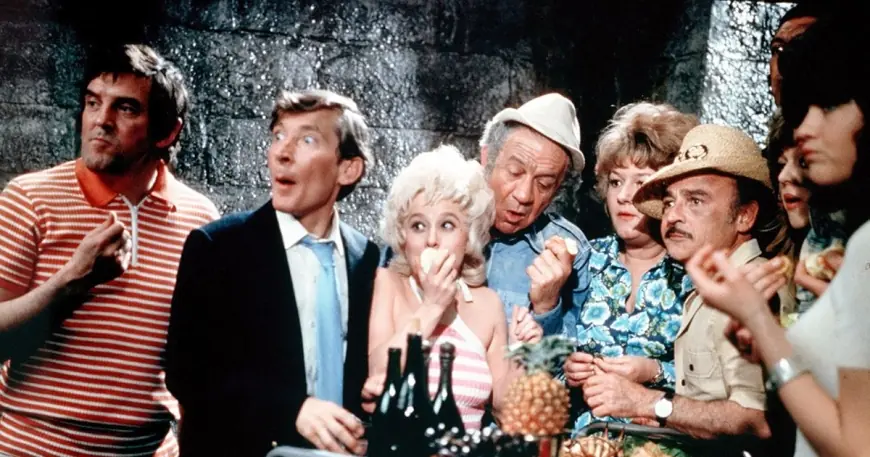
kenneth williams, the actor, comedian and raconteur born on 22 February 1926, is being recalled as a singularly subversive figure who would have turned 100 on Sunday; his mix of erudition and vulgarity, recorded diaries and a contested death in 1988 have kept his name in public conversation.
Kenneth Williams’s comic range and public persona
Williams, born to working-class London parents on 22 February 1926, could play humble or haughty, cheeky or Chekhov and was described as someone who always stole the show. His adenoidal voice was ubiquitous on stage, screen and radio in the second half of the last century, sliding from sandpapery cockney to Sandringham pomp. He called himself a “dried-up prune-like poof” and wrote that “Perhaps it’s my duty to be a sort of mosquito, ” lines that underline a public persona equal parts erudite and deliberately animalistic.
Carry On films, character moments and a final turn
Williams was a mainstay of the Carry On films, appearing in 26 of them, including Carry On Cleo — the film that gave him the line “Infamy, infamy, they’ve all got it in for me!” — and Carry On Camping, in which Barbara Windsor’s bikini top was famously catapulted onto his horrified face during a morning workout. His final contribution to the series came in 1978 in the dismal Carry On Emmannuelle [sic], in which he plays the French ambassador, continually refusing sex with his y
Friends, admirers and the Michael Sheen portrayal
Colleagues and admirers captured Williams’s contradictions: Dame Maggie Smith said he could make a place “suddenly marvellous just by being there, ” Fenella Fielding said “he could be hideous, ” and Gyles Brandreth called him “Outrageous, waspish, wickedly funny, and often wicked simply to be funny. ” At Attitude magazine’s comedy award last year, standup comic Tom Allen used his acceptance speech to single out kenneth williams as “a big hero of mine, ” saying he connected with Williams’s outsiderness and his refusal to fit in. Michael Sheen, who played Williams in the 2006 film Kenneth Williams: Fantabulosa!, argued that Williams’s habit of alternating highbrow chat with bawdy asides gave him a dangerous spontaneity, even saying, “What David Lynch did for America, Kenneth Williams did for Britain, but in the form of light entertainment. ”
Residence, diaries and a blue plaque
Williams lived in Flat 62 on the upper floor of Farley Court, a 1929 apartment building near Madame Tussauds, between 1963 and 1970 while shooting films at Pinewood Studios such as Carry On Cleo, Carry On Up The Khyber and Carry On Camping. A blue plaque was unveiled on 22 February 2014 by his friend Barbara Windsor to mark what would have been his 88th birthday; the plaque is mounted on the London flat where he lived as he rose to national prominence through films and regular slots on the radio programme Round The Horne. In his diary he wrote that he felt “elated” about relocating, noting, “My bedroom looks out over Regent's Park. The trees are turning now and the sight is beautiful. I can see all the traffic twinkling down the Marylebone Rd - It's all so marvellous, I could cry, ” and on another occasion complained about “the nits crowding round outside the waxworks. How I loathe them and Madame Tussaud. ”
Death, estate and donations to animal charities
Williams died in April 1988 at the age of 62; the coroner recorded an open verdict because it could not be established whether he had intentionally taken his own life or had accidentally overdosed on medication prescribed to treat chronic health issues including stomach ulcers and back pain. Friends suggested his death was an accident, saying he would not have died by suicide while his elderly mother was still alive and living next door. After his death he left some of his estate to a close friend and neighbour, Paul Richardson, including diaries and letters, and a Will Trust was arranged to manage annual donations from an estate valued at more than £500, 000. Figures show that in 2024 those donations included £46, 000 each to Guide Dogs For The Blind and Battersea Dogs Home, £34, 500 to the PDSA and £57, 500 to the RNLI.
Williams’s centenary on 22 February — the date he was born in 1926 — is the immediate milestone being noted this week, and the blue plaque at Farley Court remains a physical marker of the life he kept and the diaries he left behind.