
















Woman handed receipt showing £63 quadrillion after Quadrillion Gift Card mix-up in Nottingham

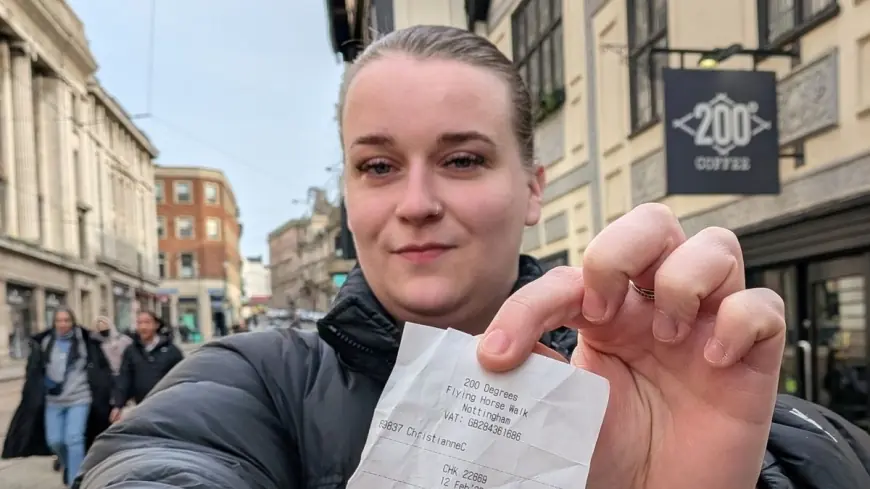
Sophie Downing went in for a matcha latte with a £10 gift card and walked out with a receipt that seemed to show more than £63 quadrillion on the balance — a surreal error that briefly made her, on paper, the “richest” person around. The quadrillion gift card moment matters for anyone who uses or accepts stored-value cards: it highlights how a simple administrative or technical till mistake can create confusing records, strange incentives and social-media attention.
Quadrillion Gift Card glitch through the audience lens: what customers and staff should note first
Here’s the part that matters: customers rely on receipts as a quick confirmation of transactions and balances. In this case, a 29-year-old business owner from Nottingham checked her receipt, shared it with her partner, and treated herself to one more drink — then stopped using the card after seeing the odd balance again. Regular patrons, till operators and managers should view this as a reminder to verify printed balances and to know how the store handles obvious anomalies.
What actually happened at the coffee shop (the essentials)
Sophie Downing intended to buy a matcha latte using what she believed was a £10 gift card at a 200 Degrees branch in Nottingham. After paying, she was handed a receipt showing a remaining balance of more than £63 quadrillion. Staff appeared confused during the transaction, with at least one member saying they had never seen that before. The barista initially gave the unusual receipt to Downing as a keepsake and later provided a correct receipt showing the true gift-card value. Downing used the card a second time, noticed the astronomical figure again, and decided not to keep using it.
Numbers and context that turned this into a viral punchline
- The receipt displayed a remaining balance stated as more than £63 quadrillion.
- Downing is 29 years old and runs a business called Secret Sugar Club, a hair removal service.
- She described enjoying being "the richest woman in the world on paper" while the error lasted and sent the receipt to her partner, who also found it funny.
- Downing said she would have preferred having a £63 quadrillion gift card to spend at the supermarket, but she also said she was never going to take advantage.
How the shop explained the mistake and an unresolved detail
A spokesperson for the coffee chain explained that a technical administrative error occurred when the gift card number — not the actual gift card value — was entered into the wrong part of the till. That mistake produced a receipt suggesting a far higher balance than existed in reality. The customer was charged the correct amount for her purchases and her card retained the correct balance; the first receipt was kept as a souvenir and was later replaced by a correct receipt showing the true value. Separately, one report noted the coffee shop had not publicly acknowledged the mistake, creating a contrast with the chain’s internal explanation.
Practical takeaways for customers, staff and managers
- Check printed receipts when balances look unusual and request a corrected copy if necessary.
- Stores should ensure staff know the difference between a gift card number and a gift-card value field on tills to avoid similar administrative errors.
- Remember that a gift card here could only be spent on coffee and croissants, so the inflated receipt did not represent usable cash for broader purchases.
What’s easy to miss is that the till error did not change what the customer was charged or the real balance on the card — the problem was purely a recorded display error that became a souvenir moment for the customer.
The real question now is whether stores will tweak procedures or till prompts to reduce the odds of a gift card number being mis-entered as a value. If you’re wondering why this keeps coming up: strange receipts circulate fast, and even non-monetary anomalies can cause reputational headaches and customer confusion.