














How Jackie Chan’s long, risky return in The Shadow’s Edge reshapes expectations for modern action

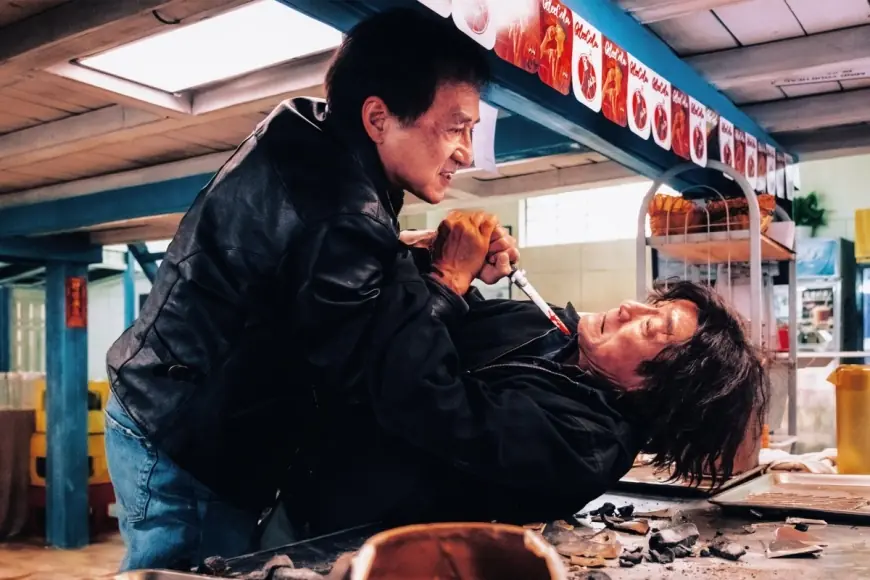
The significance of The Shadow’s Edge isn’t just that it stars jackie chan; it’s that the film deliberately stretches the action template. Clocking in at 142 minutes, director and co-writer Larry Yang asks viewers to tolerate a now-uncommon endurance test for an action crime thriller. That decision — paired with a strong emotional focus on the villain and uneven editing choices — changes how audiences experience the film’s thrills and character work.
Jackie Chan’s role amid emotional stakes and genre stretching
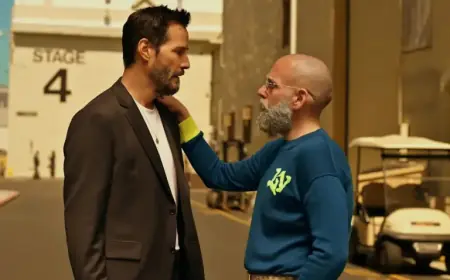
The film centers on Wong, a retired surveillance expert played by Jackie Chan, whose return to police work drives both the plot and the emotional core. More than punch-and-chase, the screenplay gives space to relationships: Wong’s bond with his niece and apprentice, He Quiguo (Guoguo), is a central thread, and the villain receives unusually sympathetic treatment. It's easy to overlook, but the film’s decision to humanize the antagonist alters the usual hero/villain dynamic and asks the audience to invest in quieter, more intimate moments between action set pieces.
- Long runtime: 142 minutes forces sustained engagement rather than rapid-fire excitement.
- Character focus: Wong and Guoguo’s relationship deepens stakes beyond the heist framework.
- Villain complexity: Fu Longsheng (the Shadow) is given emotional weight uncommon for genre antagonists.
- Production choices: the police’s shift away from funding human surveillance toward AI is a plot catalyst that shapes the central mission.
What the film does and how it lands
The Shadow’s Edge, directed and co-written by Larry Yang, tracks Wong as he assembles a surveillance team to track a skilled group of young criminals masterminded by Fu Longsheng, nicknamed the Shadow and played by Tony Leung Ka-fai. Wong and Guoguo at one point pose as neighbours to the Shadow, a stretch that allows the story to mix undercover tension with character study. The film’s emotional beats—particularly the attention paid to the Shadow’s inner life—are credited with producing memorable, affecting moments.
Technically, the picture is a mixed bag. Action sequences often reach exceptionally high peaks, with choreography and set pieces that recall the kinetic intensity found in some of the most visceral genre entries. Yet editing by Zhang Yibo is uneven: where restrained cuts let fights breathe, abrasive, hyperactive editing turns other scenes into disorienting bursts that feel closer to short-form clips than feature-film sequences. These editing choices blunt the impact of otherwise strong action and create a jarring rhythm across the 142-minute span.
On casting and character dynamics, the film leans heavily on the trio of leads to keep the narrative anchored. Guoguo’s arc — a young woman determined to prove herself after losing her father and facing prejudice at work — provides an emotional throughline that complements Wong’s return to surveillance work. The Shadow’s emotional portrayal, shaped by an arthouse-informed performance, makes the antagonist both intimidating and, at moments, sympathetic.
- Implication: Stretching a modern action film to 142 minutes reallocates screen time from pure spectacle to character development, which will polarize viewers.
- Affected groups: action purists, viewers seeking deeper character drama, and audiences sensitive to editing style will experience the film differently.
- Signal to follow: audience tolerance for prolonged tension versus appetite for compact pacing will determine how this film ages in discussions about genre boundaries.
Here’s the part that matters: the movie succeeds when emotional clarity and choreography align, and it falters when editing interrupts that alignment. The real question now is how viewers and critics will weigh those highs against the lows. The Shadow’s Edge is a 2025 action crime thriller that clearly aims to rethink what an action picture can hold; whether that gamble pays off depends on whether the runtime and editing feel purposeful rather than indulgent.
It’s worth noting that, despite its flaws, the film is described as predominantly excellent, largely because the leading performances and some standout action set pieces provide enough momentum to carry the film through its rougher stretches.
The bigger signal here is how filmmakers are willing to bend genre conventions—using length and emotional complexity—to push for a different kind of action film experience.