























2026 Winter Olympics Freestyle Skiing Halfpipe: Alex Ferreira Strikes Gold as Birk Irving and Henry Sildaru Redefine the Podium

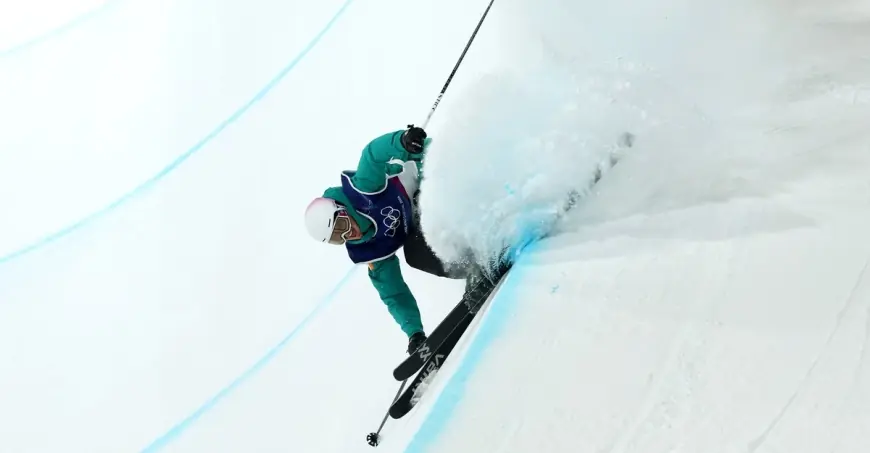
Alex Ferreira delivered the defining men’s freeski halfpipe moment of the 2026 Winter Olympics on Friday, February 20, 2026 ET, landing a late, high-scoring run to take gold in Livigno and complete a rare Olympic medal set across three Games. The final also produced one of the surprise storylines of the freestyle skiing program: Estonia’s Henry Sildaru surged to silver, while U.S. teammate Birk Irving finished just off the podium in fifth in a final where margins were thin and the pressure to “put it down” on a last run decided everything.
What happened in the halfpipe skiing Olympics final
Ferreira’s winning score of 93.75 came on his final run, the classic halfpipe script where an athlete must choose between protecting a good earlier score or swinging for a cleaner, bigger, more technical line. He went for it and was rewarded.
Sildaru posted 93.00 to claim silver in a result that turned heads not because he lacked talent, but because his halfpipe résumé had not pointed to a near-win at this stage. Canada’s Brendan Mackay earned bronze with 91.00, while the battle behind them included a tight group fighting for placements where a single missed grab, a small under-rotation, or a slightly lower amplitude can drop an athlete multiple spots.
Irving, one of the most consistent halfpipe skiers of the last several seasons, ended in fifth after the judges sorted the final scores. For Team USA, it was a podium and a near-podium, underscoring just how deep the discipline has become.
Alex Ferreira skier: gold, legacy, and the Hotdog Hans effect
Ferreira’s Olympic arc matters because it is so cleanly legible: silver in 2018, bronze in 2022, and now gold in 2026. Few athletes stay relevant across that many cycles in a sport where trick progression keeps accelerating and injuries, funding, and form swings routinely cut careers short.
Away from competition, Ferreira is also known for “Hotdog Hans,” a long-running comedic alter ego built around the idea of an unassuming, older skier who suddenly throws down elite halfpipe-level tricks. The character is easy to dismiss as just a joke until you understand the strategic upside: it widened his audience beyond hardcore contest fans, kept him culturally visible between seasons, and gave him a separate lane to be creative without needing every appearance to be a medal bid.
Behind the headline, that matters because modern Olympic stars are no longer evaluated solely on results. They operate in an ecosystem of sponsors, teams, national programs, and federations that all respond to attention. A recognizable persona can translate into stability, which translates into better training resources, better support, and a longer runway to peak at the right time.
Henry Sildaru: the dark-horse silver that reshapes expectations
Sildaru’s silver is the kind of result that forces a reset in how the sport’s competitive map is drawn. Freeski halfpipe has been dominated for years by a tight circle of nations with deep pipelines and frequent contest exposure. When a teenager from a smaller program jumps into medal contention, it signals that access to progression has broadened, and that a single athlete’s multi-discipline ambition can still pay off.
The incentives are complicated. Competing across slopestyle, big air, and halfpipe expands medal chances and brand value, but it also splits training time and increases fatigue and injury risk. Sildaru’s breakthrough suggests that the ceiling is high for athletes willing to embrace that risk, but it also raises the question of sustainability: can an athlete maintain three separate trick toolkits through an entire Olympic cycle and still arrive fresh at the Games?
Birk Irving and the brutal math of a modern halfpipe final
Irving’s fifth-place finish illustrates a truth that’s easy to miss on highlight clips: in a top-tier Olympic halfpipe, the difference between second and fifth can be a fraction of the total run. Athletes are pushed into a narrow corridor where they must deliver maximum difficulty with near-perfect execution, while also hitting the intangible judging levers like amplitude, flow, and variety.
That dynamic changes athlete behavior. It encourages bigger risk on the final run, increases the chance of crashes late in finals, and rewards those who can “upgrade” without losing cleanliness. For teams, it becomes a resource game: who has the coaching, the video analysis, the training pipe access, and the physical therapy support to keep upgrading safely?
What we still don’t know and what to watch next
Several key pieces remain unresolved even with medals decided:
-
Whether Sildaru’s result marks a new consistent contender in halfpipe or a peak-timed performance that will be harder to replicate across seasons
-
How the judging trendlines settle after 2026, especially the balance between raw difficulty and run quality
-
Which athletes choose to specialize more narrowly after seeing the physical toll of a packed freestyle program
-
How national programs respond, including whether more federations invest in dedicated halfpipe development to close the gap
What happens next: realistic scenarios and triggers
-
A new rivalry cycle forms around Ferreira’s gold and the next wave chasing him, triggered by early-season head-to-head finals in the next World Cup circuit
-
Sildaru commits more heavily to halfpipe after the medal, triggered by resource support and a clearer training plan that protects his body
-
Irving rebounds quickly with a technique-focused offseason, triggered by refining execution so upgrades are “bankable” under Olympic pressure
-
The event trends toward even higher difficulty, triggered by athletes successfully landing new combos consistently in competition rather than in training
-
A judging recalibration emphasizes style and flow more, triggered by athlete and coach feedback that the sport is getting too crash-prone
The men’s halfpipe final in 2026 ended with Ferreira on top, but the bigger story is the widening field. When gold is decided on a last run and silver comes from an unexpected place, it’s a signal that the discipline is entering a new, more competitive era.