



















Spencer Jones' Roster Crossroads: What Yankees Decision-Makers and Fans Need to Track

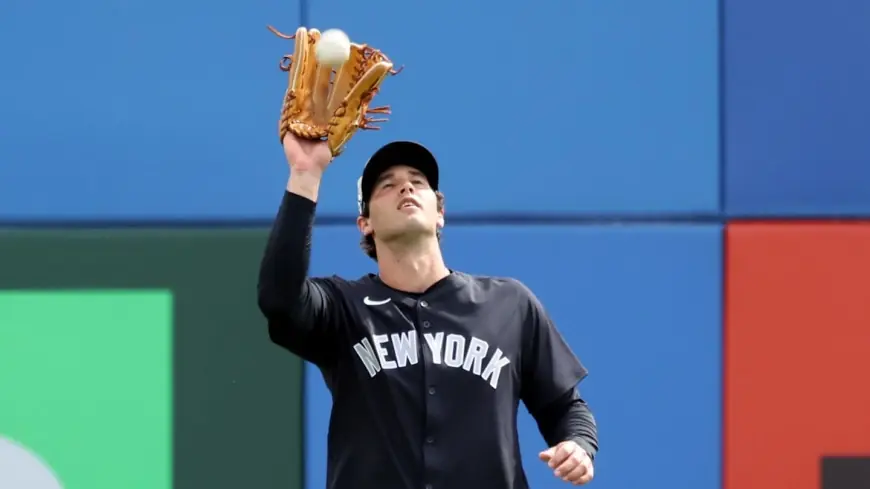
Why this matters for a specific group: For Yankees roster architects and invested fans, spencer jones represents both a tradeable asset and a developmental puzzle. His breakout power-speed season is real, but the club’s recent moves and their depth chart have pushed him toward a minor-league start — a dynamic that affects how the team manages playing time, trade leverage, and fan expectations as the season begins.
Spencer Jones and the choices facing the Yankees' decision-makers
Front-office planners are the first to feel the consequences: a player with 35 home runs and 29 stolen bases between Double-A and Triple-A creates upside and timing questions at once. That combination makes spencer jones attractive both as a near-term roster option and as a bridge to a larger return in trade conversations. Here’s the part that matters for those making roster calls: do you accelerate his path to the big league to plug an outfield need, or keep him in place to preserve trade value while addressing other, clearer needs elsewhere?
Stakeholders affected include the team’s roster decision-makers, other prospects who could move as part of any transaction, and fans tracking playing-time narratives. What’s easy to miss is how a single signing or retention of an established outfielder can cascade into multiple roster choices — effectively shifting whether a top prospect is used as a short-term solution or as long-term currency.
Event details and the performance profile that drives these choices
Key facts shaping the debate: last season, Jones produced 35 home runs and stole 29 bases while spending time at Double-A and Triple-A. Over the combined stint he slashed. 274/. 362/. 571 for an OPS of. 933. That output was punctuated by volatility; in one notable stretch he slashed. 180/. 250/. 306 with an OPS of. 556 across 29 games. He bats left-handed, has played center field in the upper minors, and the organization has been cautious about using him as a trade chip through the offseason.
Organizational moves influenced his immediate placement: with established outfield signings and returning veterans on the depth chart, Jones is expected to begin the season at Triple-A unless injuries open a big-league spot in spring training. If roster health changes, his path can accelerate; if not, he remains a high-upside option still in the minors.
- Stat profile (combined minors last season): 35 home runs; 29 stolen bases;.274/. 362/. 571 slash; OPS. 933.
- Notable slump: 29-game stretch with a. 180/. 250/. 306 line and OPS. 556.
- Bats/Defense: Left-handed hitter; has experience in center field at the upper-minor level.
If you’re wondering why this keeps coming up: teams often weigh immediate roster fits against the chance to trade a prospect when his market value peaks. With Jones’ mix of power and speed — and with organizational signings constraining an immediate opening — the calculus is particularly sharp.
Forward signals that will clarify the path: how the club manages outfield playing time in spring training, whether injuries create openings, and whether front-office discussions shift from patience to maximizing trade return. The real test will be whether the team prioritizes an internal solution for outfield depth this season or treats Jones as high-value currency to address other roster gaps.
Micro timeline: last season — breakout 35-homer/29-steal output across Double-A and Triple-A; midseason slump across a 29-game stretch; offseason organizational choices nudging him toward a Triple-A start.
Writer’s aside: The bigger signal here is that prospect value is rarely static — a single roster move or a short hot streak can materially alter both opportunity and trade leverage.