




















Supreme Court Ruling Overturns Broad Tariffs, Trump Counters with New 10% Global Levy

The Supreme Court struck down the president’s sweeping tariff program, and within hours the president announced a new, across-the-board 10 percent tariff. The twin developments inject fresh uncertainty into trade commitments and federal revenue streams at a moment when markets and lawmakers are still grappling with the fallout.
Supreme Court decision and immediate details
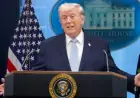
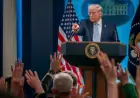
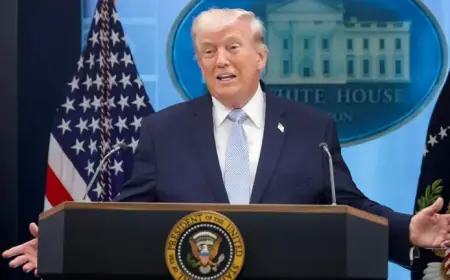
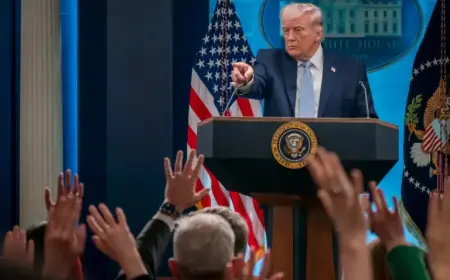
The court, in a 6-to-3 opinion written by Chief Justice John G. Roberts Jr., concluded that the 1977 emergency statute the president had relied on did not authorize unilateral imposition of tariffs. The ruling overturned the earlier use of that authority for duties placed on nearly every U. S. trading partner last year. In response, the president held a news conference at the White House, criticized the justices who ruled against him, and announced a new global tariff of 10 percent to take effect on Tuesday.
Officials cited a different legal pathway in setting the new levies, invoking Section 122 of the 1974 Trade Act—a statutory provision that none of his predecessors had used to impose such a broad tariff. The White House also indicated an intent to employ Section 301 of that act to investigate other countries’ trade practices, a step that could lead to additional measures.
Context and pressure points
The decision marks a direct rebuke of the administration’s preferred legal theory, which had rested on the 1977 emergency statute. Chief Justice Roberts found that the statute does not grant the tariff power the president asserted. The ruling drew support from justices across the ideological spectrum and represented a rare pushback on the administration’s approach to trade authority.
The court’s action immediately called into question a raft of trade agreements reached in recent months. Many of those deals had provisions that set tariffs at roughly 15 to 20 percent in exchange for concessions and investment commitments; the ruling raises questions about whether those negotiated tariff levels will stand under the new legal posture. The decision also spotlighted the fiscal role tariffs had played: duties collected since the start of last year exceed $200 billion, and the courtroom finding suggested a potential multibillion-dollar impact on projected federal receipts.
Immediate impact
Businesses, importers, and trading partners face immediate ambiguity. The administration may be required to refund more than $100 billion in tariff revenue to thousands of importers, a process that Justice Brett M. Kavanaugh warned in his dissent could become a substantial "mess. " At the same time, the reimposition of a uniform 10 percent tariff under a different statutory authority shifts the terrain for companies that had already adjusted to prior duties and those that rely on predictable tariff rules in negotiated trade agreements.
Legislators from both parties reacted strongly. A small but vocal group of congressional Republicans joined Democrats in welcoming the court’s check on executive authority, and one senior Republican leader said the decision made clear that circumventing Congress on trade was unlawful.
What makes this notable is how swiftly the executive branch moved to recreate a tariff regime after the judiciary curtailed its chosen tool: the move exposed both the limits of legal strategies grounded in emergency statutes and the administration’s willingness to seek alternate statutory paths to the same policy ends.
Forward outlook
The new 10 percent tariff is scheduled to start on Tuesday, a near-term milestone that will test how quickly the administration can operationalize the different legal basis it cited. Parallel steps are expected under Section 301 investigations, which could produce follow-on measures but whose outcomes remain to be determined.
Several consequential processes now loom: administration plans to administer the new tariffs, potential refund mechanisms for previously collected duties, and how trading partners will respond to both the court’s ruling and the newly announced duties. The matter remains under review in terms of implementation details for refunds and the full budgetary accounting of lost or shifted revenue, but the confirmed next steps are the initiation of the 10 percent tariff and the opening of Section 301 inquiries. The broader implication is that U. S. trade policy will continue to pivot on legal interpretations and rapid executive moves, leaving businesses and markets to absorb rapid changes over the coming weeks.