























Mens Curling Final: From a Glasgow pub table to a 102-year chase — why Britain’s quartet could finally turn silver into gold

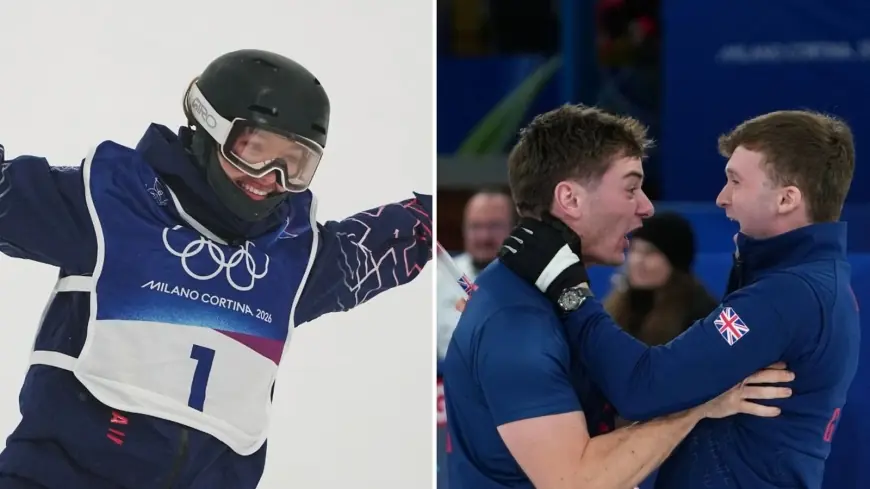
The Mens Curling Final matters because it is the capstone of a near-decade project that began with four young Scots writing “win Olympic gold” at the top of their list. This match is not just another medal opportunity — it offers a chance to upgrade a Beijing silver into the country’s first men’s Olympic curling gold since 1924, after a season of global dominance that included multiple world and European crowns and a record run of Grand Slam wins.
Mens Curling Final as the endpoint of a long, deliberate build
What led to this moment is almost as important as the final itself. The quartet coalesced nearly nine years ago and insisted on entering elite competition only as a unit. That unity, combined with complementary roles — a skip renowned for shotmaking, a tactically sharp third, and two sweepers credited with reinventing their role — produced sustained success: two World Championship titles, additional European crowns and an unprecedented run of Grand Slam victories.
They arrived at these Games with a reputation as the team to beat, but also carrying the memory of a silver from Beijing. Failing to dominate the round-robin here left qualification temporarily out of their hands, making the knockout stage feel like a return to business rather than an extension of invincibility.
How the semi-final shaped the path to the final and what Saturday will demand
The semi-final against the previously unbeaten Swiss side became the hinge that sent them into the Mens Curling Final. Britain won that match 8-5, turning a tense contest with a key steal in the sixth end and a remarkable geometric shot by the skip in the seventh that upended the Swiss scoring plan. Two points in the next end put Britain ahead going into the 10th, and the team closed out the victory to secure at least a silver and a shot at gold against Canada.
The semi was watched by millions and drew 3. 4 million viewers at its peak, underscoring how the quartet has captured wider public attention. The Swiss had entered knockout play unbeaten, and the British performance required both high-pressure shotmaking and scrappy defensive play — the sort of combination that will be tested again against a familiar, elite Canadian opponent.
Here’s the part that matters for the players and national expectations: converting this moment into gold would not only complete a stated nine-year ambition but also rewrite a 102-year gap in British men’s Olympic curling history.
- The team’s origin story matters: they set Olympic gold as an explicit goal when they formed and refused to split up to chase individual placements.
- Stamina under pressure has been decisive — the semi featured a comeback sequence of a stolen end and a high-difficulty shot that shifted momentum.
- Public attention has spiked; the semi drew a peak audience of 3. 4 million viewers, highlighting national interest and added expectation.
- Signals that will confirm a shift: repeating elite shotmaking in the final and neutralizing Canada’s strategic response will be telling.
What’s easy to miss is how much of the story is continuity: the same four players who took silver at the prior Games stuck together, refined roles, and accumulated titles that now feed confidence on the Olympic stage. The real test will be whether that cumulative experience can overcome the pressure of a gold-medal match and the tactical countermeasures an opponent like Canada will bring.
If you’re wondering why this keeps coming up, it’s because the match combines a long-planned team ambition, recent global dominance, and a single-elimination moment that can either validate that project or leave the narrative as another near miss. Saturday’s Mens Curling Final will answer which of those outcomes holds true.