





















Samuel Alito in focus after tariff dissent and new court conflict checks

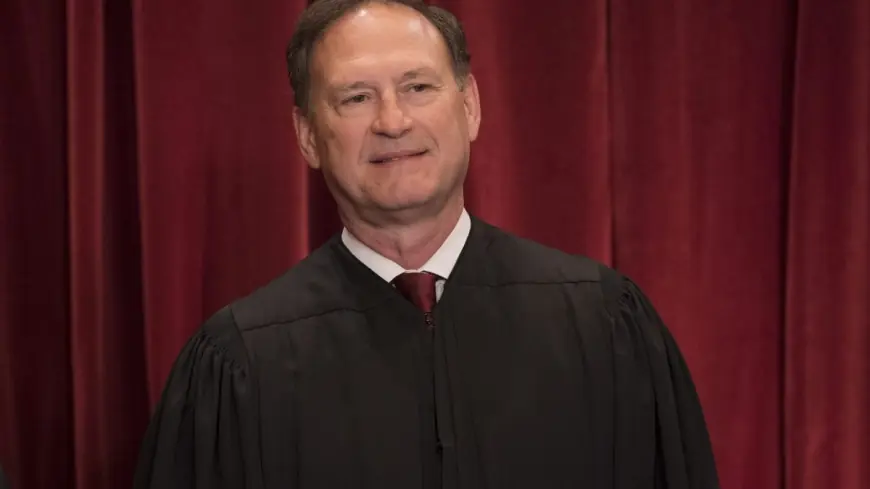
Justice Samuel Alito is drawing renewed attention after a 6–3 Supreme Court decision on Friday, Feb. 20, 2026 (ET), that struck down President Donald Trump’s global tariffs under an emergency-powers theory—an outcome that immediately rippled through markets and politics. Alito joined the three-justice dissent, positioning him at the center of a fast-moving debate over presidential authority, trade policy, and how the Court manages public confidence amid intensifying scrutiny.
The tariff ruling that put Alito back in the spotlight
The Supreme Court’s decision invalidated the administration’s tariff program, concluding the statute invoked did not authorize broad, across-the-board import levies. The ruling arrived with a clear split: six justices in the majority and three in dissent.
Alito’s dissent matters for two reasons. First, the case sits at the intersection of national economic policy and separation-of-powers questions that recur across the Court’s docket. Second, the politics around tariffs are unusually combustible, and the public narrative tends to focus on who backed which side—especially when the ruling carries immediate economic consequences.
While the majority opinion set the binding rule, the dissent serves as a roadmap for future arguments. If the administration—or a future one—tries a narrower approach, or returns with a differently framed case, the dissent can shape how litigants build the next challenge and how lower courts interpret the boundaries of executive power.
Fallout: politics and markets move quickly
The ruling triggered a rapid, public response from the White House and prominent allies, with criticism aimed at the justices who formed the majority and praise directed at the dissenters. That reaction is part of what keeps Alito’s role prominent: dissents become political talking points even though they do not control the outcome.
Markets also responded. Tariff policy can change input costs, supply chains, and corporate margins, so the legal durability of a tariff regime matters to investors. The post-decision rally in major indexes underscored that the ruling was widely interpreted as reducing near-term uncertainty for companies exposed to global trade. The link between a judicial decision and same-day market action is rare enough that it tends to amplify attention on the justices involved.
A new layer: automated conflict screening at the Court
The Alito spotlight is also shaped by a broader, ongoing conversation about ethics and recusal at the Supreme Court. This week, the Court disclosed it will begin using an automated in-house process to flag potential conflicts tied to stock ownership and other recusal-related issues.
That change is not targeted at any single justice, but the timing matters: public concerns about ethics practices have been persistent, and any operational shift can be read as the institution signaling it is tightening internal controls. For Alito, whose public profile has already been shaped by ethics-related controversies in recent years, a formalized screening tool adds context to how future recusal questions may be framed—especially in high-stakes cases with political or financial overtones.
Public appearances and the role of a justice off the bench
In the same week as the tariff decision, Alito also maintained a public-facing schedule that included at least one recorded talk focused on constitutional history and civil liberties themes. These appearances typically avoid pending cases, but they still influence how a justice is perceived: as a legal thinker, as an institutional voice, and as a figure who helps define what the Court represents to the public.
For critics, public visibility can invite questions about impartiality or messaging. For supporters, it can reinforce confidence in a justice’s interpretive approach. Either way, public appearances often become part of the broader narrative—especially when a justice is already in the news for a closely watched dissent.
What to watch next on Alito’s docket
Over the next several weeks, Alito’s influence will be measured less by headlines and more by how the Court’s work proceeds: how major opinions are assigned, how sharply written separate writings become, and whether new procedural tools (like automated conflict checks) meaningfully alter recusal practices.
Here’s a short timeline of the key recent developments that are shaping the current moment:
| Date (ET) | Development | Why it matters |
|---|---|---|
| Feb. 20, 2026 | Supreme Court strikes down the administration’s tariffs; Alito dissents | Sets limits on emergency-powers trade actions; dissent sketches an alternative view |
| Feb. 18, 2026 | Court outlines automated conflict-flagging process | Signals institutional effort to strengthen screening and avoid avoidable recusal issues |
| Feb. 19, 2026 | Recorded public remarks by Alito | Adds to public profile and interpretive framing amid heightened attention |
Forward look: the institution as much as the individual
Alito’s latest moment in the spotlight illustrates how the Supreme Court’s legitimacy debates now travel alongside its legal debates. A major separation-of-powers ruling can elevate a dissent into a political symbol, while internal policy changes on conflict screening can become a second storyline running in parallel.
The next test will be whether the tariff decision is treated as a one-off statutory interpretation fight—or as a broader marker of how willing the Court is to police the outer bounds of executive economic power. In either scenario, Alito’s written record in dissents and concurrences is likely to remain a key reference point for the next wave of litigation and legislative maneuvering.