
























2026 Winter Olympics Women Single Skating Free Skating: Alysa Liu Claims Gold as Kaori Sakamoto, Ami Nakai Round Out the Podium

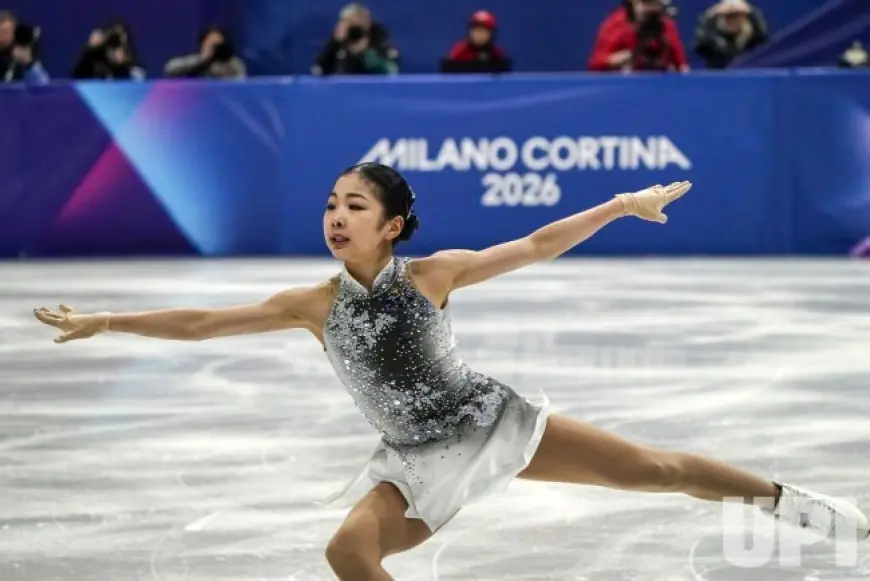
The 2026 Winter Olympics women single skating free skating delivered the decisive swing in the women’s figure skating medals, with Alysa Liu turning a third-place short program into Olympic gold on Thursday, February 19. Liu’s free skate topped the segment and lifted her to 226.79 points overall, edging Japan’s Kaori Sakamoto at 224.90, while Japan’s Ami Nakai took bronze with 219.16.
For searchers seeing both spellings, the Olympic champion’s name is Alysa Liu, not “Alyssa Liu.”
Women’s free skate results and women’s figure skating medals
Final standings in women’s singles figure skating at the Olympics 2026 were decided by the combined short program and women’s free skate:
-
Gold: Alysa Liu, 226.79 total, free skate rank 1
-
Silver: Kaori Sakamoto, 224.90 total, free skate rank 2
-
Bronze: Ami Nakai, 219.16 total, free skate rank 9
Just off the podium, Mone Chiba finished fourth with 217.88. Amber Glenn climbed to fifth overall at 214.91, and Adeliia Petrosian placed sixth at 214.53.
In the women’s free skate segment itself, Liu led with 150.20. Sakamoto followed at 147.67, and Glenn posted 147.52.
Figure skating schedule and results: when the women’s free skate happened in ET
The women’s single skating free skating began Thursday, February 19 at 1:00 pm ET. It was the final, medal-deciding segment after the women’s short program earlier in the week, completing the women’s figure skating final in Milano Cortina 2026.
Behind the headline: why this final flipped so dramatically
The headline outcome is straightforward: Liu was the best scorer in the women’s free skate and the most complete competitor across both segments. The deeper story is about incentives and risk tolerance.
Ami Nakai entered the free skating with the short program lead, a position that can quietly become a trap. Leading after the short program raises the cost of “playing not to lose,” because a cautious layout can invite a technically confident chaser to overwhelm you on base value and late-program momentum. Nakai’s bronze illustrates the knife-edge reality of modern women’s single skating: you can win the short program and still have very little margin once the longer program begins.
For Kaori Sakamoto, the incentive was different. As the veteran in the final group, her path to gold relied on pressure-proof skating and the advantage of consistently strong program components. Her silver suggests she did enough to contend but not quite enough to hold off the highest-scoring free skate of the night.
For Alysa Liu, the incentive was pure upside. Sitting third after the short program, she didn’t need to protect a lead; she needed to build one. That mindset often produces the cleanest “attack” skating—committed entries, confident landings, and fewer small hesitations that can bleed points through execution.
What this means for U.S. women’s figure skating and Olympic history
Liu’s win ends a long wait for a U.S. women’s singles Olympic gold medal, the first since Sarah Hughes in 2002. It also resets the modern reference points for American women’s Olympic success: the last U.S. women’s singles Olympic medal before this was Sasha Cohen’s silver in 2006, and now the U.S. has a champion again in the sport’s most scrutinized event.
It’s also notable that the U.S. placed three women in the top 12 overall, with Glenn fifth and Isabeau Levito 12th. That depth matters beyond headlines, because it shapes funding, assignments, and the next quad’s development pipeline.
Medal count Olympics 2026: how the wider table looks after the women’s final
As of Friday, February 20, 2026 in ET, the overall medal picture remains tight at the top. Norway leads with 16 gold and 34 total medals. Host Italy sits second with 9 gold and 26 total. The United States is third with 7 gold and 24 total, while Japan has 5 gold and 22 total. In practical terms, one marquee event win—like women’s singles figure skating—can change the tone of a country’s Games even if it moves the table only by a single medal.
What we still don’t know and what happens next
Even with official women’s figure skating results posted, a few meaningful unknowns linger:
-
Technical reviews can still sharpen narratives: which elements gained the most through execution, and where points were lost through rotation calls or edge attention.
-
Program strategy questions remain: whether today’s winning balance of difficulty and cleanliness becomes the template heading into the next season.
Next steps to watch, realistically:
-
Liu’s immediate path: whether she continues into post-Games competitions or pivots to managing the spotlight and workload that come with Olympic gold.
-
Japan’s response: with three skaters in the top four, Japan’s system remains dominant; the question is how it recalibrates to turn depth into more top-step finishes.
-
The U.S. internal shakeout: Glenn’s strong free skate score and the broader team depth will influence who gets built around for the next major championships.
The women’s free skate Olympics 2026 final didn’t just award medals—it clarified the sport’s current truth: in women’s single skating, the title goes to the skater who can combine ambition with precision when the pressure peaks, and on Thursday in ET, that was Alysa Liu.