


















isabeau levito sharpens routines in practice ahead of Olympic free skate

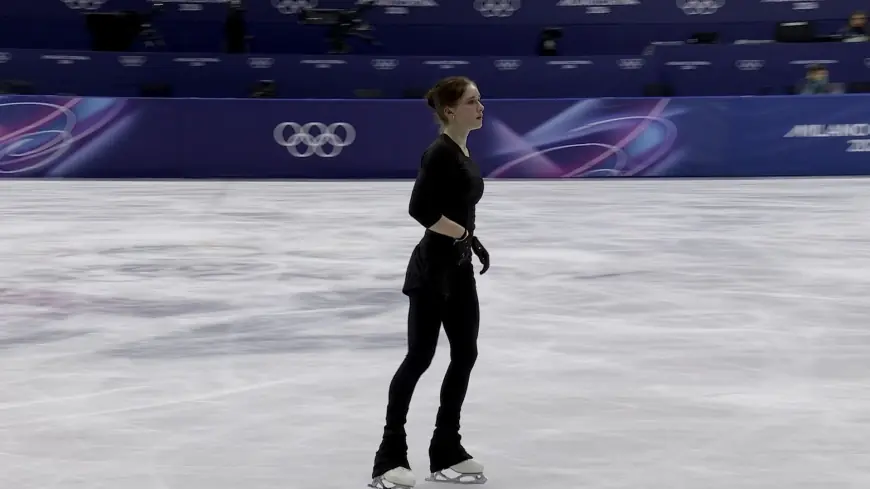
Isabeau Levito spent a focused session on the ice as she prepares for the free skate at the 2026 Winter Games, reinforcing the elements that could decide her Olympic debut. The 18-year-old American appears intent on translating practice polish into competition points as the women's event moves into its decisive phase.
Practice session under the Milan lights
On Feb. 11, 2026 (ET), Levito took to the ice at the Milano Ice Skating Arena for a visible, businesslike practice ahead of her free skate. Skaters and coaches used the session to refine entries, exits and the transitions that underpin higher technical scores, and Levito’s body language suggested an athlete working through precise details rather than experimenting with new material.
Coaching staff were active at the rinkside while Levito cycled through warmups and run-throughs of key sequences. Observers noted a calm focus as she skated elements in sequence, an encouraging sign for a skater making her first Olympic appearance. The practice provided the final chance to settle timing and adjustments before the competition’s high-stakes segment.
Olympic debut and medal context
Levito, 18, is making her Olympic debut in the women's singles after contributing to her nation's performance in the team competition. The American team has already captured gold in the team event, and attention now turns to individual medals, where the United States has not reached the podium in women's singles since 2006 and has not won Olympic gold in that discipline since 2002.
Levito will skate alongside teammates who are familiar faces on the circuit; the trio—often grouped together by fans—brings a mix of technical ambition and stylistic variety. The women's short program began on Feb. 17, 2026 (ET), setting the stage for the free skate where overall placements will be decided. For Levito, the Olympic stage represents both the culmination of a rapid rise through junior and senior ranks and a test of composure under intense scrutiny.
Outlook for the free skate and what to watch
Judges will weigh technical difficulty, execution and program components, so consistency in practice can be as valuable as the difficulty of planned elements. Levito’s recent sessions emphasized clean transitions and strong edges—areas that can lift program component scores even if a jump under-rotates or lands slightly short.
Expect the focus to be on how she manages the opening minutes of her free skate, where early momentum often dictates the rest of a program. Execution on jump layouts, the polish of spins and the storytelling in transitions will define her score potential. Mental resilience will also be tested: an Olympic free skate demands the same physical choreography with an elevated emotional intensity.
For fans and pundits, Levito’s free skate is both an individual moment and part of a broader American push to reclaim a place on the women’s singles podium. Whether she can harness the calm observed in practice and convert it into a peak performance on competition night will determine if she helps close a 20-plus-year medal drought for U. S. women in individual Olympic figure skating.
The coming days will reveal whether the measured work on the Milan ice translates into a breakthrough performance when the free skate runs are completed.