

























‘Love Story’ Premiere Rekindles Debate Over JFK Jr., Carolyn Bessette and Calvin Klein’s New Direction

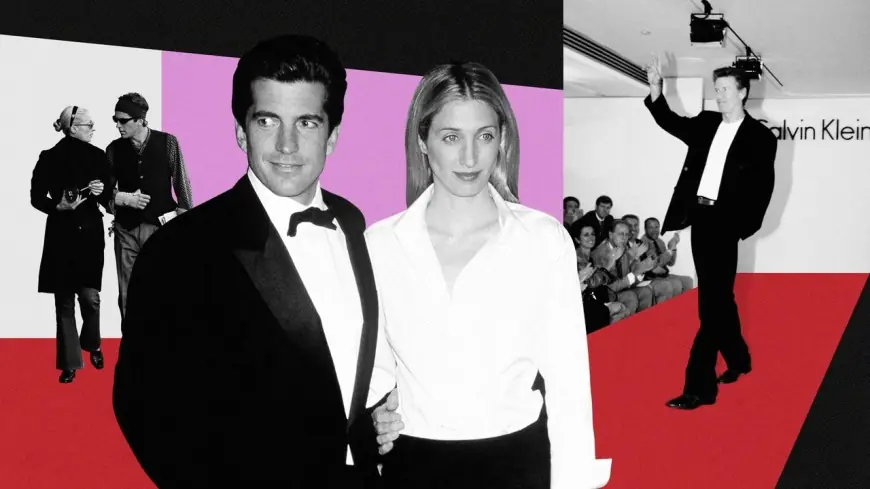
The debut of Ryan Murphy’s Love Story has refocused attention on jfk jr and Carolyn Bessette’s brief, mythologized life together — and arrived at an awkward cultural moment: a major Calvin Klein runway opted to revisit the brand’s earlier era rather than lean into the 1990s minimalism the series so vividly evokes. The result is a tangled conversation about taste, ownership of memory and how the past gets repackaged for present-day audiences.
Fashion and Franchise: When Costume Meets the Runway
The show’s costume work has been widely noted for capturing the spare, reticent elegance that made Carolyn Bessette a style touchstone: pencil skirts, simple white shirts, and the quiet luxury associated with 1990s Calvin Klein. That alignment felt almost cinematic when the first episodes arrived the night before a major fashion presentation — yet the brand’s creative director chose to look earlier in the label’s history, mining late 1970s and early 1980s references rather than nodding directly to Bessette’s signature silhouette.
On the runway, the collection pivoted between exploratory tailoring and moments that flirted with subversion: suiting with sleeves removed to emphasize biceps, backless formalwear that revealed underlayers, and a racer-back white dress trimmed with delicate beadwork. The mix landed as tentative rather than declarative, a reminder that reinterpreting an iconic house means deciding which era to champion. For viewers freshly reminded of Bessette’s aesthetic, the choice felt like a missed opportunity to reclaim the brand’s 1990s identity rather than reframe it.
Ownership, Objection and Historical Detail
The series has also reopened questions about who gets to tell a family story. Members of the Kennedy circle have pushed back, calling the dramatization a problematic commercial use of private grief. One heir publicly objected to the project, calling it a grotesque exploitation of a family tragedy — a charge that ignited a sharp back-and-forth over access, memory and motive. The exchange underscored how fraught dramatizing recent history can be when living relatives remain gatekeepers of personal recollections.
Beyond the ethical argument, the show’s early episodes have prompted viewers to scrutinize specific moments portrayed on screen. The narrative includes scenes that triangulate well-known anecdotes — a teenage bike theft in Central Park, a celebrity visitation at a wake, and an image of Jacqueline Kennedy Onassis burning private correspondence. Those portrayals have been examined closely, and while dramatizations compress and reshape events for storytelling, several of the series’ vignettes draw on documented episodes from the family’s public and private history. The depiction of letter-burning, for example, aligns with longstanding accounts of measures taken to manage sensitive correspondence.
Timing and release patterns have heightened the cultural ripple: multiple episodes premiered on Feb. 12, and subsequent installments are slated to air weekly on Thursdays at 9 ET. That cadence gives critics and viewers time to parse costume choices, line-by-line dialogue and the broader question of whether a streaming-era anthology can responsibly reanimate living memory without distorting it.
What It Means for jfk jr’s Legacy
At the center of the debate is jfk jr himself — a figure whose public persona has long been filtered through myth and media. The series reintroduces him to younger audiences, but the framing matters: is this a revival that deepens understanding of a complicated life, or a glossy reconstruction that flattens nuance for dramatic effect? Early reactions suggest both impulses are in play. Costume accuracy and set detail lend authenticity, while select narrative choices and high-profile disputes over the project’s ethics create an uneasy aftertaste.
Whether Love Story ultimately deepens or distorts the Kennedy family’s public story will depend on how subsequent episodes balance theatrical compression with historical restraint — and on how cultural institutions and designers reckon with the demand to honor, rather than commodify, a style and a life that continue to captivate.