

























Scientists Turn Discovery of Roman Self-Healing Concrete into New Business Venture

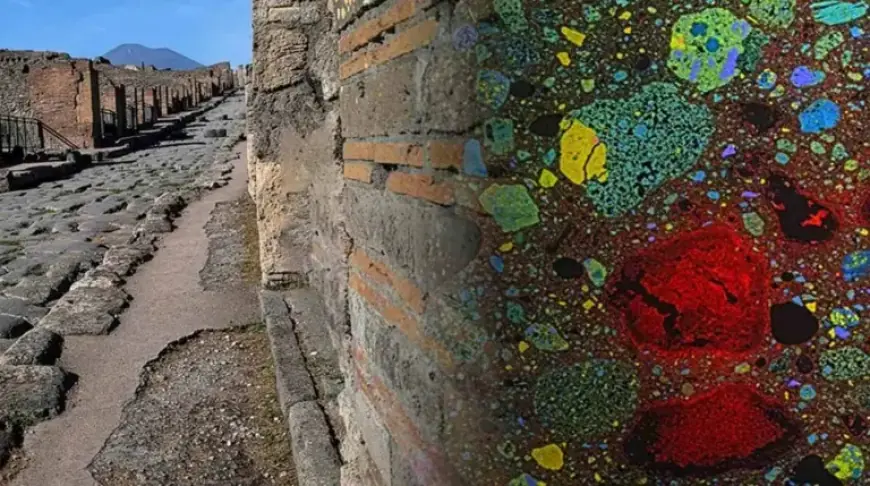
A scientific breakthrough regarding Rome’s self-healing concrete has led to the launch of a new business. MIT Associate Professor Admir Masic has confirmed theories about ancient concrete at a construction site in Pompeii, demonstrating the incredible durability of Roman technology.
Exploring Roman Concrete’s Longevity
Concrete was fundamental to the architectural advancements of ancient Rome, enabling the construction of monumental structures like buildings, aqueducts, and bridges. Many of these edifices have stood the test of time, remaining functional nearly 2,000 years later.
Scientific Findings
In 2023, Masic and his team published a pivotal paper on Roman concrete. Their research indicated that the ancient Romans mixed lime fragments with volcanic ash and other components. The addition of water initiates a “hot-mixing” process, generating heat that traps reactive lime in solid clasts that help heal the concrete when cracks occur.
- Key Components of Roman Concrete:
- Lime fragments
- Volcanic ash (including pumice)
- Other dry ingredients
- Self-Healing Properties:
- Redissolving lime fills cracks
- Long-term durability
Contradictions with Historical Texts
Interestingly, Masic’s findings contrast with the writings of Vitruvius, a renowned Roman architect. Vitruvius described a different mixing process involving water and lime, established in the first century BCE. Masic respects these historical texts but suggests that they may have been misinterpreted.
After conducting further analysis at Pompeii, where many structures were preserved by the eruption of Mount Vesuvius in 79 CE, Masic’s team confirmed the use of the hot-mixing method. They examined various construction materials, revealing a diverse mix of reactive minerals in the volcanic ash.
Commercial Ventures Inspired by Ancient Techniques
Motivated by the implications of this research, Masic has founded a company named DMAT. This initiative aims to create modern concrete that replicates the self-healing capabilities of its ancient counterpart.
Masic emphasizes the significance of ancient Roman concrete: it has survived geological events and environmental degradation over centuries. The goal is to develop materials that mimic these ancient processes, leading to longer-lasting and more sustainable building materials.
Conclusion: A New Era for Concrete
Through this innovative approach, Masic and his colleagues are not only honoring the engineering brilliance of ancient Rome but are also paving the way for a new generation of construction materials. Their work highlights the relevance of ancient wisdom in contemporary applications, offering a blueprint for sustainable building practices.