
























Australia Labeled as Dumping Ground for Slave-Made Goods

Australia faces increasing scrutiny over its handling of slavery in supply chains, as concerns mount that the nation is becoming a dumping ground for slave-made goods. Chris Evans, the country’s anti-slavery commissioner, has emphasized the need for stringent legislation mandating that Australian companies take concrete measures against slavery.
Call for Stronger Anti-Slavery Laws
Evans criticized existing laws for allowing a lenient “tick-a-box” approach to compliance. Currently, companies are only required to disclose slavery risks without facing penalties for non-compliance. This has led to widespread neglect of serious issues surrounding forced labor and debt bondage.
He warned that Australia is lagging behind other markets, particularly in Europe, where stronger anti-slavery laws are in place. This gap could jeopardize Australia’s trade with nations that prioritize ethical supply chains.
Growing International Pressure
- Countries like the UK and New Zealand are tightening their own regulations.
- Evans emphasized the urgency for Australia to implement changes to avoid falling behind.
Amid these calls for action, allegations of forced labor have surfaced concerning two major Australian companies: glove manufacturer Ansell and retail giant Kmart. Both are under scrutiny for their supply chains linked to exploitative labor practices.
Ansell and Kmart Under Investigation
Ansell’s Complicated Supply Chain Issues
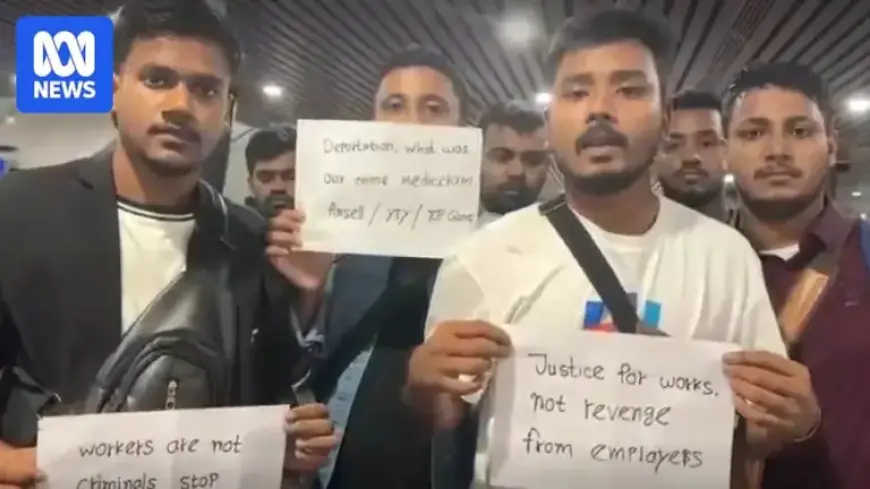
In recent years, Ansell has faced controversy over its relationship with Mediceram, a Malaysian supplier accused of exploiting Bangladeshi workers. Allegations include wage theft and forced labor, with workers reportedly incurring significant fees to secure their jobs.
In a troubling turn, it was revealed that 200 Bangladeshi nationals experienced systemic forced labor and were subjected to debt bondage due to recruitment costs. Activist Andy Hall has been vocal about the alleged abuses, insisting that Ansell has not conducted effective due diligence before partnering with Mediceram.
Kmart’s Legal Challenges
Kmart is also facing legal action from the Australian Uyghur Tangritagh Women’s Association (AUTWA). The group is demanding transparency regarding the potential use of Uyghur slave labor in its supply chain. This action highlights concerns regarding the sourcing of products from Xinjiang, an area notorious for labor camp abuses.
- Concerns about forced labor in Uyghur camps have been extensive since 2017.
- The AUTWA is seeking critical documents related to Kmart’s suppliers linked to this issue.
Consequences of Inaction
Evans has called for legislative changes that would require companies to perform due diligence in their supply chains. He suggests categorizing industries and products as high-risk, which would necessitate additional scrutiny when importing goods.
The current voluntary nature of compliance leaves many workers vulnerable and enables companies to escape accountability. Evans asserts that firms should be held responsible for ensuring that their operations do not involve exploitation.
The Impact of Consumer Choices
Experts warn consumers must be aware of the implications of purchasing excessively cheap products, which often reflect exploitative labor practices. Fiona David, a slavery specialist, urged the public to reflect on the price of goods and consider potential hidden costs associated with human rights violations in production.
The Need for Border Controls
Evans and other advocates are advocating for better border controls to prevent slave-made goods from entering Australia. Currently, such regulations are not being prioritized in government reviews, but the conversation continues as the issue grows in urgency.
As the pressure mounts on both Australian businesses and lawmakers, it becomes increasingly clear that immediate action is required to combat modern slavery effectively.