
























Ford Urges Trump Administration to Approve Chinese EV Technology in US

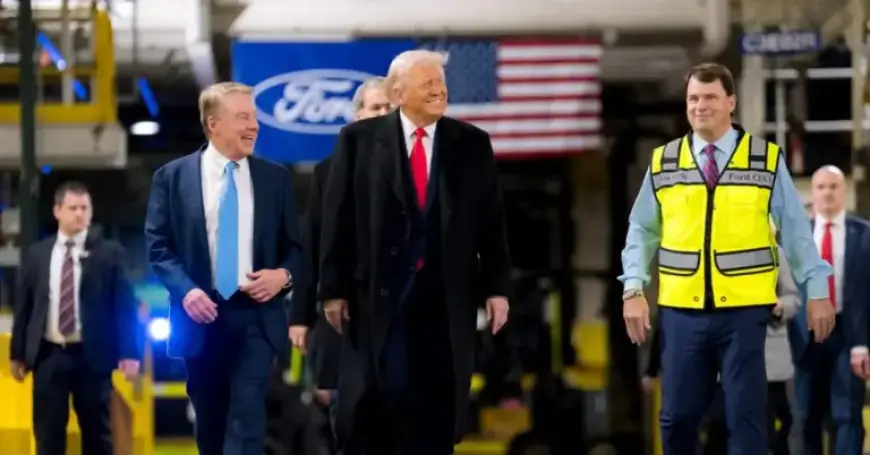
Ford CEO Jim Farley recently engaged in discussions with the Trump Administration regarding the potential collaboration with Chinese electric vehicle (EV) manufacturers in the United States. The talks highlight a significant shift in perspective, given that China is a leading player in the global EV market.
Ford’s Interest in Chinese EV Technology
China registered nearly 3 million battery electric vehicles (BEVs) in Q4 2025, marking a 16% year-over-year increase and pushing global EV sales past 4 million units for the first time. As a result, major automakers, including Ford, are seeking to leverage China’s expertise in electric vehicle technology.
Discussions with the Trump Administration
During an event at the Detroit Auto Show, Farley spoke with key officials, including US Trade Representative Jamieson Greer and Transportation Secretary Sean Duffy. He proposed that US carmakers partner with Chinese EV brands for joint ventures in the US, enabling local production and technology sharing.
While these discussions remain in preliminary phases, they mark a potential pivot in US automotive policy. President Trump recently suggested allowing Chinese automakers to establish manufacturing plants in the US, contingent on them hiring American workers.
Potential Partnerships with BYD and Geely
Ford is reportedly exploring partnerships with several prominent Chinese EV manufacturers, including BYD and Geely. A relationship with BYD could focus on acquiring batteries for hybrid vehicles, while a partnership with Geely may involve utilizing an underutilized Ford plant in Europe and sharing technologies.
- BYD: Potential battery supply for hybrid models.
- Geely: Sharing resources and technology in Europe.
Impact on the US Market
Allowing Chinese EV makers to enter the US market is viewed as a “watershed moment” that could radically change the landscape. However, significant opposition exists. General Motors (GM) has expressed concerns, warning that such a move could jeopardize US market shares and disrupt the supply chain.
Despite these challenges, momentum is building as Ford prepares to launch its Universal EV Platform. This initiative will introduce lower-cost lithium iron phosphate (LFP) batteries in Michigan by late 2023, with plans for an affordable electric pickup by 2027.
The Competitive Landscape
Ford’s global sales in 2025 were approximately 4.4 million vehicles, trailing BYD’s impressive figure of over 4.6 million units sold. Other global OEMs like Toyota and Kia have found success in China through strategic partnerships with local brands.
As Ford navigates the complexities of the evolving automotive landscape, the question remains: Will the Trump administration support these partnerships with Chinese EV manufacturers? The outcome could influence the future of electric vehicles in the US.