






















Rubio Urges Europe: Be Strong Partners, Not Vassals to Washington

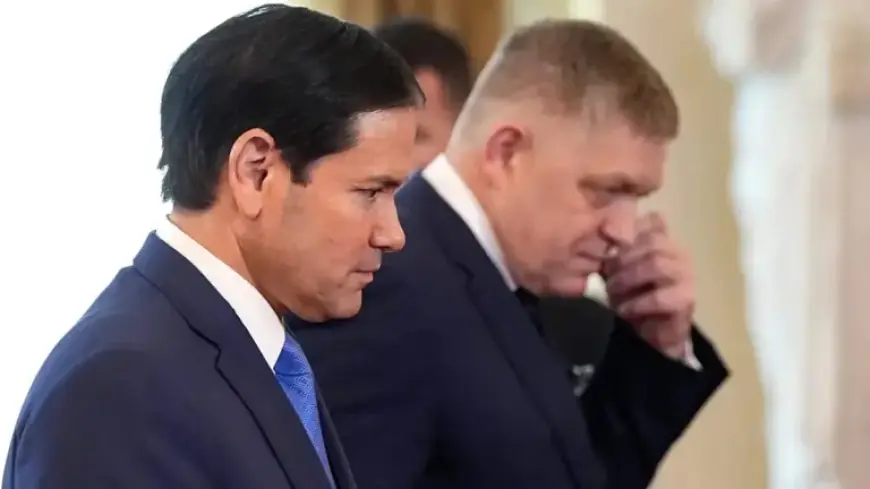
U.S. Secretary of State Marco Rubio recently addressed the need for Europe to strengthen its independence from Washington. In a press conference in Bratislava, he emphasized that the U.S. does not want European allies to be vassals. Rubio made these comments following a meeting with Slovak Prime Minister Robert Fico.
Details of Rubio’s European Tour
Rubio commenced his two-state tour of Central Europe after attending the Munich Security Conference. Slovakia served as his initial destination, with Hungary next on the agenda. In Hungary, he is expected to meet with Prime Minister Viktor Orbán to discuss bilateral relations.
Key Statements on NATO and Cooperation
- Rubio reassured that the U.S. is not withdrawing from NATO but may reposition a limited number of troops in Europe.
- He highlighted that stronger European nations lead to a stronger NATO alliance.
- “We want to be your partner,” Rubio stated, aiming for collaborative efforts with Europe.
Concerns Over Military Involvement
During the press conference, Rubio responded to concerns over recent troop movements, saying, “We’re not leaving NATO.” He also addressed Slovakia’s criticism of the U.S. military actions in Venezuela, reiterating the U.S. national interests in such operations.
Fico’s Views on EU Policies
Prime Minister Robert Fico criticized the European Union’s continued support for Ukraine, which marks its fourth year of conflict. He noted Slovakia, Hungary, and the Czech Republic abstained from a €90 billion EU support package for Ukraine in December.
- Fico expressed his fears that ongoing financial support would prolong the war and result in more casualties.
- He warned against phasing out Russian fossil fuel imports, which he claimed would harm Slovakia’s energy stability.
Future Meetings and Strategic Alliances
Rubio’s next stop is Hungary, where discussions with Orbán will center on energy partnerships and the global peace process. Orbán has been a significant Trump supporter and is a critic of the EU. He was the first European leader to join Trump’s Board of Peace initiative.
These interactions highlight the evolving dynamics in U.S.-European relations and the differing perspectives on security and energy policies. As political landscapes shift in Europe, key leaders will continue to navigate these complex issues.