























Jacob Elordi’s Heathcliff Fuels Erotic, Polarizing Wuthering Heights Adaptation

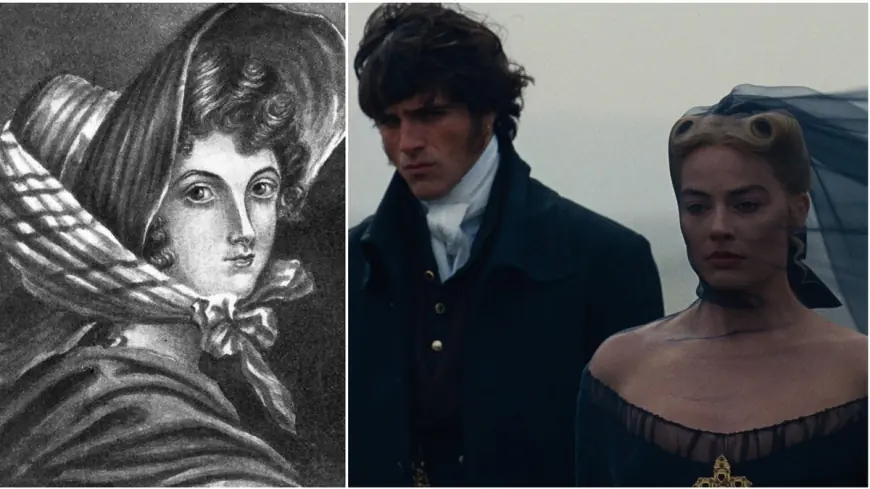
Jacob Elordi’s brooding turn as Heathcliff drives Emerald Fennell’s new Wuthering Heights into distinctly carnal territory, producing a film that has been praised for its magnetism and criticized for what some see as a loss of the novel’s strangest, most restorative elements. The production’s publicity and the film itself both leaned hard into physical obsession, while a structural choice to end the story early closes the door on the book’s multi-generational arc.
A performance built on physicality and chemistry
Elordi’s Heathcliff is cinematic in the most obvious sense: driven by bodily intensity, frequently shirt-drenched and given moments designed to shock and titillate. The film foregrounds tactile images — a character licking a flesh-toned wall, breathless make-out sessions in the rain, and scenes that push into light BDSM and voyeurism. Those choices place the body at the center of the storytelling and make Elordi’s chemistry with his co-star a primary selling point.
Beyond spectacle, the performance contains quieter beats that undercut the hyper-sexualized moments: small, intimate gestures that suggest possessiveness and care as much as lust. These interstices are where the leads sustain audience investment, turning what could be mere provocation into something more emotionally tethered. For viewers drawn to visceral representations of obsession, Elordi’s Heathcliff delivers; for others, the emphasis on flesh over family complicates the film’s claim to be a full adaptation of the novel’s sweep.
Ending early: excising the next generation
One of the most consequential changes here is narrative economy. The adaptation stops roughly midway through the book, closing on the death of the central heroine and a scene that implies a miscarriage rather than the birth and legacy that follow in the original text. By excising the second half, the film deliberately removes the next generation’s role in reckoning with inherited trauma and in redeeming — or at least tempering — the devastation wrought by the central couple.
That truncation has practical and artistic effects. Practically, it compresses a sprawling, multi-decade novel into a single two-and-a-half-hour experience focused tightly on the Heathcliff–Catherine relationship. Artistically, it changes the story’s moral architecture: where the book balances destructive obsession with the possibility of healing across time, the film leaves viewers mostly in the thrall of dissolution. That makes for a more immediate, erotic movie but a less restorative one.
Critical split: passion praised, strangeness questioned
Reception has been sharply divided. Many responses single out the pair’s palpable magnetism and the director’s willingness to lean into erotic shock as the film’s biggest assets. The publicity campaign amplified that impression, feeding narratives of “mutual obsession” with staged details that kept attention on the leads’ offscreen rapport as well as their on-camera intimacy.
Others have pushed back on what they see as a loss of the novel’s essential peculiarities. For critics who contend that the original’s enduring power comes from its mix of savagery and eventual intergenerational reckoning, the film’s choice to prioritize physical lust and to stop short of the book’s late redemption leaves it feeling incomplete — a passionate fragment rather than a full, strange love story.
Whatever side viewers take, one thing is clear: Jacob Elordi’s Heathcliff is hard to ignore. The portrayal anchors a film that has made deliberate, unmistakable choices about tone and focus — choices that will likely keep conversations about this adaptation alive for months, especially among viewers who care as much about fidelity to the source as they do about cinematic provocation.