





















Marco Rubio Urges U.S.-Europe Unity While Defending Trump-Era Policies at Munich Security Conference

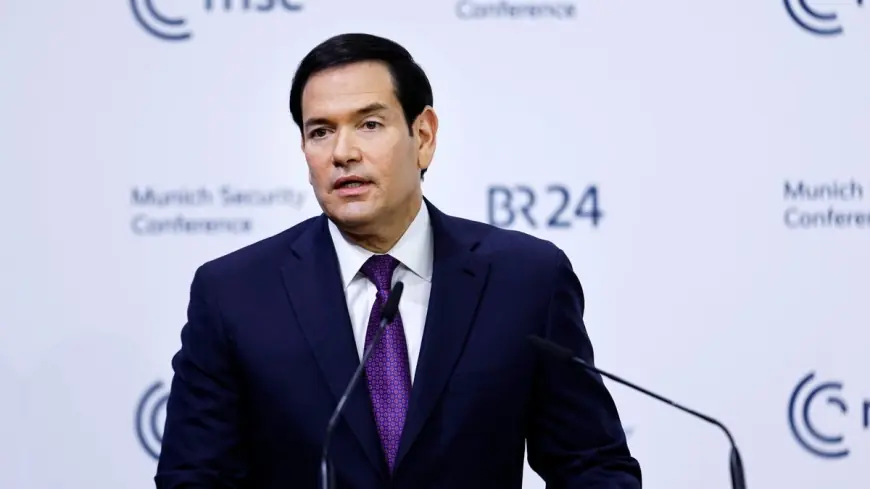
Munich — On February 14, 2026 (ET), Secretary of State Marco Rubio delivered a keynote appeal for transatlantic solidarity while outlining forceful critiques of globalization, international institutions and environmental policy that underscore ongoing friction between Washington and many European capitals.
Appeal to shared history and a call for a stronger alliance
Rubio opened his keynote by stressing the deep cultural and historical ties that bind the United States and Europe, saying the two shores "belong together" and invoking shared heritage and common sacrifices. His message sought to reassure European leaders who have grown anxious about an unpredictable U. S. foreign policy. Conference organizers and attendees received the remarks as a measured bid to shore up transatlantic cooperation after a turbulent period of strains.
He urged renewed investment by both sides in deterrence and collective defense, endorsing the longstanding principle that Europe should shoulder more of its security burden while insisting that the Atlantic partnership remain the cornerstone of Western stability. Rubio framed stronger ties as mutually beneficial amid global strategic competition and ongoing conflict in Eastern Europe.
Defending divisive policies: institutions, trade and migration
Despite the opening overture, Rubio used much of his address to defend policy positions closely associated with the prior administration, drawing criticism from some quarters of the hall. He attacked what he described as the excesses of globalization, singled out open-border policies and unfettered free trade as contributors to "deindustrialization, " and raised alarm about mass migration reshaping domestic politics in both the United States and Europe.
Rubio also mounted a sharp critique of the United Nations, declaring the body "has no answers and has played virtually no role" on some of the most urgent global issues. He framed that critique as a rationale for more assertive unilateral action by the United States in certain theaters, even praising past unilateral military moves in Latin America and the Middle East as necessary tools of national interest.
On climate and emissions policy, Rubio voiced clear skepticism about measures aimed at rapid decarbonization, arguing such approaches can weaken industrial capacity and harm working communities. That stance underscores a recurring ideological gap between his approach and many European leaders who view aggressive climate action as integral to security and economic modernization.
European reactions and the broader strategic calculus
European leaders at the conference signaled mixed reactions. Senior officials described Rubio's affirmations of shared bonds as welcome, even as they registered concern over his criticisms of multilateral institutions and his backing of policies that have previously strained relationships with allies. The conference chair characterized the speech as a moment of reassurance for attendees navigating an uncertain Atlantic partnership.
Speakers on the European side reiterated commitments to build a more autonomous defense posture and urged their partners to align on burden-sharing. That push for greater European strategic independence is driven not only by demands for higher defense spending but also by a desire among some capitals to hedge against abrupt policy swings in Washington.
Rubio’s address offered a snapshot of a broader dilemma: a desire to preserve the Atlantic alliance’s core while simultaneously pushing policies that many allies find unsettling. As transatlantic leaders continue their post-conference assessments, the challenge will be translating shared rhetoric about unity into policies that reconcile divergent views on trade, climate, migration and multilateralism.