

























Shock on the Ice: Malinin’s Collapse Hands Gold to Shaidorov in 2026 Winter Olympics Men’s Figure Skating

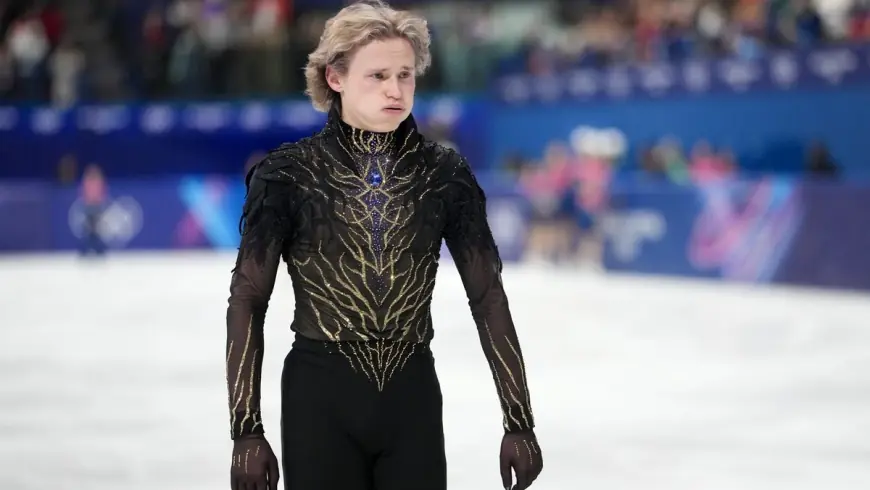
Ilia Malinin entered the 2026 Winter Olympics men figure skating final as the overwhelming favorite, but an error-strewn free skate on Feb. 13, 2026 (ET) saw him tumble out of medal contention. In a dramatic reversal, Mikhail Shaidorov surged from fifth after the short program to claim gold, with Yuma Kagiyama taking silver and Shun Sato capturing bronze.
The free skate that changed everything
The long program began with promise for Malinin, who landed a quad flip and earned one of the highest component marks early in the skate. What unfolded next, however, was uncharacteristic: a popped quad axel attempt that became a single axel, a downgraded quad loop, and two falls that all but erased his short-program advantage. He finished eighth overall with 264. 49 points — well below his personal best in prior competition.
Shaidorov’s steady climb to gold
Mikhail Shaidorov produced a composed and technically strong free skate that vaulted him from fifth into first place with a total of 291. 58 points. His performance combined clean jump executions with solid components, and the scoreboard reflected both technical courage and composure under pressure. The victory marks a milestone: the country earned its first Olympic men’s figure skating gold and only its second Winter Games gold since competing independently in the 1990s.
Podium finishers and scoring snapshot
Japan earned two spots on the podium. Yuma Kagiyama, who had an uneven long program, held together enough of his free skate to secure silver with 280. 06 points — his second consecutive Olympic silver in the event. Shun Sato completed the podium with a bronze-medal total of 274. 90 points. The gap between Shaidorov and the rest reflected both his quality and the costly mistakes by several top contenders in the long program.
What the result means for Malinin
Malinin called the result crushing in the immediate aftermath, saying simply, “I blew it. ” The 21-year-old had been widely viewed as the era’s dominant skater, famous for pushing technical boundaries — including the quad axel in training and competition. His first Olympic experience, though, underscored how the added pressure of the Games can disrupt even the most confident competitors. He does leave Milan-Cortina with an Olympic team gold to his name, but the free skate will be parsed and studied by the athlete and his coaching team in the months ahead.
Pressure, risk and the modern men’s field
This event illustrated two realities of elite figure skating today: the technical ceiling keeps rising, and so does the margin for catastrophic error. Attempts at ultra-difficult elements can deliver historic rewards or devastating point losses if they fail. The competition also offered a reminder that Olympic pressure is a distinct animal; performances that seem achievable in other championships can unravel on the sport’s biggest stage.
Looking ahead
The men’s field in 2026 showcased depth and volatility. Shaidorov’s breakthrough will alter the landscape, while Japan’s young contenders reaffirmed their resilience. For Malinin, the setback is a sharp lesson but not necessarily an endpoint. At 21, he has time to recalibrate technical strategy and mental preparation. The coming season and the world championships will offer the first clues about how he responds to this defining moment.
The men's free skate in Milan will be remembered not only for the upset on the scoreboard but for the stark illustration of how Olympic pressure can reshape expectations in an instant. The sport moves forward — propelled by risk, redemption and the relentless pursuit of perfection.