

























SWAT Team Activity in the Nancy Guthrie Case Signals a Sharper Turn in a Fast-Moving Missing-Person Investigation

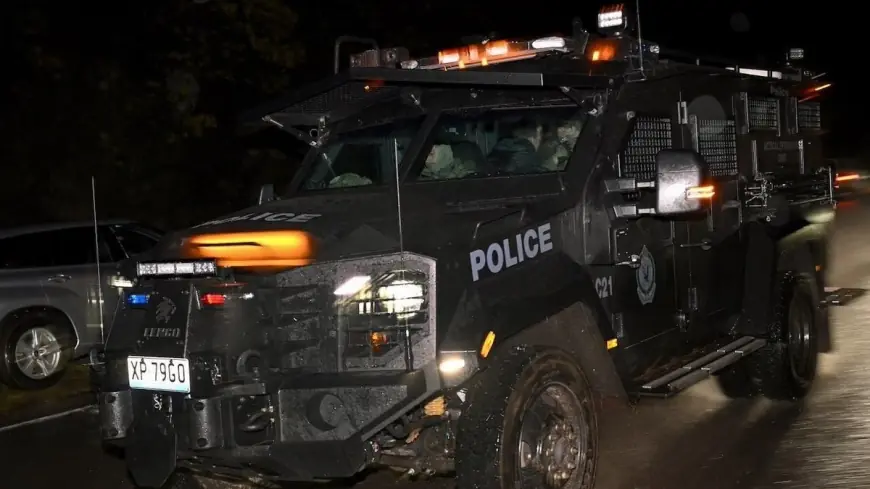
A late-night SWAT operation near the Tucson-area neighborhood where Nancy Guthrie disappeared is reshaping the trajectory of a case that has already drawn intense public attention. The law enforcement presence, described as heavy and highly coordinated, unfolded Friday night, February 13, 2026 ET, as investigators pursued new leads tied to the disappearance of the 84-year-old mother of morning television host Savannah Guthrie.
Authorities have said only that the activity is connected to the ongoing investigation and that federal partners are involved. Reports of multiple people being detained during the operation have added urgency, but officials have not publicly confirmed whether any detainees are suspects or whether arrests have been made.
What happened during the SWAT team operation
The SWAT response centered on a residence not far from the area where Nancy Guthrie was last known to be at home. Alongside tactical units, forensic personnel were observed on scene, suggesting investigators were not only securing a location but also collecting potential evidence.
This kind of deployment typically indicates one of two things: either investigators believed there was a meaningful chance of encountering an armed or dangerous person, or they needed a controlled environment to execute a search tied to sensitive evidence, timelines, or digital leads. In either case, the operational posture signals escalation from broad canvassing to more targeted enforcement steps.
Behind the headline: why the case intensified now
The incentives driving the current phase are clear. When a vulnerable person goes missing and investigators see signs that point away from a voluntary departure, time becomes the central pressure point. Each day without verified contact increases the risk of harm and raises public and institutional stakes for rapid resolution.
Several dynamics converge here:
Context
Investigators have been treating this as more than a routine missing-person case. The public posture has emphasized evidence review, neighborhood video analysis, and coordination across agencies, all of which tends to happen when a case is viewed as potentially criminal and time-sensitive.
Incentives
For law enforcement, a SWAT-backed search helps reduce risk during a high-stakes warrant execution and preserves the integrity of evidence collection. For potential witnesses, the visibility of a large operation can loosen information that people hesitated to share earlier. For anyone involved in wrongdoing, that same visibility raises the cost of staying quiet or staying local.
Stakeholders
Nancy Guthrie’s family has the most immediate stake: safety, privacy, and answers. Local residents face disruption and fear, especially if the investigation suggests a threat in the area. Investigators carry reputational exposure in a case that is now widely followed, where every official statement is scrutinized for signals of progress.
What we still don’t know
Even with the visible surge in activity, the public is missing several key pieces that will determine how to interpret the SWAT operation:
-
Whether the detained individuals are witnesses, persons of interest, or unrelated to the core events
-
Whether investigators recovered physical evidence during the search that meaningfully changes the timeline
-
Whether there is a single suspect theory or multiple competing theories being tested in parallel
-
Whether investigators believe Nancy Guthrie is being held somewhere, moved across jurisdictions, or harmed soon after the disappearance
-
Whether any communications tied to the case are authentic, misleading, or part of a broader effort to delay detection
It’s also not publicly clear how much of the investigation hinges on forensic results versus tip-driven leads. That distinction matters because tip-led operations can be fast and fluid, while forensic-led developments often move slower but can lock a case into a more definitive direction.
Second-order effects: what this could change beyond the case itself
A high-profile missing-person investigation can shift local behavior quickly. Neighborhoods become more cautious, businesses see attention they did not ask for, and innocent people near the investigation can become targets of online speculation. A SWAT operation can heighten that effect, creating a perception that danger is immediate even when officials have not said so.
There’s also a policy ripple: when a case reaches this level of attention, agencies often receive additional funding and staffing support, but they also face pressure to release details earlier than they normally would. That can be a problem if premature disclosure risks spooking a suspect or contaminating witness testimony.
What happens next: plausible scenarios and triggers
-
Evidence-driven pivot
If forensic teams recovered items that connect directly to Nancy Guthrie or a specific suspect, investigators may move quickly to seek charges. Trigger: confirmation of a strong physical link, such as DNA, trace evidence, or verified location data. -
Detentions lead to releases
If detainees were held for questioning but not tied to the underlying disappearance, the case may return to broader searching and interviewing. Trigger: lack of corroboration across timelines, devices, and witness statements. -
A widening jurisdictional search
Federal involvement often points to the possibility of cross-jurisdiction movement or digital evidence with broader reach. Trigger: data indicating travel, communications, or financial activity outside the immediate area. -
Public-facing update with limited details
Investigators may provide a short update to curb rumors while withholding operational specifics. Trigger: intense public speculation following the SWAT presence. -
Additional targeted searches
If the operation was one piece of a larger enforcement plan, more searches could follow quickly. Trigger: information gained during the initial search that identifies secondary locations or associates.
Why it matters
The SWAT team appearance is not just a dramatic visual. It’s a marker that investigators believe the case has reached a point where controlled, higher-risk action is justified, either to protect officers and the public or to preserve fragile evidence. For the family and the community, it can be read as a sign of momentum, but not yet of resolution.
Until officials confirm what was found and why the operation occurred, the most responsible interpretation is narrow: the investigation has intensified, key leads are being tested, and the case is moving from broad inquiry toward targeted action.