






















New Zealand vs South Africa: Markram opts to bowl as early seam threat tests Blackcaps

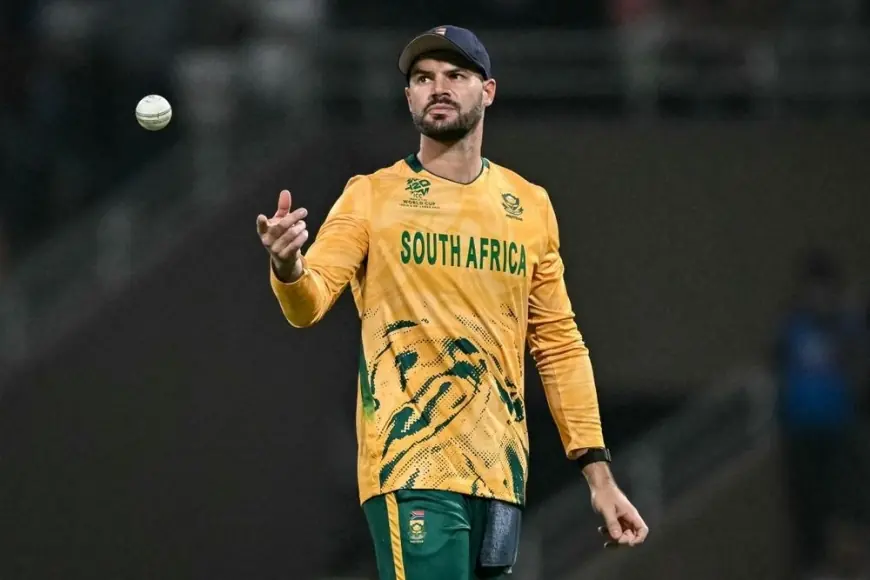
South Africa captain Aiden Markram won the toss and elected to bowl on a bright day at the Narendra Modi Stadium in Ahmedabad, setting up a high-stakes T20 World Cup Group clash. The decision ushered in an opening phase dominated by pace, with the Proteas' seamers probing for edges and New Zealand's top order looking to steady the innings.
Toss and team news
Markram's side made one change to the XI that survived a dramatic double super over earlier in the tournament, bringing seamer Corbin Bosch into the attack in place of a specialist spinner. New Zealand fielded an unchanged line-up that combined experience and explosive intent: Tim Seifert (wicketkeeper), Finn Allen, Rachin Ravindra, Glenn Phillips, Daryl Mitchell, Mark Chapman, Mitchell Santner (captain), James Neesham, Matt Henry, Lockie Ferguson and Jacob Duffy. The match was scheduled to get underway at 8: 30 a. m. ET.
Early exchanges: seamers set the tone
South Africa opened with Lungi Ngidi, who immediately tested Tim Seifert with pace and bounce. Seifert offered an expansive drive that flew to the boundary but also nicked a couple of deliveries, inviting sharp work in the cordon. Kagiso Rabada followed in the second over, and the Proteas continued to hunt for edges, probing lines outside off stump and forcing the Blackcaps to manufacture singles rather than free-flowing shots.
Those opening overs established the narrative: disciplined, hard lengths and angled seam movement that kept New Zealand’s power hitters in check. Finn Allen rotated the strike when possible, but scoring remained cautious as South Africa leveraged the new ball and the pace of their quicks.
Key performers and moments
Tim Seifert's early boundary was one of the standout early moments — a big swing that found the rope — but it was his two edges that underlined the effectiveness of the Proteas' seam plan. Fielders in the deep chased down potential fours, and substitutes sprinted to cut off would-be boundaries, squeezing the scoring rate in the opening powerplay.
On the bowling front, Ngidi and Rabada tested a variety of lengths and angles. The inclusion of Bosch has added another pace option to the attack, supplying zip in the middle overs and the ability to exploit any seam movement as the ball softened. New Zealand's bowlers, led by Ferguson and Henry, remained ready to strike back, while Santner's role with the ball and in the middle order offered the Blackcaps flexibility as the contest unfolded.
Markram: focus inward, not on external angles
Markram was at pains to downplay distractions around the contest, insisting the Proteas' concern lies with self-improvement rather than off-field chatter. He noted that former staff links give opponents insight, but his emphasis was unambiguous: the team is intent on getting closer to its best and trusting performance to determine the result.
"We actually haven't thought about that. He'll know all of us pretty well... We are at a stage now as a team where I still don't think we are quite near our best, so a lot of the focus is there, " Markram said, framing the match as another step in a process rather than a moment to get drawn into narratives about coaching familiarity or advantage.
Group picture and what’s next
Both teams head into this fixture on the back of wins over Afghanistan, results that have tightened the contest for qualification from the group. With the Super Eight spots on the line, momentum from a disciplined bowling performance or an aggressive chase will be decisive. For New Zealand, steadying the top order and getting Santner to control the middle overs will be key. For South Africa, the task is to maintain the early pressure, rotate the ball well and strike when the fielding restrictions ease.
As the match progresses, the battle between New Zealand’s attacking intent and South Africa’s disciplined seam attack promises to be the defining duel of the afternoon — a contest that could shape both teams’ paths through the tournament.