
























Nancy Guthrie update today: SWAT activity near southern Arizona properties as investigators detain multiple people, but missing 84-year-old still not found

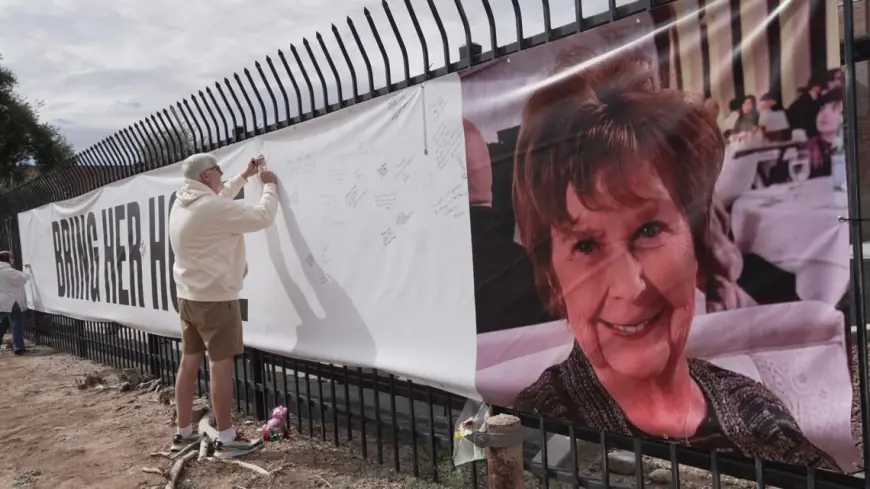
The search for Nancy Guthrie took another high-intensity turn late Friday, February 13, 2026, Eastern Time, when heavily armed tactical teams and forensic vehicles converged near properties tied to the ongoing investigation into her disappearance. Authorities have not announced that Guthrie has been found, and as of Saturday, February 14, 2026, ET, she remains missing.
Guthrie, 84, vanished in early February from her home in the Tucson area, setting off a rapidly expanding investigation that now spans neighborhood canvasses, forensic testing, and repeated calls for the public to share any relevant video or sightings. The case has drawn national attention in part because her daughter is a well-known television host, but the underlying facts remain stark: an elderly woman with medical needs disappeared under circumstances investigators have described as suspicious and potentially violent.
What happened in the latest Nancy Guthrie news update
Investigators focused Friday night on activity near residences in southern Arizona, including areas that have come up repeatedly in public chatter such as Rio Rico and Marana. Law enforcement blocked off road access in at least one location and deployed forensic units consistent with evidence processing rather than a simple welfare check.
Multiple individuals were detained during the operation, but officials have not publicly identified them or explained whether they are witnesses, persons of interest, or potential suspects. That gap is fueling speculation online, including claims circulating about specific names. At this stage, those identity claims are not confirmed in official public statements, and treating them as fact risks misdirecting attention and harassing uninvolved people.
Separately, investigators have continued working through a large volume of tips and digital evidence linked to the area around Guthrie’s home, including doorbell-camera activity and neighborhood surveillance footage.
Behind the headline: why the case escalated into SWAT and forensics
Tactical deployments typically happen for a few reasons: a credible risk of armed resistance, intelligence suggesting a suspect may be inside a location, or a need to control a scene quickly to preserve evidence. Forensics vehicles point to another priority: locking down a location long enough to process DNA, trace evidence, and digital devices without contamination.
The incentives for authorities are clear. In a high-profile missing-person case, speed matters, but so does accuracy. A rushed arrest that fails in court can permanently damage the case and reduce the odds of finding the missing person. At the same time, public pressure increases with every day that passes, especially when the person missing is elderly and dependent on daily medication. That combination often produces a visible surge in activity as investigators push on multiple leads at once.
Who the stakeholders are, and what they want right now
-
Family and close friends want one thing first: a confirmed location and safe recovery, or failing that, definitive answers.
-
Investigators want reliable, court-ready evidence. That means verifying timelines, separating real tips from noise, and mapping digital footprints to physical movement.
-
The public wants clarity, but the attention can cut both ways. It can generate valuable leads, and it can also amplify false claims that distract from the search.
-
Online opportunists often exploit cases like this by impersonating officials, creating fake fundraisers, or circulating “breaking news” that is simply made up.
What we still don’t know
Several key questions remain unanswered publicly:
-
Whether the detentions are directly connected to Guthrie’s disappearance or represent a parallel lead that still needs verification.
-
Whether the investigation is treating this primarily as kidnapping, burglary gone wrong, or another form of targeted harm.
-
Whether any ransom communications are authentic or part of a hoax cycle that sometimes attaches itself to major cases.
-
Whether there is a confirmed suspect description that is consistent across all evidence sources, rather than a composite built from partial footage.
Until officials release a clearer narrative, it is possible for multiple theories to circulate at once. That is exactly when misinformation spreads fastest.
Second-order effects: how the “breaking news” cycle can hurt a search
The most damaging pattern in missing-person cases is a feedback loop where viral speculation becomes “common knowledge.” Once that happens, witnesses can unconsciously reshape what they saw to fit the story they keep reading, and tip lines get flooded with repetitive, low-quality reports.
Another ripple effect is misidentification. When social media fixates on a named “suspect” without confirmation, it can lead to harassment, vigilantism, or destroyed reputations that later become legal landmines for the investigation itself.
What happens next: realistic scenarios and triggers
-
Targeted search warrants and evidence releases
Trigger: investigators confirm a location is materially relevant, such as a device, vehicle, or DNA link. -
Public briefing clarifying the detentions
Trigger: officials determine the legal status of those held and whether charges are warranted. -
Expanded ground search and re-canvass of nearby corridors
Trigger: a credible sighting, a vehicle lead, or a verified digital location ping. -
A focused request for specific video windows
Trigger: investigators narrow the timeline and ask residents or businesses for footage from exact hours. -
A pivot to longer-term investigative steps
Trigger: two weeks pass without recovery, moving the case toward deeper forensic work, financial tracing, and interview sequencing.
For now, the most accurate “Nancy Guthrie update today” is also the hardest: there has been intensified law enforcement activity and multiple detentions, but she has not been publicly confirmed found as of February 14, 2026, ET. The next decisive shift will likely come from a single verified piece of evidence that turns a busy investigation into a clear, testable timeline.