














JFK Jr. and Carolyn Bessette return to the spotlight with a new series and a fresh fashion auction

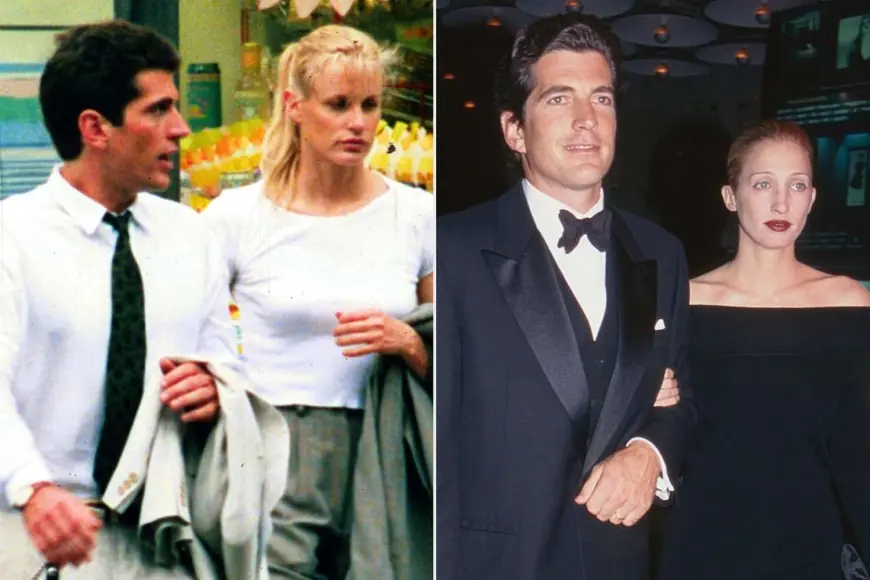
A new wave of attention is sweeping back toward John F. Kennedy Jr. and Carolyn Bessette-Kennedy this month, driven by a dramatized limited series that debuted on Thursday, Feb. 12, 2026, and an auction of fashion items tied to Bessette-Kennedy that opened in New York with bidding scheduled to close Tuesday, March 3, 2026 (ET). Together, the projects have reignited familiar debates: what the public is owed from a private relationship, who gets to tell the story, and how far “icon” culture can go before it turns into exploitation.
A dramatized series reopens old questions
The new limited series focuses on the couple’s relationship arc—from their early courtship and the intense tabloid pressure to their secret wedding and the strain of living under constant attention. It arrived with immediate buzz and renewed scrutiny because it dramatizes real people who died in 1999 and whose families are still very much present.
The production has also stirred criticism tied to consultation: some public voices close to the broader Kennedy orbit have argued that dramatizing the couple without family involvement risks flattening them into costumes and headlines. Supporters counter that the story has long been part of American pop culture, and that retelling it with care can challenge some of the harsher narratives that followed Bessette-Kennedy in the late 1990s.
What’s clear in 2026 is that the story still lands as a pressure-cooker parable: fame, surveillance, and the way public fascination can turn a relationship into a national Rorschach test.
The fashion auction, and the “provenance” problem
At the same time, a collection of 25 pieces associated with Bessette-Kennedy has been put up for auction in Manhattan, with a public exhibition component. The sale leans into her enduring reputation for minimal, sharply tailored 1990s style—camel coats, clean lines, and a kind of deliberate restraint that still shapes fashion mood boards decades later.
But the auction also highlights a recurring tension in celebrity memorabilia: provenance.
A portion of the items is described as directly traceable to Bessette-Kennedy through a close personal connection. The remainder comes from a private collector with a story of secondary-market acquisition, and those pieces are described with less certainty. That split has become part of the news hook—because “Bessette-Kennedy style” has become so valuable, the line between authentic wardrobe artifacts and look-alike curation matters to buyers and to the broader cultural conversation.
Why Bessette-Kennedy’s image still resonates
Bessette-Kennedy’s influence has endured because it sits at the intersection of glamour and refusal. Her public life offered few intentional “performances” in the modern influencer sense—no direct branding, no constant self-narration—yet her aesthetic became a template. The result is a legacy built as much from scarcity as from visibility.
That scarcity is also why fashion-driven projects keep returning to her: a small number of widely circulated photographs, a handful of canonical outfits, and a mythology of “quiet luxury” before the term existed. When a new screen portrayal arrives, it doesn’t just retell a romance—it reanimates a visual language.
JFK Jr.: legacy, media pressure, and the mythology machine
John F. Kennedy Jr. has long occupied a specific American role: the photogenic heir who tried to build a life adjacent to, but not fully inside, politics. In cultural memory, he’s often positioned as a symbol of possibility—youth, charisma, and the idea of a different future.
The renewed attention this month has also brought a familiar pattern back into view: the way the couple’s story is repeatedly packaged around tragedy. Their 1999 plane crash off Massachusetts, which killed Kennedy Jr., Bessette-Kennedy, and Lauren Bessette, remains the endpoint most retellings orbit—sometimes at the expense of the daily realities that came before it.
In 2026, the better versions of these stories tend to do something simpler and more difficult: they place the couple back into ordinary human contexts—work, friendships, conflict, and the grind of being watched.
What the 2026 moment says about culture now
This month’s surge is less about new facts than about new framing. The combination of dramatized storytelling and high-priced wardrobe artifacts shows how quickly a relationship can be reassembled into “content” and collectibles.
A few dynamics are driving the timing:
-
Anniversary-style programming cycles that regularly revive major 1990s cultural narratives
-
Rising demand for archival fashion and celebrity-linked objects
-
A backlash-aware audience that now questions who benefits from retelling a tragedy
Whether this wave fades or grows will depend on how the series is received over the next few weeks and how the auction performs as bidding closes in early March. Either way, the story’s reappearance is a reminder that JFK Jr. and Carolyn Bessette-Kennedy remain shorthand for something bigger than themselves: love under a microscope—and the price of being turned into a legend.