





















Fort Bragg readies for presidential visit as Trump honors Special Forces after Maduro capture

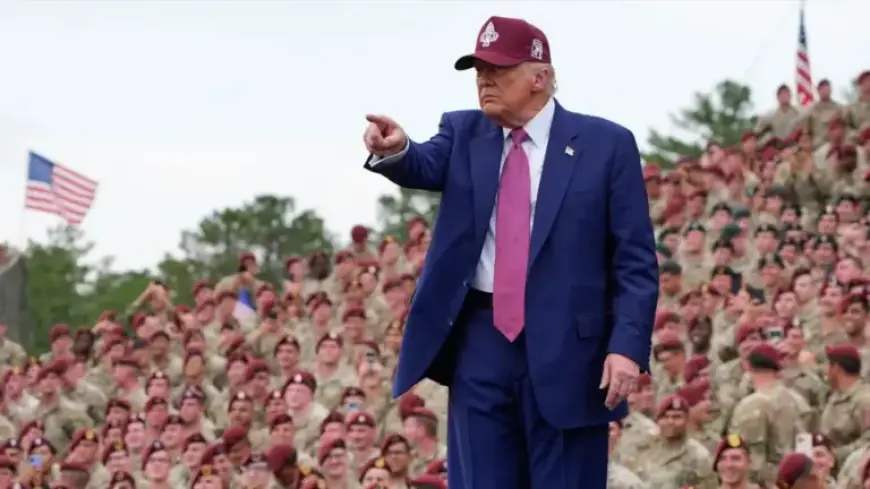
President Donald Trump is set to speak at Fort Bragg on Friday at 1: 30 p. m. ET, marking a high-profile salute to U. S. Special Forces credited with capturing Venezuelan leader Nicolás Maduro in a New Year’s raid. First lady Melania Trump is expected to join the visit and meet with military families.
The visit at a glance
The president’s appearance will center on recognizing service members involved in the operation that removed Maduro to face U. S. smuggling charges. The first lady’s schedule includes time with families on base, underscoring the administration’s emphasis on the sacrifices of military households. The event is slated for early afternoon, with remarks beginning at 1: 30 p. m. ET.
The stop continues a stepped-up travel pace in politically pivotal states ahead of the November midterm elections. The White House has paired these trips with messaging on the economy and affordability, themes that have become recurring fixtures of the president’s speeches this year.
Honoring a high-risk raid
U. S. officials credit elite American forces with storming into Venezuela on the third day of the New Year and spiriting Maduro out to face charges in the United States. The president has described the mission as a showcase of bravery and advanced capabilities. He has also spoken about specialized technology employed during the operation, referencing what he called a “discombobulator” designed to disable Venezuelan equipment.
In the weeks since, senior administration figures have framed the raid as part of a broader campaign to restore accountability and fight criminal smuggling networks in the region. The White House has also spotlighted the geopolitical reverberations, pointing to energy, security and strategic competition concerns that extend beyond Venezuela’s borders.
Policy stakes in the hemisphere
Following the operation, the administration moved to expand oversight related to Venezuela’s oil sector, arguing that economic leverage is crucial in shaping the country’s transition. The president plans to convene leaders from several Latin American nations in Florida on March 7, a gathering intended to align regional responses and address external influence.
Advisers have framed the moment as part of a newly assertive approach in the Americas, with the president branding his strategy the “Donroe Doctrine, ” a nod to historical assertions of U. S. leadership in the Western Hemisphere. Ahead of the March summit, officials have emphasized the need to counter growing Chinese influence and to harden regional cooperation on security and energy flows.
Fort Bragg’s platform and a charged backdrop
Fort Bragg, one of the world’s largest military installations by population, has long served as a stage for presidential messaging on national security and military readiness. The president last spoke at the base in June during a ceremony marking the U. S. Army’s 250th anniversary, an appearance that drew sharp reaction after he labeled protesters in Los Angeles “animals” while defending the deployment of troops to respond to unrest.
Since then, the administration has leaned on National Guard deployments and federal law enforcement as part of a broader domestic security posture. A senior immigration adviser announced the end of operations in Minnesota that had led to the fatal shootings of two U. S. citizens, a development that intensified scrutiny of federal tactics even as the White House has maintained a hard line on border enforcement.
Campaign-season messaging meets military ceremony
Friday’s salute at Fort Bragg allows the president to blend commander-in-chief optics with the political imperatives of a midterm year. In recent weeks he has returned to themes of cost-of-living relief and job growth while highlighting national security gains, an agenda calibrated for audiences in swing-state communities that are home to large numbers of service members and veterans.
The first lady’s engagement with families adds a softer touch to the program, ensuring attention not only on combat achievements but also on the day-to-day realities for those stationed at high-tempo installations. Expect language honoring sacrifice, valor and readiness, alongside nods to pay, benefits and support services.
What to watch next
Beyond the ceremonial honors, Friday’s remarks are likely to preview the administration’s next steps on Venezuela policy, with particular focus on energy oversight and the March 7 Florida gathering. Watch for new details on multilateral cooperation, border interdiction and technology-driven counter-smuggling measures.
With the midterms drawing closer, the White House is also expected to keep pairing national security milestones with economic messaging. The Fort Bragg appearance, anchored around a headline-making raid and the troops who carried it out, offers a blueprint for how the president plans to knit together foreign policy assertiveness and domestic priorities in the months ahead.