






















Rui Hachimura leans into sixth-man role, tabs himself and Jarred Vanderbilt as Lakers’ bench X-factors

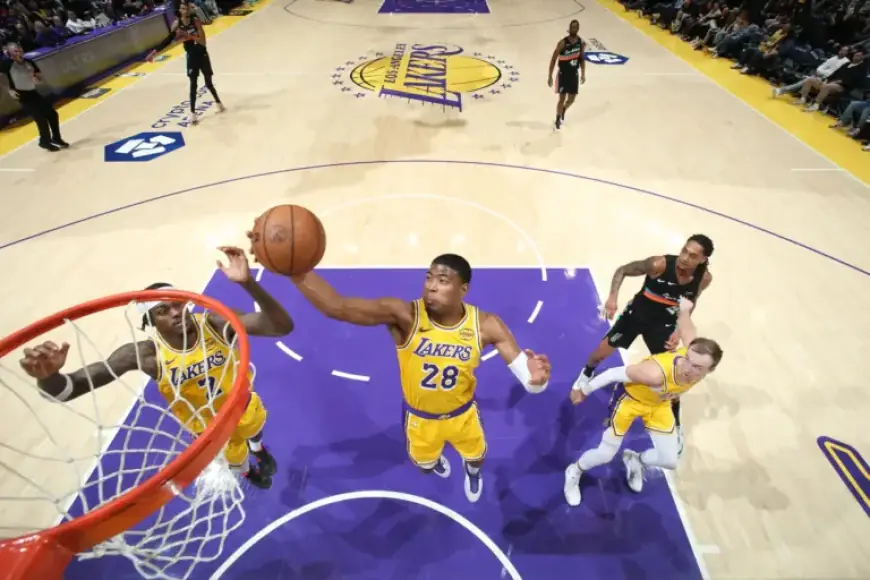
Rui Hachimura has shifted from opening-night starter to high-impact reserve—and he’s embracing it. The forward said this week that he and Jarred Vanderbilt see themselves as the Los Angeles Lakers’ bench X-factors, a pairing designed to tilt games with Hachimura’s scoring and Vanderbilt’s defense as the regular season moves toward the stretch run.
From starter to spark: Hachimura resets his role
After the first quarter of the season, the Lakers rebalanced their rotation and moved Hachimura to the bench. Rather than bristle at the change, he’s settled into a sixth-man groove focused on injecting offense and tempo. As a reserve, Hachimura is averaging 10.2 points and shooting 42% from three, numbers that give head coach JJ Redick a dependable punch when the second unit hits the floor.
Hachimura’s willingness to recalibrate his usage has been central to stabilizing Los Angeles’ non-starter minutes. His size and touch in the mid-post, coupled with spot-up reliability, have helped diversify the bench’s look and reduce the scoring droughts that plagued earlier lineups.
Vanderbilt’s defensive edge balances the unit
While Hachimura drives the bench’s scoring, Vanderbilt’s calling card is disruption. The forward’s switchability and motor give the Lakers a stopper who can bother ball-handlers, body up wings, and crash passing lanes. Few on the roster cover more defensive ground in a single shift, and that versatility has made Vanderbilt a frequent closer for specific matchups, even on nights he doesn’t start.
Vanderbilt’s impact showed up in the margins during one of Los Angeles’ recent signature wins, where his activity helped swing momentum and stabilize coverages across multiple positions.
Proof of concept in a comeback over Philadelphia
In a recent comeback victory over the 76ers, the bench tandem provided the exact blend the Lakers have been seeking. Hachimura delivered 17 points and a team-high seven rebounds, while Vanderbilt set the tone defensively and finished with a +16 plus-minus in 23 minutes. Afterward, Hachimura summed up their mission: “I think, especially coming off the bench, we got to bring the energy. Me, Vando, we have the length, the strength and everything. We talk about it every game. We just got to bring the energy. Me and him are gonna be the x-factors on this team.”
The complementary fit matters as the Lakers look to win the minutes when LeBron James sits and the rotation shifts around Anthony Davis. In that Sixers game, Hachimura’s shot-making opened the floor, and Vanderbilt’s on-ball pressure and help rotations disrupted rhythm—precisely the formula Los Angeles needs to bank wins without heavy starter loads.
Reality check in a lopsided night against San Antonio
The growth curve isn’t linear. On Tuesday night (ET), Los Angeles was routed by the Spurs on the second half of a back-to-back with several regular starters held out ahead of the All-Star break. Hachimura still logged significant minutes and struggled to find a rhythm as the Lakers’ defense unraveled early. That performance underlined a persistent challenge: when depth is stretched, the second unit’s margin for error shrinks, and missed shots can compound on the other end.
Even in that setback, the rotation decisions signaled that Hachimura remains central to the Lakers’ bench plans. The team continues to rely on his ability to steady groups that mix reserves with one star and to soak up usage when primary creators rest.
What it means for the stretch run
Since arriving in 2023, Hachimura and Vanderbilt have lived through a volatile chapter of Lakers basketball. Now, both are firmly entrenched as impact reserves, and their combined profile—efficient bench scoring from Hachimura, multipositional defense from Vanderbilt—maps cleanly to what playoff teams need from their second units.
Los Angeles has hovered above .500 despite injuries and frequent lineup tweaks. As the schedule tightens, the Lakers’ ceiling will hinge on winning substitution pockets and controlling the game’s energy when stars sit. Hachimura’s 42% shooting from deep is a pressure release for lineups short on spacing, while Vanderbilt’s defensive versatility can flip momentum with a single sequence.
If the duo continues to sync their strengths, the Lakers will have a credible path to tightening rotations without overburdening their top players. By Hachimura’s own framing, he and Vanderbilt plan to own that lane—and if they do, Los Angeles’ bench could become an asset rather than a variable as the postseason approaches.