




















Nancy Guthrie Update Today: Gloves Found Near Tucson Search Area as Investigators Push for Doorbell Camera Leads

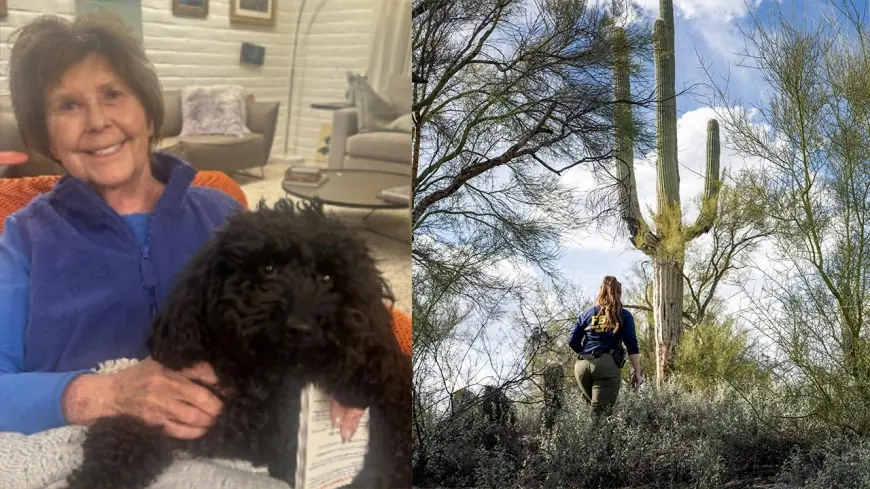
As of Thursday, February 12, 2026 ET, Nancy Guthrie has not been publicly confirmed as found, and investigators in southern Arizona continue to treat her disappearance as a suspected abduction rather than a missing-person walkaway. The case, centered on the Catalina Foothills area north of Tucson, has entered a new phase: broader roadway searches, evidence testing, and an intensified push to collect raw home-surveillance footage from neighbors.
Nancy Guthrie is 84 years old and is the mother of broadcaster Savannah Guthrie. Her family has said she needs medication, a detail that has sharpened the urgency and raised the stakes of every hour without verified contact.
Latest on Nancy Guthrie: what investigators have said publicly
Authorities have emphasized several points in recent updates that shape how the case is being worked:
-
The disappearance is being investigated as a criminal matter, with the working assumption that she was taken against her will.
-
A masked person captured on a front-door camera near her home remains a central investigative focus.
-
Investigators have recovered and are analyzing multiple items of evidence from the home, while limiting public detail to avoid tipping off whoever is responsible.
-
A set of gloves discovered along a roadway in the search area is being sent for testing.
The combination of a likely forced removal, a visible masked figure near the home, and physical items now in forensic processing suggests investigators believe this is solvable with the right linkage: either DNA, trace evidence, or a vehicle-and-route match from surrounding cameras.
Has Nancy Guthrie been found?
No public announcement has confirmed that Nancy Guthrie has been located. Family appeals and law-enforcement requests for tips are ongoing, which typically indicates investigators do not yet have a verified recovery or direct contact.
Rio Rico update: Carlos Palazuelos detained, then released
One of the most searched developments involves a man detained in Rio Rico, Arizona, south of Tucson. The man has been publicly identified as Carlos Palazuelos, who has described himself as a delivery driver. He was questioned and then released without charges.
This matters because viral narratives often treat any detention as a breakthrough. In reality, brief detentions frequently reflect lead triage: checking identity, confirming movements, eliminating someone quickly, and moving on. The release strongly signals that investigators either did not find probable cause to hold him or determined he did not fit critical elements of the timeline.
Dominic Evans and “suspect” claims: what’s confirmed and what isn’t
Online speculation has repeatedly elevated the name Dominic Evans, often framed as a suspect in Tucson. As of today ET, there has been no official public confirmation that Dominic Evans is a named suspect, charged party, or formally designated person of interest by investigators.
The practical impact of rumor-heavy naming is usually negative. It can flood tip lines with noise, distort witness recollection, and create legal risk that discourages legitimate witnesses from coming forward. Investigators typically prefer specifics over names: original video files, unusual vehicle sightings, receipts, timestamps, and route details.
Doorbell camera video: why it’s so important, and what it may not show
The masked figure on the porch has become the visual anchor of the case, but even strong video rarely answers the biggest questions by itself. The most valuable use of that clip is as a reference point for:
-
Clothing, gait, height estimates, and hand dominance
-
Whether the person appears to be disabling or testing the camera
-
A narrow time window that can be cross-matched against neighboring cameras, vehicle plate readers, and traffic patterns
What the clip may not show is equally important: whether Nancy was moved by vehicle, whether more than one person was involved, and whether the porch appearance was a decoy staged to draw attention away from another entry point or earlier contact.
Behind the headline: incentives, stakeholders, and the likely investigative theory
This case has three competing forces pulling it in different directions.
Context and incentives: If this is a targeted abduction, the motive could be money, leverage, personal grievance, or opportunistic criminality. The appearance of ransom-style messaging, if authentic, would suggest financial incentive. If messaging is not authentic, it may be misdirection designed to waste time and steer attention away from the real timeline.
Stakeholders: The family needs visibility without amplifying false leads. Investigators need the public’s help locating video while withholding enough detail to preserve the integrity of evidence and any future prosecution. The neighborhood becomes a critical stakeholder because modern cases like this are often solved by stitching together dozens of private camera angles into one coherent vehicle route.
Missing pieces: The public still does not know the precise last-confirmed time Nancy was seen, whether a vehicle has been identified, whether digital traces exist from phones or accounts, and whether investigators have confirmed the authenticity of any communications tied to the case.
Second-order effects: High-profile attention tends to create a surge in impersonators, fake tipsters, and opportunists seeking money or attention. That can slow an investigation unless law enforcement quickly filters tips into “verifiable now” versus “speculation.”
What happens next: realistic scenarios and triggers
Here are the most likely next steps over the coming days, with clear triggers:
-
A roadway-route breakthrough
Trigger: a neighbor’s raw video captures a vehicle entering or exiting the area around the porch-camera timestamp. -
A forensic linkage from the gloves or other recovered items
Trigger: usable DNA, fibers, or trace materials that match a known person or ties to a vehicle or location. -
A publicly identified person of interest
Trigger: corroborated evidence from multiple sources, such as video plus a verified movement timeline. -
A shift in search geography
Trigger: investigators narrow travel corridors and move resources from ground searches to route reconstruction and targeted warrants.
For now, the most useful public action is precise: if you live near the Catalina Foothills search area or along likely road routes, preserve original camera footage from late January 31 through early February 1, 2026, and report it directly to investigators with exact timestamps. In cases like this, one overlooked clip is often the difference between a mystery and an arrest.