























Parker Kingston and BYU Football Thrown Into Turmoil as Star Wide Receiver Faces a First-Degree Felony Rape Charge

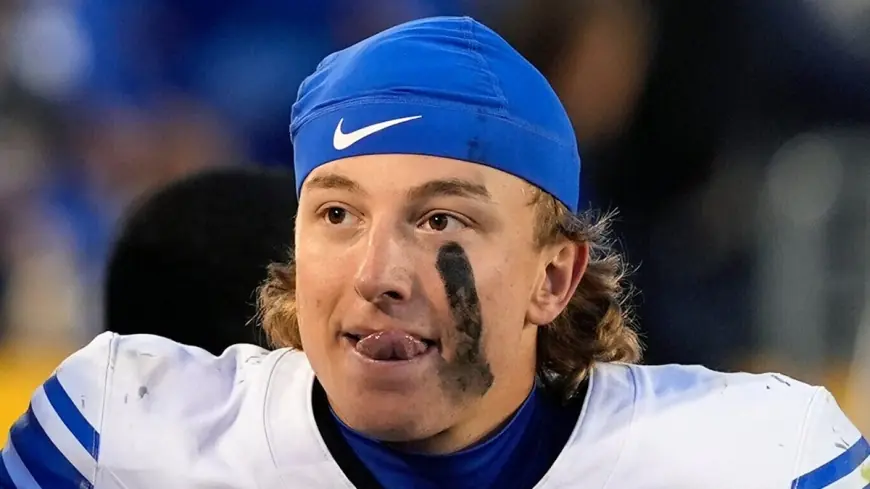
BYU football’s offseason took an abrupt turn this week after wide receiver Parker Kingston was charged in Utah with first-degree felony rape in connection with an allegation dating back to February 2025. Kingston, a breakout playmaker for the Cougars, has been held without bail and is scheduled for an initial court appearance on Friday, February 13, 2026 ET.
The case is immediately one of the most consequential off-field stories in college football right now, not only because of Kingston’s on-field importance, but because it places BYU’s program at the intersection of criminal justice, campus policy, and the reputational stakes that follow any high-profile allegation.
What happened: timeline of the allegation and charge
Prosecutors say the investigation began after a then-20-year-old woman reported a sexual assault to law enforcement at a southern Utah hospital on February 27, 2025 ET, four days after the alleged incident on February 23, 2025 ET. Authorities say detectives gathered digital and forensic evidence and conducted interviews over the course of a nearly yearlong investigation before the charge was filed this week.
Court documents describe the alleged encounter as beginning with consensual sexual activity that did not include intercourse, then escalating after the woman said she tried to stop further sexual activity. Kingston has told investigators that all sexual activity was consensual, according to the unsealed court documents.
Kingston was arrested on Wednesday, February 11, 2026 ET, and remains in custody without bail ahead of Friday’s court date.
Why this matters for BYU football right now
Kingston isn’t a fringe contributor. He was BYU’s leading receiver in the 2025 season, finishing with 66 receptions for 924 yards and five touchdowns. He is also a high-visibility player in a program that sells stability, identity, and discipline as competitive advantages.
That combination raises the stakes. When a team’s star is accused of a violent felony, the story quickly becomes bigger than football, and every institutional choice becomes a referendum on values: how the program communicates, how it supports due process, how it supports the complainant, and how it supports the broader campus community.
Behind the headline: incentives, stakeholders, and pressure points
This case puts multiple incentives in collision:
-
Prosecutors are incentivized to show they treated a serious allegation with rigor, especially after a long investigation and a high-profile defendant.
-
The defense is incentivized to keep the case tightly tethered to evidence, not public outrage, and to push back hard against assumptions that can form before trial.
-
BYU is incentivized to cooperate with law enforcement while limiting public comment, both because of privacy rules and because every statement can be scrutinized later.
Stakeholders extend beyond the immediate parties. Teammates, coaches, recruits, donors, and the campus community all absorb the reputational shock. Opponents and conference peers watch for how BYU handles discipline and messaging. And because BYU’s honor code has historically shaped player availability and discipline, outside audiences often interpret the program’s response through a moral lens, whether that’s fair or not.
The missing pieces: what we still don’t know
Even with a charge filed, there are key unknowns that will decide the trajectory:
-
The full scope and strength of the digital and forensic evidence referenced by investigators
-
Whether additional witnesses or corroborating communications will be central to the case
-
The court’s reasoning for detention without bail, and whether that changes after hearings
-
How BYU will handle Kingston’s team status and scholarship status while the legal process unfolds
-
Whether any further allegations or related inquiries emerge as attention intensifies
Second-order effects: what this could trigger for the program and beyond
For BYU, the immediate risk is competitive: losing a top receiver reshapes an offense, timing, and leadership dynamics before spring and summer development windows. The longer-term risk is recruiting and brand: opponents will use instability in negative recruiting, and families will ask tougher questions about oversight, player conduct education, and institutional accountability.
For college football more broadly, cases like this feed renewed calls for clearer standards around when a player is removed from team activities, how schools communicate without prejudicing legal proceedings, and what support systems exist for complainants and accused students alike.
What happens next: realistic scenarios and triggers
-
The case moves quickly toward hearings that clarify detention and evidence
Trigger: early court proceedings produce rulings on bail, scheduling, and evidentiary motions. -
BYU places Kingston on an immediate suspension from team activities
Trigger: internal policy decisions aimed at reducing institutional risk while the case proceeds. -
The legal process stretches into the season timeline
Trigger: continuances, complex evidentiary disputes, or extended pretrial motion practice. -
A plea negotiation phase emerges
Trigger: both sides assess litigation risk after discovery and initial hearings. -
The case goes to trial with heightened public scrutiny
Trigger: the parties do not resolve pretrial and proceed to a jury, making testimony and evidence the central battleground.
Why it matters
This story is not a football distraction that fades with the next game. A first-degree felony charge against a prominent college athlete forces institutions to prove that accountability and fairness can coexist: protecting due process while taking allegations seriously, and balancing privacy with the public’s demand for transparency. For BYU, the next steps will define not only a season’s outlook, but how the program is perceived when its values are tested under the harshest spotlight.