

























US Army Deploys AeroVironment’s LOCUST Counter-Drone Laser Near El Paso Airport

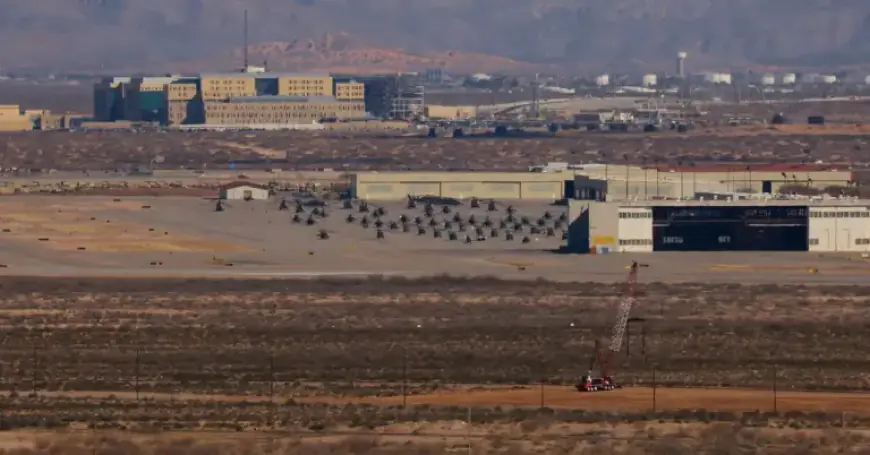
The U.S. Army recently deployed AeroVironment’s LOCUST laser counter-drone system near El Paso International Airport. This action resulted in a temporary airspace closure that lasted over seven hours on February 11, 2026. Officials had concerns about the potential risks the counter-drone system could pose to commercial aviation.
Deployment of LOCUST Counter-Drone System
The LOCUST system, which features a 20-kilowatt direct-energy weapon, is a notable advancement in counter-drone technology. It was developed to mitigate threats posed by unmanned aerial vehicles (UAVs) at a lower cost than traditional missile systems. The deployment is part of the U.S. Army’s ongoing efforts to enhance security around airports and large gatherings.
Significance of Deployment
- The deployment of LOCUST is particularly important as the U.S. prepares for major events like the FIFA World Cup.
- There are over 1,000 reported drone sightings monthly along the U.S.-Mexico border.
- Counter-drone technology becomes vital in protecting infrastructure from potential threats.
AeroVironment, based in Virginia, supplied the first two LOCUST systems to the Army in September 2024. These systems had undergone testing at Yuma Proving Ground in Arizona before training Army personnel at Fort Sill, Oklahoma.
FAA Response and Airspace Shutdown
The Federal Aviation Administration (FAA) acted swiftly to halt air traffic in and out of El Paso. This precautionary measure reflects the increasing concerns regarding drone threats in high-traffic airspaces. Following the seven-hour shutdown, the FAA has since lifted the temporary closure, allowing flights to resume normally.
Recommendations from Experts
Defense experts recommend integrating the LOCUST system into existing missile defense initiatives. This approach aims to ensure a robust defense mechanism in areas where illicit drone activity is prevalent, particularly near the southern border.
The recent deployment of the LOCUST counter-drone laser system marks a significant step in the U.S. military’s technological advancements against drone threats. The effectiveness and cost-efficiency of this system may set a precedent for future military applications in urban and sensitive airspace environments.