

























Vulcan Centaur Launches US Military Surveillance Satellites February 12

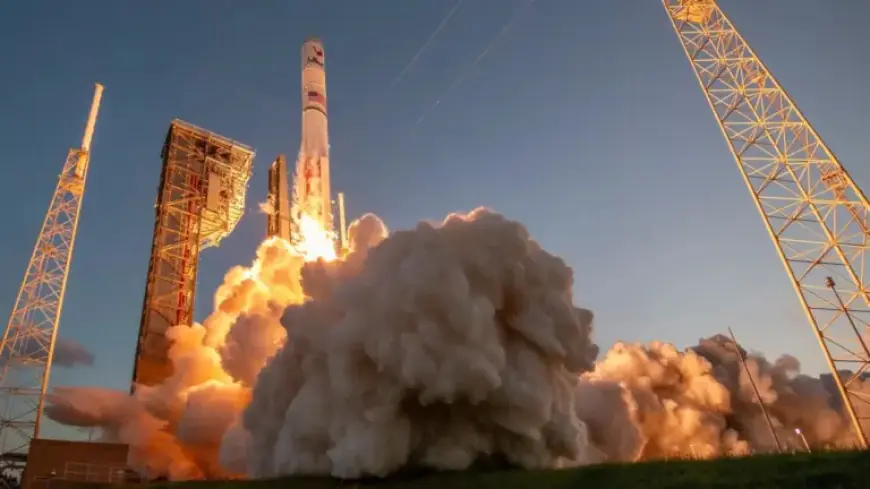
The Vulcan Centaur rocket is set to launch the USSF-87 mission, delivering surveillance satellites for the U.S. military on February 12. This launch will take place at Cape Canaveral Space Force Station in Florida.
Launch Details
The Vulcan Centaur is scheduled to lift off during a two-hour window starting at 4:22 a.m. EST (0922 GMT). Coverage will commence approximately 20 minutes prior to liftoff.
Mission Objectives
The USSF-87 mission carries two satellites as part of the Geosynchronous Space Situational Awareness Program (GSSAP). These satellites are designed to enhance the U.S. Space Force’s ability to monitor activities in geostationary orbit (GEO).
Significance of Geostationary Orbit
- GEO is positioned 22,236 miles (35,785 kilometers) above Earth.
- Satellites in this orbit match Earth’s rotational speed, allowing them to observe specific areas consistently.
- GEO is crucial for weather, reconnaissance, and communication satellites.
Role of GSSAP Satellites
The GSSAP spacecraft serve as dedicated sensors in the Space Surveillance Network, enhancing flight safety. They assist in providing timely warnings about potential hazards from other orbital objects.
Enhancements and Payloads
In addition to the GSSAP satellites, USSF-87 includes research and development payloads. These will improve orbital maneuvering precision and overall resilience of U.S. assets in GEO.
Vulcan Centaur Specifications
The upcoming launch will mark the fourth mission for the Vulcan Centaur, a 202-foot-tall (61-meter) rocket. This rocket is designed to replace the Atlas V, with significant capabilities for national security missions.
Launch Provider Certification
After overcoming a previous anomaly, the Vulcan Centaur has been certified for national security launches. This makes the ULA’s Vulcan the second rocket, alongside SpaceX, authorized for military satellite missions.
Future Prospects
The Vulcan Centaur has been selected for over two dozen national security missions. It can launch from Cape Canaveral and Vandenberg Space Force Base in California, expanding the U.S. military’s launch capabilities.
As the USSF-87 mission approaches, anticipation builds for the significant advancements in space surveillance it aims to deliver.