























Third Ukrainian Athlete Barred for Wearing Remembrance Helmet at Olympics

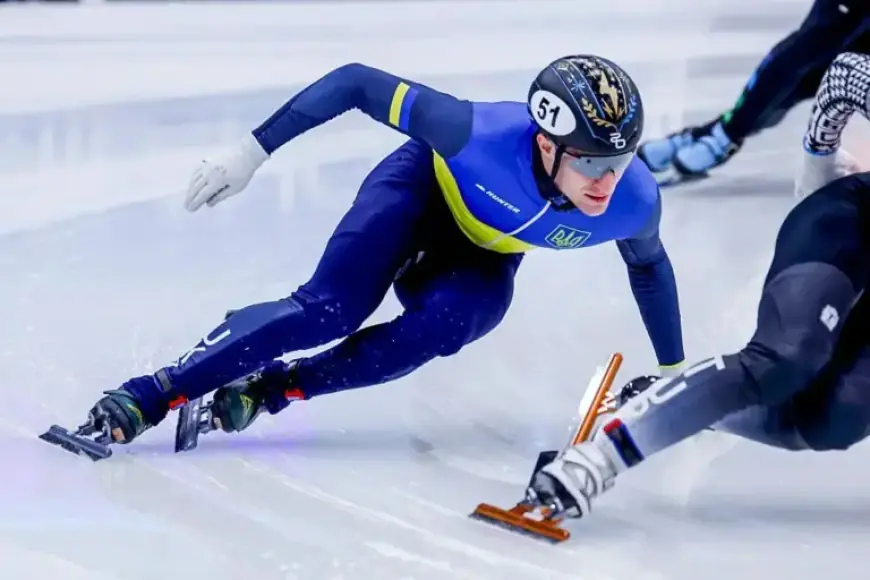
Oleh Handei, a Ukrainian short track speed skater, faces restrictions regarding his helmet at the Winter Olympics in Milan. He revealed on February 11, 2026, that the International Skating Union deemed his helmet ineligible due to its inscription of Ukrainian poetry.
Third Ukrainian Athlete Barred for Wearing Remembrance Helmet at Olympics
Handei is the third Olympian from Ukraine affected by this controversial ruling. Prior to the Olympics, he received notice that his helmet was classified as “politicized” by the authorities. The inscription, written by renowned Ukrainian poet Lina Kostenko, reads: “Where there is heroism, there is no final defeat.” Despite Handei’s insistence that these words are motivational, officials maintained the helmet’s ban.
Other Athletes Affected
Two additional Ukrainian athletes have encountered similar issues. Their helmets were also prohibited for containing messages deemed political. The following is a brief overview:
- Kateryna Kotsar: A freestyle skier, her helmet was disqualified for bearing the message “Be Brave like Ukrainians.”
- Vladyslav Heraskevych: A skeleton racer, his helmet honored Ukrainian athletes who lost their lives during Russia’s ongoing aggression.
The International Olympic Committee (IOC) upholds a strict policy against the politicization of sports, which it states is outlined in the Olympic Charter. Nevertheless, Handei has argued that Kostenko’s poetry does not reference politics or warfare, but serves as a personal source of motivation.
Calls for Fair Treatment
Heraskevych critiqued the IOC in a social media post, highlighting what he perceives as a double standard. He compared their treatment of Ukrainian athletes with that of Israeli skeleton racer Jared Firestone. Firestone was permitted to wear a kippah with the names of the victims of a tragic event at the 1972 Munich Olympics during the Opening Ceremony. Heraskevych questioned the disparity in treatment for different athletes.
The sentiment resonated beyond the sporting community. Oleksandr Syrskyi, commander-in-chief of Ukraine’s Armed Forces, voiced his support for the athletes’ tributes, stating, “Remembrance is not a violation.”
Impact of the War on Ukrainian Sports
The ongoing conflict in Ukraine has tragically affected sports. Hundreds of athletes and coaches have been killed, and numerous sports facilities have suffered destruction due to Russian attacks. Despite the ban on Russian and Belarusian national teams from participating in the Olympics, individual athletes from those countries can still compete under a neutral banner. However, many of these athletes maintain connections to the Kremlin or support the war.
Handei expressed concern over potential provocations from “neutral” athletes at competitions, highlighting the emotional toll the situation has taken on athletes. He also stood in solidarity with Heraskevych, urging him to maintain his stance against IOC restrictions. Handei remarked, “We have to fight. And as long as we fight, we can win.”