

























Gen Z Overthrows Bangladesh’s Regime: Will They Shape the Next Government?

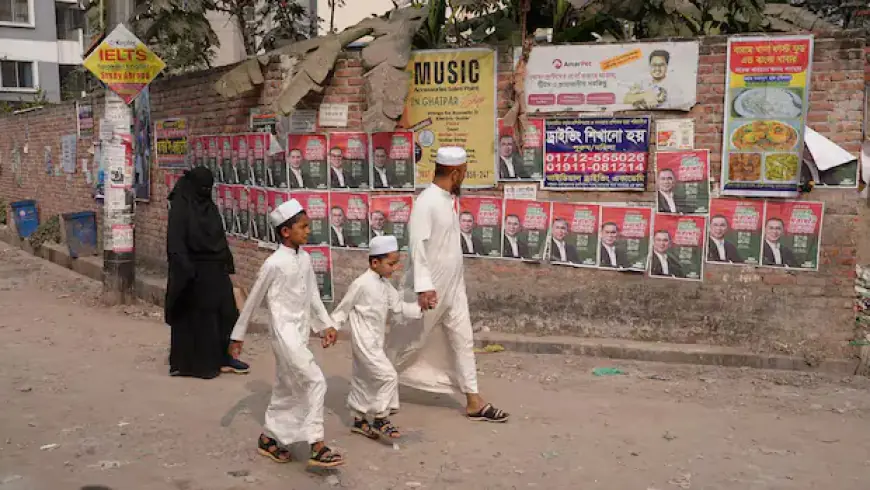
In a significant political shift, Bangladesh is witnessing a historic election as the youth movement takes center stage. This election, held in early 2025, follows the ousting of Sheikh Hasina, the long-time leader accused of human rights violations and authoritarian rule. The political landscape has dramatically altered since the student-led protests that unraveled Hasina’s regime, marking the rise of Generation Z in shaping the nation’s governance.
Bangladesh’s Political Upheaval
Sheikh Hasina’s authoritarian leadership spanned 15 years and resulted in widespread dissent. Her administration faced violent protests that culminated in her escape to India amid escalating chaos, with estimates of over 1,400 deaths attributed to security forces under her orders, as reported by the United Nations.
The 2025 election represents a turning point, especially for younger voters. Many, like Mohammad Ali and Rahul Ghosh Joy, are participating for the first time, expressing optimism over what they perceive as a fair electoral process.
Changing Political Dynamics
- The absence of Hasina’s Awami League party, banned by a caretaker government in 2024, has created a political vacuum.
- Leading the opposition is Tarique Rahman of the Bangladesh Nationalist Party (BNP), recently returned from a lengthy exile in Britain.
- Shafiqur Rahman now heads the resurgent Jamaat-e-Islami, a party that has minimized female representation in its candidate list.
The younger demographic constitutes over 35% of voters, a substantial shift in the electoral base. Political analysts predict that this election may be more fiercely contested than anticipated, with heightened stakes for securing voter support.
Escalating Tensions and Security Concerns
Given the tumultuous backdrop, the electoral process is closely monitored, with the government deploying a record 108,000 security personnel to maintain peace. Tensions remain high, especially due to the historic rivalry between the BNP and the Islamists, who have leveraged the power vacuum left by Hasina’s party.
Geopolitical Implications
The outcome of this election will significantly impact regional relations, particularly with India. As the relationship between India and Bangladesh reaches a low point, the rise of Jamaat-e-Islami could raise alarms in New Delhi. Political scientists note that India’s discomfort with any Islamist party in power can deepen ties with Bangladesh amidst an ongoing clash over issues related to religious minorities.
Public Sentiment and Future Outlook
The populace, still reeling from the aftermath of the protests, exhibits a mix of hope and skepticism. Activists express concerns over governmental efficacy, particularly given the prior government’s inefficiency under Nobel laureate Mohammad Yunus. For many like Zartaj Parveen, whose son lost his life in the protests, the future remains uncertain.
The current climate suggests that regardless of which party emerges victorious, the pressure for immediate reform and accountability will be immense. The new government must deliver results swiftly, particularly to appease the younger voters whose idealism has been shaped by recent historical events.
The 2025 election thus stands as a critical juncture for Bangladesh, where the aspirations of a dynamic young electorate can redefine the nation’s democratic path.