

























Guillaume Cizeron returns to the top with new Olympic ice dance gold

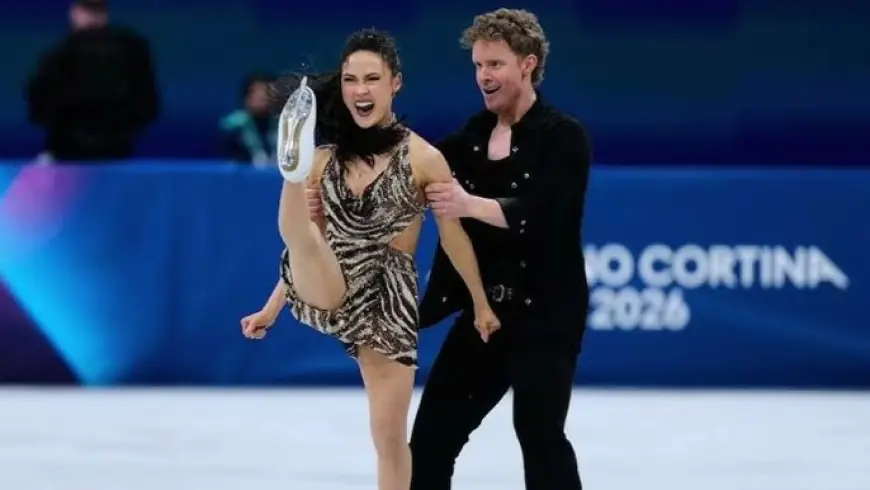
Guillaume Cizeron capped a high-risk comeback on Wednesday, Feb. 11, 2026, winning Olympic ice dance gold in Milan with new partner Laurence Fournier Beaudry. The victory reshapes the ice dance landscape just four years after Cizeron’s last Olympic title—and it does so with a partnership that began only last year.
The French duo finished first on a razor-thin margin, turning what started as an experiment into the defining result of the Games’ ice dance event.
Key takeaways from the result
-
A brand-new pairing converted a short runway into an Olympic title in a discipline usually built on long partnerships.
-
The podium was decided by small margins, keeping the event tight into the final group.
-
The win immediately raises questions about whether the team continues through the next season—or treats the Games as the peak.
Guillaume Cizeron’s comeback in focus
In ice dance, timing and trust matter as much as technical difficulty. That’s why Cizeron’s decision to return to competition with a new partner stood out from the start: the typical path is years of building chemistry before the sport’s biggest moment.
Cizeron had already become one of the era’s defining skaters with Gabriella Papadakis, collecting major titles and establishing a style built around deep edges, speed, and close musical phrasing. After their split, he spent time outside full-time competition, adding choreography work and staying visible in skating circles—then chose the most demanding possible re-entry point: an Olympic season.
How Fournier Beaudry and Cizeron won
Fournier Beaudry and Cizeron leaned into clarity and control rather than trying to “out-trick” the field. Their performances emphasized clean elements, strong unison, and a component-heavy approach that judges often reward when execution is secure.
The margin at the top underscored how finely balanced elite ice dance has become. Their combined score finished just ahead of the U.S. team of Madison Chock and Evan Bates, with Canada’s Piper Gilles and Paul Poirier taking bronze. The top two were separated by less than two points overall, meaning any small error—an edge call, a level lost, a slightly slower rotation—could have flipped the standings.
A partnership formed under pressure
The Fournier Beaudry–Cizeron partnership was announced in 2025, leaving limited time for the pair to develop competitive identity, set technical baselines, and refine lifts and transitions under international scrutiny. That time crunch shaped the season: early events served as public dress rehearsals, and program construction had to balance ambition with risk management.
Behind the scenes, the pair also navigated the non-skating realities that come with international sport—eligibility, logistics, and the constant demand for public messaging—while trying to look like a team that had been together for years. Their Olympic win suggests they succeeded at the hardest part: arriving with confidence when the pressure was highest.
Controversies and scrutiny around the duo
The Games’ ice dance spotlight has also carried an unusually heavy layer of off-ice attention.
Fournier Beaudry’s previous competitive chapter drew public discussion tied to the aftermath of misconduct allegations involving a former partner. Separately, Papadakis published a memoir in January 2026 that described her past partnership with Cizeron as emotionally difficult and controlling. Cizeron has denied those claims publicly, framing them as inaccurate and harmful.
None of that changed the scoreboard in Milan, but it has shaped how the win is being received—and it may continue to follow the pair as they decide what comes next.
What comes next after Milan
The immediate question is whether this Olympic title becomes the launch point for a longer run or a decisive finale. Ice dance careers can extend, but maintaining a new partnership at the very top requires constant reinvestment: new programs, new technical demands, and sustained health through a packed calendar.
If the team continues, the next milestones would likely include the post-Olympic international season and major championships later in 2026, where expectations would shift from “surprising contenders” to “the standard everyone is chasing.” If they step back, the win still stands as one of the sport’s rarest accomplishments: a new pairing reaching Olympic gold on a compressed timeline.
Sources consulted: Reuters, International Skating Union, Olympics.com, Le Monde