

























Trump’s EPA Poised to Revoke Climate Change Legal Finding: What’s Next?

In a significant shift for U.S. environmental policy, the Trump administration is expected to revoke the Environmental Protection Agency’s (EPA) legal finding that greenhouse gases are harmful to public health. This determination, made under the Clean Air Act, has stood since 2009 and provided a framework for regulating emissions. The repeal would mark a pivotal moment in the ongoing battle against climate change, as the administration aims to dismantle regulations it considers burdensome to economic growth.
Details of the Repeal
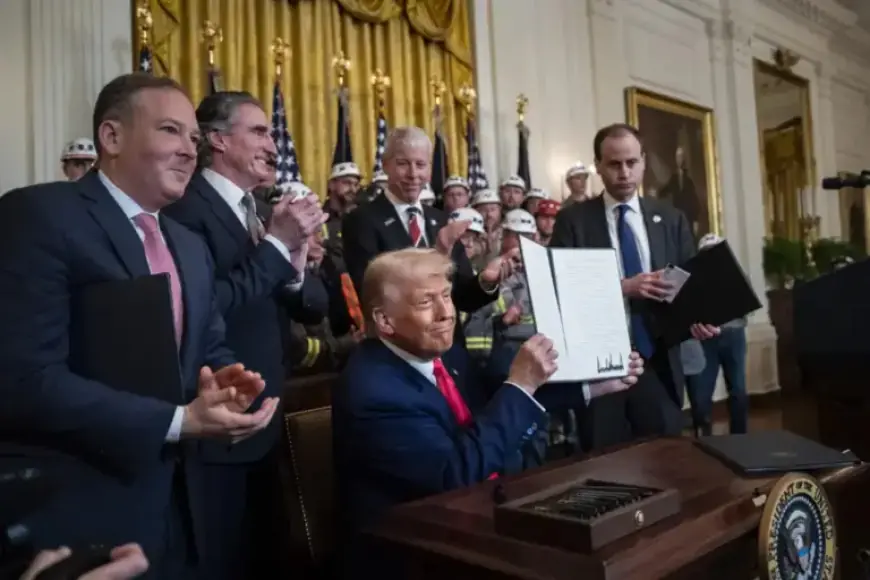
EPA Administrator Lee Zeldin will accompany President Donald Trump at an event highlighting increased coal use. This gathering comes as the EPA prepares to finalize the repeal of the endangerment finding, which the president ordered on his first day in office during his second term.
White House spokesperson Karoline Leavitt stated that the actions taken by the president represent one of the most considerable deregulatory efforts in history, aimed at promoting U.S. energy dominance. This repeal is perceived as more radical than previous efforts in Trump’s first term, with Zeldin’s team claiming that the EPA never had the authority to impose such rules initially.
Response from Climate Advocates
In light of these developments, climate advocates and several Democratic-led states have indicated plans to legally challenge the repeal. Critics argue that this decision could lead to dirtier air and increased health costs, significantly impacting communities already susceptible to pollution. Michelle Roos, executive director of the Environmental Protection Network, condemned the move, calling it a betrayal of public health responsibilities.
Legal Implications and Future Actions
The legal ramifications of this repeal are significant. The issue may reach the Supreme Court, which has previously recognized greenhouse gases as pollutants under the Clean Air Act in the 2007 landmark case, Massachusetts v. EPA. However, the current composition of the Supreme Court could complicate matters, as the justices who formed the majority in the original ruling are no longer on the bench.
Scientific Consensus on Climate Change
A recent report by the National Academies of Sciences, Engineering, and Medicine (NASEM) emphasizes that the evidence linking greenhouse gas emissions to adverse health outcomes remains undeniable. The report stressed that current scientific understanding supports the original endangerment finding, citing increasing temperatures and severe climatic events as critical indicators of ongoing environmental challenges.
Impact on Future Administrations
The ability of future administrations to reinstate such findings depends largely on the adjudication of current legal battles. If the Supreme Court upholds the Clean Air Act’s original interpretation regarding greenhouse gases, the EPA may retain the authority to regulate these emissions. In contrast, a reversed interpretation could hinder federal environmental efforts for years.
- Key Points of Concern:
- Potential rise in air pollution.
- Higher public health costs.
- Long-term implications for climate policy and clean energy initiatives.
Conclusion
The expected repeal highlights a contentious moment in U.S. climate policy. As legal challenges loom, the implications for both public health and environmental sustainability remain a point of contention. The ongoing discourse around greenhouse gas regulation underscores the complexities of balancing economic growth with the urgent need for climate action.