
























Bad Bunny’s Super Bowl Halftime Show Captivates 128 Million Viewers

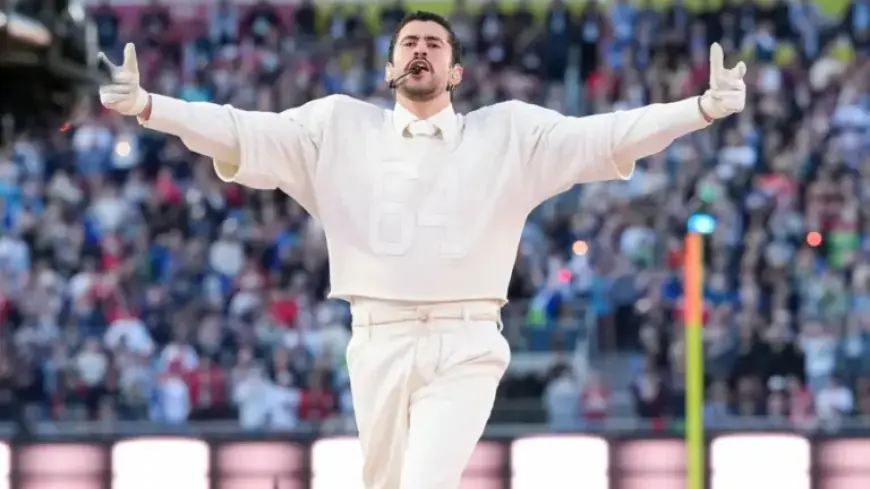
Bad Bunny’s electrifying Super Bowl Halftime Show captured the attention of millions. The spectacle not only entertained but also achieved remarkable audience engagement.
Record-Breaking Viewership
According to Nielsen, Super Bowl LX reached a peak viewership of 137.8 million during the second quarter. The game averaged 124.9 million viewers overall, making it one of the most-watched events in television history.
Bad Bunny’s halftime performance itself attracted 128.2 million viewers, ranking it among the top performances in Super Bowl history. This record places it just behind Kendrick Lamar’s 133.5 million viewers from the previous year and Michael Jackson’s legendary 133.4 million viewers from 1993.
Historical Significance
- Bad Bunny became the first artist to perform entirely in Spanish at the Super Bowl halftime show.
- The event took place at Levi’s Stadium in Santa Clara, California.
- His opening declaration, “Que rico es ser Latino,” emphasized Latino pride.
Throughout the performance, Bad Bunny celebrated Latino culture. He sang hits like “Tití Me Preguntó,” interacted with performers portraying traditional scenes, and delivered a powerful message of hope and resilience. The event served as a vibrant showcase of his identity and artistic vision.
Impact on Streaming and Charts
Following the halftime show, Bad Bunny’s music saw dramatic increases in streaming. U.S. Spotify streams surged by 470 percent, while global streams climbed by 210 percent. This resulted in Bad Bunny securing the top six positions on Spotify’s U.S. Daily Top Songs Chart.
Ricky Martin also experienced a boost in his streaming numbers, with a 145 percent increase in the U.S. Meanwhile, Bad Bunny’s song “DtMF” made a notable resurgence on the Billboard Hot 100, re-entering at Number 10.
Conclusion
Bad Bunny’s performance at Super Bowl LX not only captivated 128 million viewers but also solidified his place in music history. His success illustrates the enduring impact of cultural representation in mainstream media, drawing attention to the rich tapestry of Latino culture.