

























Political Pressure Builds to Unmask Names in Epstein “Ring” Files as Massie and Khanna Spotlight Bin Sulayem, Nuara, and Others

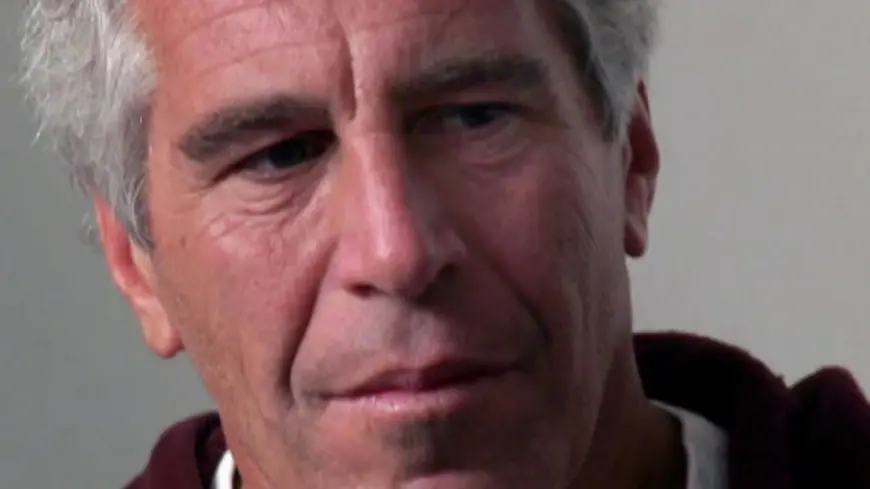
A fast-moving political fight over the Jeffrey Epstein case flared again this week as lawmakers demanded fuller disclosure of names they say were improperly blacked out from government files. The latest clash, driven by Representative Thomas Massie and Representative Ro Khanna, has pulled a fresh set of names into public view, including Sultan Ahmed bin Sulayem, Salvatore Nuara, and Leonic Leonov, while reigniting a broader debate over whether powerful interests still shape what the public is allowed to know about Epstein’s trafficking network.
The story is developing, and many details remain unverified in public. But the incentives behind the push are clear: lawmakers want to force transparency, justice officials want to protect case integrity and privacy obligations, and the public is demanding accountability amid years of suspicion that influential people received special treatment.
What happened: the new political flashpoint around the “ring” narrative
In recent hours, Massie and Khanna escalated claims that files tied to Epstein’s sex-trafficking enterprise contain names that were withheld without a clear, publicly explained legal reason. They argue that certain redactions go beyond shielding victims or sensitive investigative methods and instead appear to conceal politically or financially connected individuals.
As part of that push, Khanna publicly read out a set of names he said were previously hidden in redacted material he reviewed. Among the names circulating in that context are Salvatore Nuara, Leonic Leonov, and others. Because the release process is contested and the underlying documents are not fully public in a clean, universally accessible way, the public still cannot independently verify the context in which each name appears, or what each mention actually signifies.
That distinction matters. Inclusion in files can range from incidental reference to operational involvement. Political rhetoric often collapses that spectrum into a single insinuation.
Sultan Ahmed bin Sulayem: why his name is in the mix
Sultan Ahmed bin Sulayem, a prominent Dubai-based ports and logistics executive, has been thrust into the center of the latest round of attention due to correspondence that has resurfaced or been newly highlighted in connection with Epstein. The political claim is not just that a name appears, but that the content of communications reflects a relationship that continued long after Epstein’s earlier criminal case.
What’s notable is how quickly this shifted from scandal-adjacent gossip into a concrete political lever: lawmakers are using high-profile names to argue that redactions were not merely bureaucratic caution, but a form of protection. If that framing sticks, it could force additional disclosures, corporate distancing, and reputational fallout that extends well beyond Washington.
Massie and Khanna: unlikely allies with aligned incentives
Massie and Khanna sit on opposite sides of the partisan map, but transparency is one of the few issues that can produce real cross-aisle energy, especially when it can be framed as a fight against elite impunity.
Their incentives differ slightly:
-
Massie benefits from a civil-liberties and anti-secrecy posture that plays well with voters distrustful of federal institutions.
-
Khanna benefits from a reform and accountability frame that appeals to voters who see wealth and power as distortions of justice.
Together, they can make the issue feel less like partisan theater and more like a legitimacy test for the justice system.
What we still don’t know: names, roles, and the meaning of “incriminated”
Even if a name appears in a file, the public still needs answers to basic questions before drawing conclusions:
-
Is the person referenced as a witness, a contact, a business associate, or something more serious?
-
Is the mention supported by corroboration, or is it a one-off claim inside a messy investigative archive?
-
Were redactions made to protect victims, ongoing cases, or sensitive sources, even if that rationale was poorly communicated?
-
Are the spellings and identities accurate? Some names now circulating may be incomplete, misspelled, or belong to multiple people.
This is where the “ring” language can mislead. The phrase implies a structured criminal organization with clearly defined roles, but public evidence may not yet support that level of certainty for every individual being discussed.
Second-order effects: why this fight could reshape more than one investigation
The political pressure campaign can trigger ripple effects that go beyond Epstein-related disclosures:
-
Courts and prosecutors may become more cautious about releasing material, fearing misinterpretation and reputational damage to uninvolved parties.
-
Genuine victims and witnesses may be retraumatized or deterred by renewed public attention.
-
Corporations and institutions linked to named individuals may pause partnerships, open internal reviews, or push leaders to step aside to contain reputational risk.
-
Copycat claims and opportunistic misinformation can flood the environment, making it harder to separate signal from noise.
There is also a governance consequence: if lawmakers succeed in forcing wider disclosure, future high-profile investigations may face new disclosure norms, tightening the margin for confidential negotiations and witness protections.
What happens next: realistic scenarios and triggers
-
Additional unredactions or clarifying releases
Trigger: sustained bipartisan pressure, combined with public outcry over inconsistent redaction standards. -
Competing legal arguments about privacy and due process
Trigger: concerns that public naming without charges creates irreparable harm. -
Corporate distancing or governance changes
Trigger: institutional investors or partners decide reputational exposure is too high. -
A formal congressional hearing cycle
Trigger: lawmakers seek sworn testimony to lock in accountability claims. -
Public re-framing by justice officials
Trigger: the need to explain redaction logic in plain terms to restore trust.
Why it matters
This is ultimately a credibility battle. For years, Epstein’s case has symbolized a fear that justice bends around money, status, and connections. The current political surge, fueled by Massie and Khanna, is an attempt to force a definitive answer to a question the public has never stopped asking: who was protected, why, and by whom?
Until clearer documentation is made public and independently verifiable, the responsible posture is restraint. But the political reality is momentum: once names are spoken in official settings, the story shifts from whether disclosure should happen to how far it will go, and which institutions will move first to manage the fallout.