





















Best Super Bowl commercials 2026: big celebrities, bigger swings, and $10M airtime

Super Bowl LX didn’t just crown a champion on Sunday, February 8, 2026 — it also delivered a familiar second contest: which brands could turn a 30- or 60-second window into the night’s most replayed moment. This year’s ad slate leaned hard on celebrity casts, nostalgia, and a noticeable wave of tech-forward concepts, including interactive “do it now” challenges that briefly strained real-world systems once millions tried to participate.
Below is what stood out most from Super Bowl commercials 2026, plus the key numbers behind Super Bowl ad cost and the game’s location context.
Where is the Super Bowl at?
Super Bowl LX was played at Levi’s Stadium in Santa Clara, California, with kickoff at 6:30 p.m. ET. For anyone asking “where was the Super Bowl last year,” Super Bowl LIX was held in New Orleans at Caesars Superdome on February 9, 2025.
| Item | Detail |
|---|---|
| Super Bowl LX location | Santa Clara, California (Levi’s Stadium) |
| Super Bowl LIX location | New Orleans, Louisiana (Caesars Superdome) |
| 30-second ad cost, 2026 | ~$8M average; up to ~$10M for premium slots (approx.) |
How much is a Super Bowl commercial?
The simplest answer: a 30-second commercial during the Super Bowl now costs about as much as a mid-budget feature film’s production spend.
For Super Bowl LX, pricing centered around an approximate $8 million average for a 30-second spot, with top in-game positions reaching about $10 million. That figure covers airtime only; brands still pay for creative development, celebrity fees, production, and the social/streaming extensions that keep a spot alive after the broadcast.
The practical takeaway for viewers: the ads that feel “overbuilt” often are — and the ones that try to do something interactive carry additional risk if the call-to-action succeeds too well.
Best Super Bowl commercials 2026: the ones people kept talking about
A clear top tier emerged from the conversation loop after the game:
-
Budweiser returned to its comfort zone with the Clydesdales, pairing the horses with a bald eagle in a patriotic, high-production storytelling spot that doubled as a milestone celebration for the brand.
-
State Farm built its ad around musical nostalgia, bringing in Jon Bon Jovi alongside Keegan-Michael Key, Danny McBride, Hailee Steinfeld, and the girl group KATSEYE for a playful insurance spoof that leaned on instantly recognizable hooks.
-
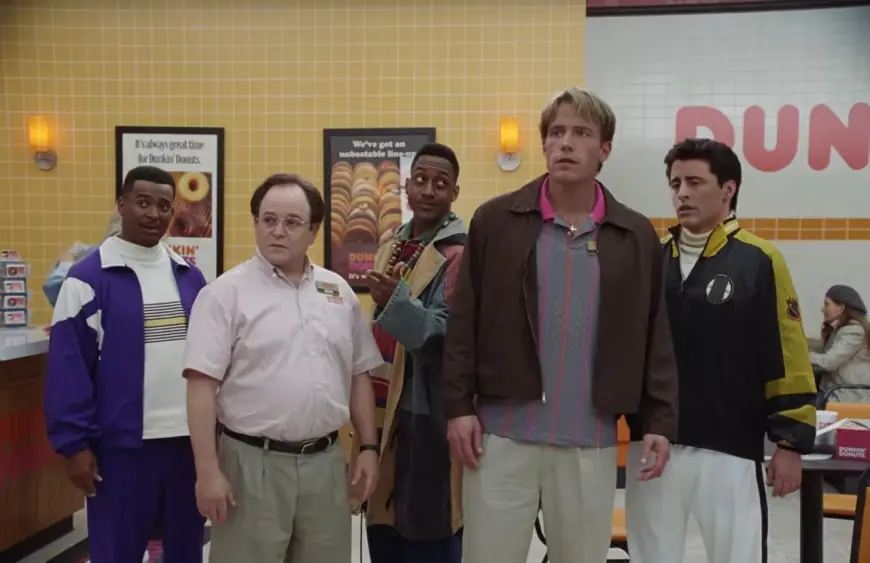
Dunkin’ pushed its evolving “cinematic universe” further with “Good Will Dunkin’,” a sitcom-styled parody anchored by Ben Affleck and capped by a late reveal that included Jennifer Aniston and a Tom Brady cameo.
-
T-Mobile went full sing-along with the Backstreet Boys, rewriting lyrics to fit the pitch and using the band’s familiarity as the entire engine of the joke.
-
Pepsi Zero Sugar staged a clean, easy-to-follow “taste test” story with a polar bear twist — a simple premise that landed because it stayed coherent and didn’t over-explain itself.
-
Instacart delivered one of the night’s stranger, funnier swings, starring Ben Stiller and Benson Boone in an intentionally absurd musical number built around the word “bananas.”
The MrBeast Super Bowl commercial 2026: big ambition, real-world friction
The most “modern internet” moment came from the MrBeast-fronted Salesforce spot, “The Vault,” which promised a $1 million prize for solving a multi-step puzzle. It wasn’t just a commercial — it was a live participation event, designed to push viewers into Slack and an assistant workflow to keep hunting for clues.
That scale created immediate stress when huge traffic volumes hit at once, including delays for some users trying to get started. The concept still did what it was built to do: extend a Super Bowl ad into a multi-day cultural scavenger hunt.
A defining theme: tech, AI vibes, and the backlash
One of the sharpest undercurrents in the 2026 Super Bowl ads conversation was how quickly audiences labeled anything “off” as AI. Some brands did use AI-forward aesthetics; others simply used heavy visual effects or de-aging that looked uncanny enough to trigger the same reaction.
At the same time, a few ads worked because they signaled craft and clarity — straightforward storytelling, recognizable stars, and jokes that resolved cleanly inside the time limit. In a year when many spots tried to do “more,” the ads that did “simple, well” often traveled farthest.
What to watch next
The post-game winner’s circle for Super Bowl ads usually becomes clearer over the next week as brands release extended cuts and track follow-on engagement. Two indicators matter most:
-
which spots keep generating organic replays and memes without needing extra paid push, and
-
which interactive campaigns can convert curiosity into sign-ups or sales without breaking the user experience.
For 2026, the early signal is that nostalgia, musical hooks, and one big, clean idea still beat complexity — especially when every second costs millions.
Sources consulted: NFL, Business Insider, Adweek, PepsiCo