

























Understanding Big Altima Energy: A Comprehensive Analysis

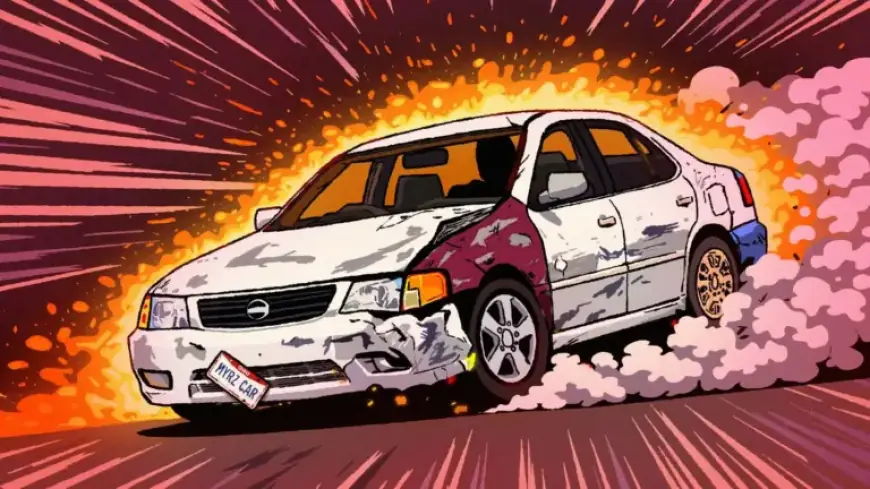
The Nissan Altima, once a popular midsize sedan, continues to navigate an uncertain future. Despite a decline in the appeal of mainstream sedans, Nissan has renewed its commitment to the Altima for yet another year. However, this model has developed a controversial reputation associated with reckless driving and financial struggles— a phenomenon coined as “Big Altima Energy.” Understanding Big Altima Energy involves exploring the car’s historical prominence and its subsequent descent into stereotype.
The Rise of the Nissan Altima
The Nissan Altima first debuted in the US on June 11, 1992, at the company’s Smyrna, Tennessee plant. Initially, it garnered positive reviews for its 16-valve engine and sporty performance. By July 1993, it outperformed competitors in a Car & Driver comparison, although it did fall short against the top-ranked Toyota Camry.
The Altima’s fortunes shifted dramatically with its third-generation model, produced from 2002 to 2006. It became known for its spacious interior and options like leather seats and a 240-horsepower V6 engine. The 2002 Altima won the North American Car of the Year award and surpassed 200,000 sales in the United States during its launch year.
Market Dominance
- The Altima was Nissan’s best-selling vehicle from 1998 until 2016.
- The model enjoyed an impressive sales peak of 335,644 units in 2014.
The Downfall: Cost-Cutting and Changing Dynamics
However, as the Altima thrived, Nissan underwent a significant transformation under CEO Carlos Ghosn. After a 1999 merger with Renault, Ghosn implemented severe cost-cutting measures, leading to the closure of five plants and a reduction of 21,000 jobs. Despite necessary financial improvements, these actions adversely impacted the Altima’s quality and brand loyalty.
The fourth-generation Altima launched in 2006 as a lower-quality version, introducing a continuously variable transmission (CVT) that would later lead to numerous customer complaints and lawsuits over transmission failures. This disinvestment caused a decline in the Altima’s residual values, which consistently fell behind competitors like the Honda Accord and Toyota Camry.
Declining Loyalty
| Model | 2017 | 2025 |
|---|---|---|
| Honda Accord | 62.3% | 78.8% |
| Toyota Camry | 58.1% | 75.3% |
| Nissan Altima | 53.5% | 39.1% |
A Shift in Strategy: Targeting Subprime Markets
Nissan shifted strategies by partnering with subprime lenders to attract low-credit customers. This approach often resulted in high-interest loans that further entrenched customers in financial difficulty. Such tactics not only damaged the brand’s reputation but also triggered a vicious cycle of increased repossessions and deteriorating vehicle conditions.
As the Altima found its way into households with constrained finances, it became subject to ridicule in online communities. Memes emerged portraying Altimas as poorly maintained vehicles, contributing to the cultural phenomenon of “Big Altima Energy.” Social media groups like the Big Altima Energy Facebook group gained substantial followings, amplifying the car’s negative stereotype.
The Future of the Nissan Altima
In recent years, Altima sales have plummeted, failing to exceed 150,000 units since the onset of the pandemic. The average age of Altimas on the road is now between one and two decades, reflecting a broader trend of Americans keeping older vehicles longer. Given the current landscape and Nissan’s hesitance to invest in the Altima, its future remains uncertain.
As the Altima continues to traverse the challenges of the modern automotive market, the societal context surrounding it reminds us that behind every car lies a story, often involving the struggle for financial stability. Whether you’re driving an Altima or simply sharing the road with one, it’s essential to recognize the economic pressures that may accompany each journey.