




















Bad Bunny’s Super Bowl 2026 Halftime Show Turns Super Bowl LX Into a Puerto Rico-Centered Pop Culture Flashpoint

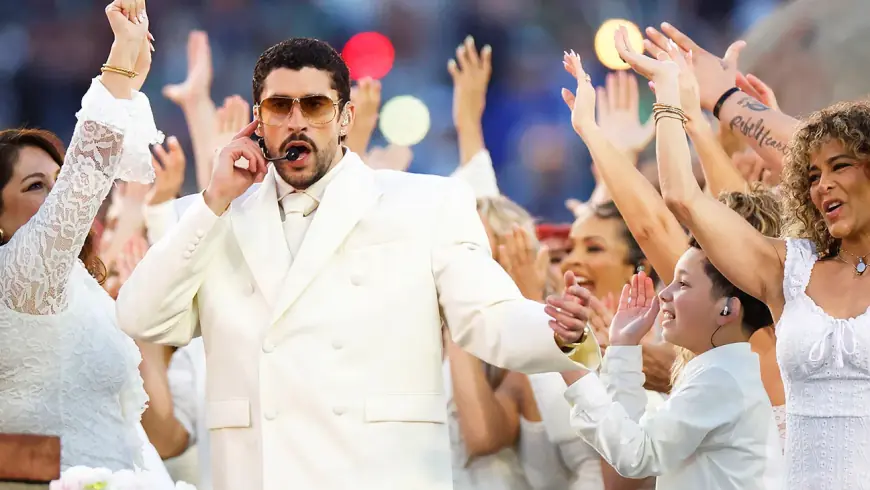
Bad Bunny didn’t just headline the Super Bowl 2026 halftime show on Sunday, February 8, 2026 — he used Super Bowl LX as a giant, mainstream stage for Puerto Rico, Spanish-language music, and a very deliberate message about identity and belonging. The performance unfolded at Levi’s Stadium in Santa Clara, California, during a game the Seattle Seahawks won over the New England Patriots, 29–13.
Kickoff was 6:30 p.m. ET, putting halftime roughly in the 8:00–8:20 p.m. ET window, when the audience is at its largest and the culture conversation shifts from football to spectacle.
What happened at the Super Bowl 2026 halftime show
Bad Bunny delivered a set built around reggaeton energy, theatrical staging, and Puerto Rico-forward visuals, then amplified the moment with guest appearances that sent search and chatter surging. Lady Gaga and Ricky Martin appeared during the show, and the celebrity cameos extended beyond musicians, including Pedro Pascal, Jessica Alba, Cardi B, and Karol G.
One of the night’s most talked-about moments was the wedding on the field. It was not a skit: it was a real wedding ceremony staged as part of the halftime production, with Bad Bunny involved in the moment as a witness.
The performance also leaned into symbolism — including a football bearing a unity message and on-field visuals that emphasized love over hate and togetherness across the Americas. Those choices quickly became part of the political and cultural argument around the show.
Behind the headline: why this halftime show hit differently
This year’s halftime show landed at the intersection of three forces.
First, economics: the halftime slot is the rare entertainment moment that still delivers an enormous shared live audience. That scale turns a performer into a global headline instantly, and it can reshape touring leverage, brand negotiations, and catalog consumption overnight.
Second, culture: a Spanish-forward halftime show tests an old assumption about “mainstream” American TV. The point was not translation. The point was presence — and that inevitably provoked both celebration and backlash.
Third, politics: the show’s unity framing and Puerto Rico emphasis made it a ready-made canvas for the country’s current identity fights. Predictably, prominent political figures and activists weighed in after the performance, attempting to reframe the show as either inspiring or insulting depending on their audience.
The Puerto Rico questions viewers keep asking
A lot of the spike in searches is basic civics, not just celebrity.
Puerto Rico is part of the United States as a U.S. territory. People born in Puerto Rico are U.S. citizens. But residents who live on the island cannot vote for president in the general election, and the territory does not have voting representation in Congress the same way states do. That political in-between status is a long-running tension — and a major reason Puerto Rico symbolism on a stage like the Super Bowl carries extra weight.
Bad Bunny basics: real name, age, net worth, and the language debate
Bad Bunny’s real name is Benito Antonio Martínez Ocasio. He is 31 years old as of February 2026.
On net worth, public estimates vary widely and should be treated as rough ranges rather than precise accounting. Depending on what’s counted — touring profits, brand deals, catalog value, ownership stakes, and taxes — estimates commonly land somewhere in the tens of millions, with some placing him near the nine-figure mark. The bigger point is leverage: halftime headliners don’t need the paycheck; they want the cultural moment that multiplies everything else.
The question “does Bad Bunny sing in English” misses what he has built his career on: he has never needed to center English to be globally dominant. The Super Bowl set leaned into that reality rather than apologizing for it — which is exactly why it became a lightning rod.
What we still don’t know
Some numbers being tossed around — especially about halftime views and “most watched halftime show” claims — often start as early estimates before any finalized accounting. Expect clearer, comparable totals once measurement firms and the league’s partners complete their reporting.
There are also circulating claims about wardrobe specifics and hidden messages that are more rumor than fact in the first 24 hours. The safest read is to separate confirmed staging elements — guests, the wedding, the location, the score — from interpretive theories that will multiply online.
What happens next: realistic scenarios with triggers
-
Streaming surge and chart reshuffle if post-show listening remains elevated through midweek ET.
-
More guest-collaboration momentum if Lady Gaga or Ricky Martin appearances translate into live or recorded follow-ups.
-
Political pile-on intensifies if activists keep using the halftime show as a proxy fight over immigration, language, and “Americanness.”
-
Brand strategy pivot if Bad Bunny continues post-show “erase and reset” behavior that signals a new era or rollout.
-
League programming response if executives try to calibrate future halftime choices based on backlash intensity versus engagement.
Why it matters
Super Bowl halftime shows are no longer just concerts — they are cultural referendums delivered to a mass audience in real time. Bad Bunny’s Super Bowl 2026 halftime show forced a national conversation about language, Puerto Rico’s place in American life, and who gets to define what “America” looks like on its biggest stage.