























Nancy Guthrie case draws wider media focus as the family renews its plea—what investigators are prioritizing now

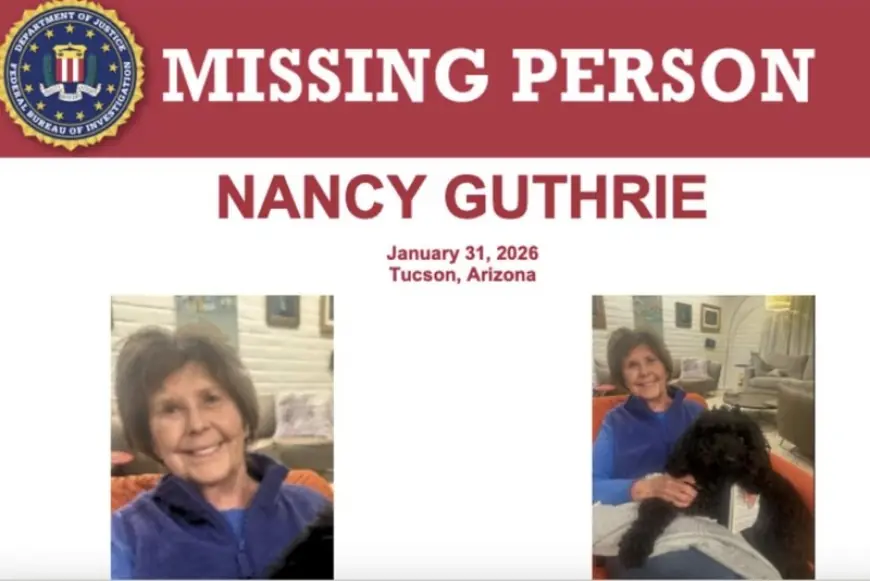
The disappearance of 84-year-old Nancy Guthrie has intensified into a high-profile abduction investigation as her family renews public pleas for her safe return and authorities sift through new communications that may—or may not—be connected to whoever took her. Investigators say no suspect has been publicly identified, and the case now hinges on two urgent priorities: verifying messages that claim a link to her disappearance and building a precise, evidence-backed timeline from the hours she vanished.
Nancy Guthrie, the mother of television journalist Savannah Guthrie, was last seen late Saturday, January 31, 2026, when family members dropped her off at her home near Tucson, Arizona. She was reported missing around midday Sunday, February 1 after she did not appear for church and could not be reached.
A family plea designed to prompt contact
In a new video appeal released over the weekend, Guthrie’s children addressed the person or people who may be holding their mother and asked for direct communication and proof she is alive. The family has said they are willing to pay for her safe return, a step often taken when families believe a public appeal might accelerate a channel of contact.
Law enforcement has not publicly confirmed proof-of-life. Officials have also emphasized that public messaging can be delicate in abduction cases—helpful for generating tips, but potentially vulnerable to hoaxes or opportunistic interference.
Investigators prioritize message authentication
Authorities have confirmed they are reviewing a new message tied to the case and are actively assessing its authenticity. That effort is now central, because abduction investigations can pivot quickly if a message is verified as coming from the responsible party—or stall if the communications turn out to be misleading.
A complicating factor has emerged: a man in California is facing federal charges after investigators say he sent communications to the family while posing as the abductor. That development highlights a recurring reality in prominent cases: once a name becomes national news, false claims and attention-seeking messages can flood in, creating noise that investigators must filter without losing time on the real lead.
The message review is also being framed around urgency. Investigators have referenced deadlines contained in earlier communications related to the case. One deadline described publicly has already passed; another is imminent. In Eastern Time, a deadline described as Thursday, February 5, 2026, at 7:00 p.m. ET has passed, with another described as Monday, February 9, 2026 (exact time not publicly detailed).
The evidence focus shifts to digital and physical clues
Investigators say the case is being treated as an abduction, and officials have described Nancy Guthrie as frail with extremely limited mobility—raising doubts she could have left unassisted.
In the past several days, investigative attention has visibly concentrated on the home and its surrounding area. A key public detail: authorities have said blood found on the front porch was confirmed through DNA testing to match Nancy Guthrie. That has strengthened the view that something violent or coercive occurred at or near the home.
From there, investigators are working the kind of “digital perimeter” that can make or break a case: home security systems, camera connectivity, phone and network activity, and any unusual interruptions overnight. Officials have expressed frustration that home monitoring did not capture usable footage during the critical window, increasing the importance of secondary data such as device logs and network records.
Why a towed vehicle matters
On Friday, February 6, investigators removed Nancy Guthrie’s blue SUV from her garage for further processing, along with additional surveillance equipment associated with the property. Such moves typically signal that investigators believe the vehicle—or its onboard data—could help narrow the timeline, confirm whether it moved, or preserve forensic evidence.
Even if a car never left the garage, it can still be valuable: modern vehicles store diagnostic and sometimes location-related information, and they can carry trace evidence that helps reconstruct who entered, what was handled, and when.
What tips matter most right now
Federal authorities are offering a reward of up to $50,000 for information leading to Nancy Guthrie’s recovery and/or the arrest and conviction of those responsible. With the investigation centered on a tight time window and incomplete video, the most useful public tips tend to be specific and verifiable.
Key tip categories investigators prioritize include:
-
sightings of an unfamiliar vehicle or person near the home during late-night or early-morning hours
-
reports of tampered cameras, cut connections, or unusual door-to-door activity
-
preserved communications that can be forwarded in original form (screenshots plus the original messages)
-
any interaction involving a frail older woman that looked coercive or out of place
Health concerns raise the stakes
Officials have repeatedly underscored the urgency because Nancy Guthrie needs daily medication and has heart-related medical needs, including a pacemaker. Those factors raise the risk of serious harm if she is without care, and they narrow the margin for time-consuming investigative detours.
For now, the case remains defined by what investigators are trying to turn into certainty: which messages are real, what the most reliable timeline is, and where the evidence trail points next.
Sources consulted: Reuters, Associated Press, ABC News, Pima County Sheriff’s Department