























Nancy Guthrie family video: what it shows, and what remains unconfirmed

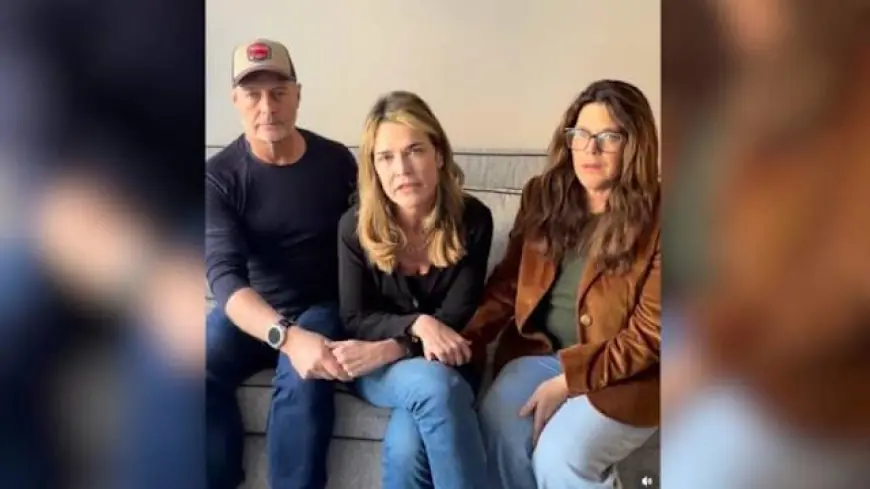
A short, somber family video released this weekend added a new, consequential detail to the search for 84-year-old Nancy Guthrie: her relatives say they have received a message from someone they believe is involved in her disappearance, and they say they are prepared to pay to get her back. The clip is emotionally direct, but it is also carefully limited—revealing just enough to confirm contact without disclosing information that could compromise the investigation.
As of Sunday, February 8, 2026 (ET), authorities have not publicly confirmed the contents of the alleged kidnappers’ latest message, nor have they publicly confirmed any proof-of-life.
What the family video reveals
The most concrete takeaway is that the family is acknowledging a new communication and treating it as credible enough to respond publicly. In the clip, Nancy Guthrie’s daughter (a prominent morning TV host) appears with her siblings and addresses the abductors directly, saying they “received your message,” that they “understand,” and that they “will pay.”
That framing matters for two reasons:
First, it signals that contact has progressed beyond rumor. Second, it suggests the family believes the message is tied to an exchange—most likely ransom—rather than a prank or generalized threat.
The video also communicates urgency without escalating into explicit details. The family’s wording emphasizes peace, celebration, and the value of their mother’s safe return, which can be read as an attempt to keep the abductors focused on a nonviolent outcome.
What it doesn’t reveal, on purpose
The clip does not answer the three questions that typically determine whether a kidnapping case pivots toward resolution or drags into uncertainty:
-
Proof of life: The family does not state they have heard or seen Nancy Guthrie in the message. Without proof of life, investigators and families often treat communications cautiously to avoid rewarding hoaxes.
-
Delivery method and demands: The video avoids naming how the message arrived, what it demanded, or whether it specified a deadline, a payment form, or a drop location.
-
Who sent it: Nothing in the video identifies whether the sender is an individual, a group, or someone impersonating an abductor.
That absence is not a gap in storytelling—it’s often deliberate. Disclosing specifics can help impersonators refine future threats, tip off suspects, or complicate law-enforcement strategy.
Why the “latest message” is hard to interpret publicly
From the outside, the phrase “we received your message” can mean several different things, and the video doesn’t narrow it down. It could be a direct demand, a “call me” instruction, a test of leverage, or a threat meant to provoke panic. It could also be a second communication after an earlier claim was discounted.
One important context point: investigators have dealt with at least one purported ransom note in this case that was treated as a hoax, with an arrest linked to that false communication. That history makes it even more likely that officials will keep the details of any newer message tightly held until they can validate it.
The investigative backdrop: what authorities have confirmed
Authorities have said they are treating Nancy Guthrie’s disappearance as an abduction and are working with federal partners. Investigators have publicly cited physical evidence at the home, including blood traces later linked to Nancy Guthrie through testing. Officials have also described issues with home security footage: the doorbell camera was disabled or removed, and the lack of a subscription meant no usable video was recovered from that device.
Police have also emphasized health concerns, noting she requires daily medication for serious conditions. That point raises the stakes of any delay and shapes what law enforcement will consider acceptable risk in negotiations and search planning.
A reward of $50,000 has been offered for information leading to her recovery or the arrest of those responsible.
What to watch for next
The next credible updates are likely to come in one of three forms: a law-enforcement confirmation that a communication is authentic, a request to the public for specific leads (such as vehicle sightings or surveillance footage), or a status change on Nancy Guthrie’s condition or whereabouts.
The clearest “signal” that a message is real—without revealing its details—would be an official statement that investigators have corroborated unique facts only a true abductor would know, or that they have obtained proof of life. Absent that, the public still cannot reliably infer what the message contained, who sent it, or whether it advances negotiations.
What the family video does accomplish is narrower but meaningful: it puts a human face on the stakes, and it indicates the family believes there is someone on the other end of this crisis who can choose to end it.
Sources consulted: Associated Press; Reuters; ABC News; People